


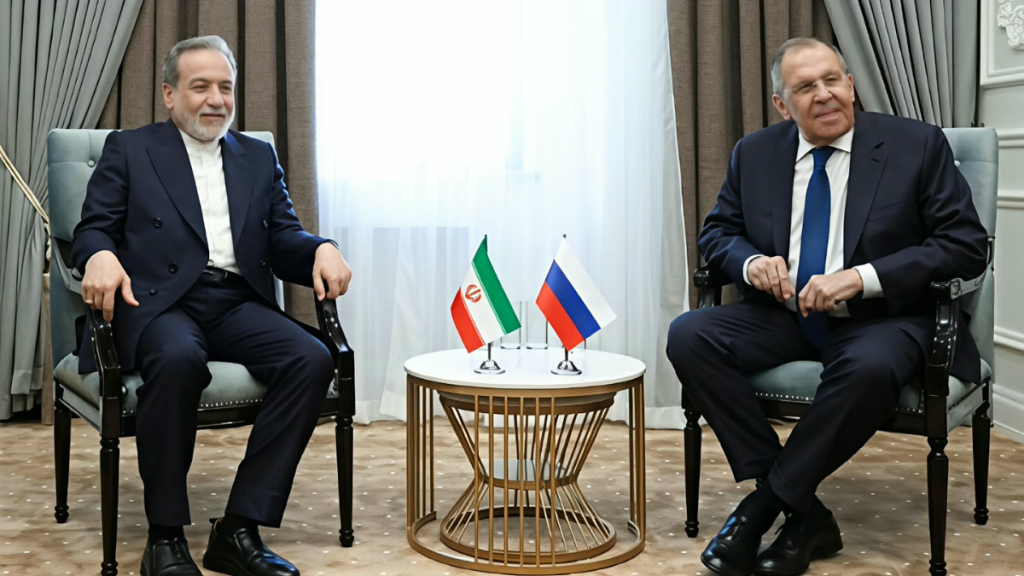
New Delhi: Russia will not abandon its economic agreements with Iran despite the difficult situation, the Russian foreign minister, Sergey Lavrov, said on Monday after talks with his Iranian counterpart Abbas Araghchi in Tehran. The two sides discussed regional tensions, bilateral cooperation and ways to strengthen security without foreign military intervention.
Araghchi blamed the United States and Israel for insecurity in the Gulf and the Strait of Hormuz, saying the war and economic blockade were the principal sources of instability.
“We welcome any initiative that leads to security from within without the presence of foreign forces, and consider it the right move,” Araghchi said at a joint press conference with Lavrov. He called on regional countries to work towards a joint security arrangement and resolve disputes through diplomacy.
Lavrov said Russia and Iran were also coordinating efforts to promote and operationalize the regional “3+3” mechanism for the South Caucasus.
Lavrov was also scheduled to meet the Iranian president, Masoud Pezeshkian, during his official visit. According to Moscow, Monday’s meeting was the fourth in-person meeting between Lavrov and Araghchi this year, following 14 telephone conversations.
The visit comes as Tehran seeks to strengthen its defence capabilities amid the possibility of renewed military action. Iran’s parliament approved Mehrdad Akhlaghi Ketabchi as its new defence minister on Sunday. He replaces Aziz Nasirzadeh, who was killed in US-Israeli strikes in February.
Ketabchi has pledged to rebuild Iran’s defence industry and accelerate military technology development, while warning Washington of a broad response to any fresh attack.
Russia and Iran have strengthened political, economic and military ties amid western sanctions. In January 2025,the Russian president, Vladimir Putin, and Pezeshkian signed a 20-year comprehensive strategic partnership treaty covering defence, security, energy, trade and transport. The agreement provides for closer coordination on regional and international issues but does not establish a mutual defence obligation.
The two presidents continued their high-level engagement with a meeting in Bishkek on the sidelines of the SCO summit in September 2026.