


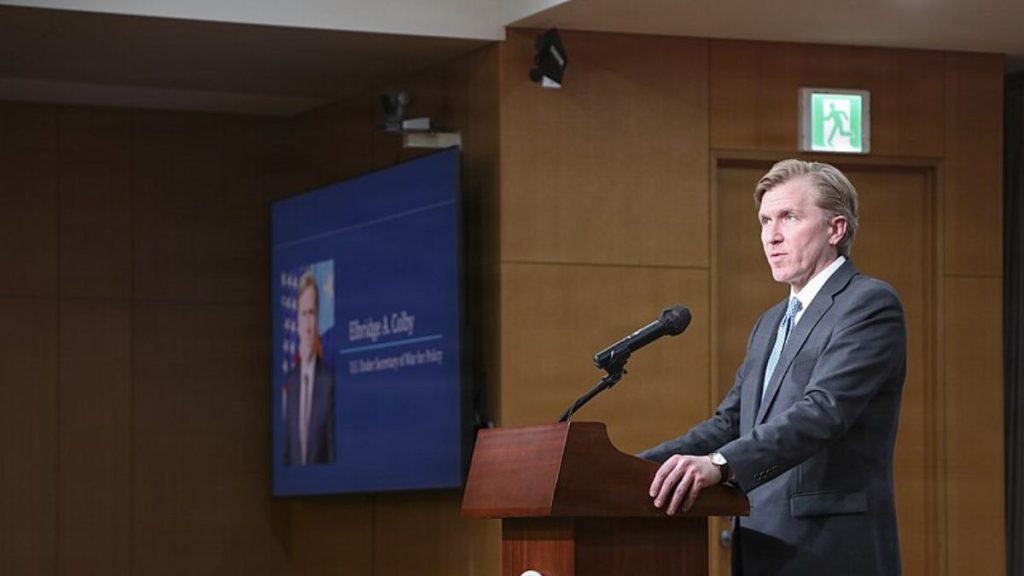
New Delhi: The Pentagon has reportedly asked several Nato allies, including Lithuania, Latvia and Estonia, to tone down public warnings about Russia during private meetings in recent weeks. Senior US defence officials, including the Pentagon policy chief, Elbridge Colby, were reportedly involved in conveying the message as Washington intensified diplomatic efforts to end the war in Ukraine.
Four people familiar with the discussions, including three European officials and one American, told Reuters on Friday that the messages were delivered during bilateral meetings in recent weeks. Pentagon policy chief Elbridge Colby was among the officials involved, although it remains unclear whether other Nato governments received similar advice. The discussions were described as cordial rather than confrontational.
Colby reportedly cautioned a Baltic official against “poking” Russia, objecting to descriptions portraying Moscow as cornered and increasingly desperate. Estonian prime minister, Kristen Michal, had called president, Vladimir Putin a “rat in a corner” in September, but Reuters could not establish whether Colby was referring to his remarks.
In a separate meeting, Pentagon officials asked an Estonian delegation to be more measured in its communications. One European official found Washington’s advice puzzling, noting that Baltic intelligence agencies had recently played down the likelihood of Russia directly testing Nato’s collective-defence commitments.
The disagreement centres on whether forceful language strengthens deterrence or amplifies the Kremlin’s efforts to spread anxiety and erode public support for Ukraine. Other European officials argue that openly discussing security risks is essential to securing public backing for military preparedness, higher defence spending and continued assistance to Kyiv.
The exchanges coincide with president, Donald Trump’s renewed push for a negotiated settlement in Ukraine. According to Reuters, Washington has explored incentives for Moscow, including possible sanctions relief and commercial arrangements, alongside pressure on Kyiv to stop striking Russian energy infrastructure. Several European governments favour maintaining economic pressure on Russia. No settlement has been reached.
Security concerns have also intensified over suspected sabotage operations. On Wednesday, German prosecutors said two Belarusian nationals had been arrested on suspicion of planning an arson attack against a building or critical infrastructure near Nuremberg. Prosecutors alleged they acted for an unidentified foreign government or organization, while German magazine Der Spiegel reported suspected Russian involvement. Moscow denies conducting sabotage campaigns across Europe.
Meanwhile, the Pentagon is reviewing US troop levels in Europe while urging allies to assume greater responsibility for their defence. At the 2025 Hague summit, Nato members committed to spending five per cent of GDP on defence and security by 2035, including 3.5 per cent for core military requirements and up to 1.5 per cent for broader security investments.
Asked about the reported conversations, a Pentagon official said: “Private conversations among allies are just that, so we will not comment on these allegations.” Nato declined comment, while the defence ministries of Lithuania, Latvia and Estonia did not respond to Reuters.
The reported exchanges underline a difficult balance for Nato: preserving unity and credible deterrence while Washington pursues negotiations with Moscow.