


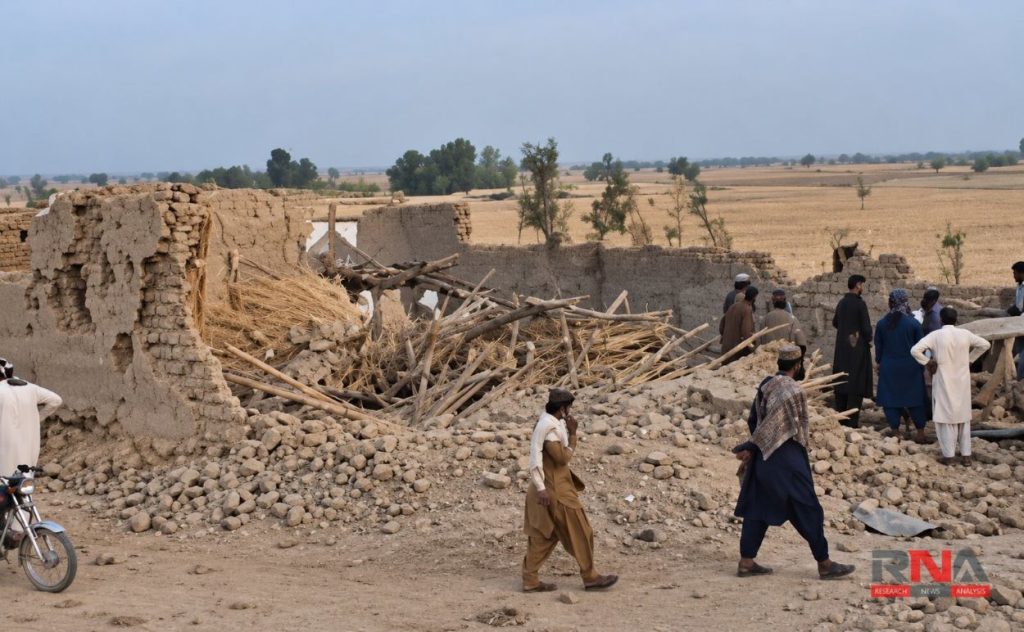
New Delhi: Pakistan carried out fresh airstrikes inside Afghanistan overnight into Thursday, saying it had killed 22 militants at two suspected hideouts. Afghanistan’s Taliban government gave a sharply different account, reporting nine civilian deaths, including women and children, in attacks on the southern province of Helmand and eastern Kunar.
The raids extended a renewed cycle of cross-border violence between the neighbours, whose dispute over militant sanctuaries has repeatedly escalated into military confrontation. Neither side’s casualty claims could be independently verified, leaving unresolved the identities of those killed and the nature of the sites struck.
Pakistan’s information ministry said the attacks followed intelligence about camps used by armed groups and their affiliates, describing the operation as “well-planned and calibrated”. Its statement on the latest strikes said preliminary reports indicated that 22 militants had been killed and substantial stocks of weapons and ammunition destroyed.
The ministry maintained that precautions had been taken to prevent civilian casualties and presented the raids as part of Operation Ghazab lil Haq, its continuing counterterrorism campaign. It said protecting Pakistani citizens remained the government’s foremost priority and accused Afghan territory of serving as a base for threats against Pakistan.
The Taliban government’s spokesman, Zabihullah Mujahid, said the bombardment had instead struck civilian homes, destroying three houses and injuring 11 people in addition to those killed. He condemned the attacks as aggression and a violation of universally accepted principles, directly challenging Islamabad’s assertion that it had avoided civilian harm.
According to an AFP report, Helmand’s provincial authorities said an attack on Safar village killed four people and left others critically wounded. Pakistan confirmed strikes at two locations but did not identify them in its announcement, so the geographical details came from Afghan officials.
The Pakistani statement used “Fitna al Khawarij”, the state’s designation for the banned Tehreek-i-Taliban Pakistan (TTP), and “Fitna al Hindustan”, a label applied to designated Balochistan-based armed groups. As Dawn explained, the latter terminology reflects Islamabad’s allegations of Indian involvement; its use does not independently establish an Indian connection to the targets struck.
The TTP and the Afghan Taliban are distinct organizations, although they are allied, a distinction central to understanding the dispute. Pakistan accuses Kabul of allowing the TTP to operate from Afghan territory, while the Taliban government denies providing sanctuary to militants attacking its neighbour.
The latest raids followed Pakistani airstrikes on September 21, when Islamabad claimed to have killed at least 28 militants. Afghan authorities reported civilian deaths, and the United Nations Assistance Mission in Afghanistan (Unama) confirmed that a man, a woman and a girl had been killed.
Those earlier attacks broke nearly three months of relative calm and prompted Kabul to summon Pakistan’s chargé d’affaires in protest. They also demonstrated how quickly violence inside Pakistan could spill across the frontier, with Islamabad pursuing alleged militant bases and Afghan authorities treating the resulting strikes as aggression.
The September escalation followed a major attack on the Old Police Lines complex in Kohat, in Pakistan’s Khyber Pakhtunkhwa province. The death toll had reached 31, including 16 police personnel, with more than 100 people injured after a suicide bombing and an armed assault on the compound.
Further exchanges followed, with Pakistan saying it had intercepted eight drones near Torkham and Kohat and subsequently struck 10 locations inside Afghanistan. Islamabad also delivered a diplomatic protest over the alleged September 23 airspace violation, illustrating how aerial attacks, border fighting and formal protests have become intertwined.
The human cost predates the latest escalation: Unama recorded 56 civilians killed and 129 injured by aerial attacks and indirect fire inside Afghanistan between late February 26 and March 5. Those independently documented casualties underline the stakes of the continuing confrontation, even as the competing accounts of Thursday’s strikes remain unverified.