


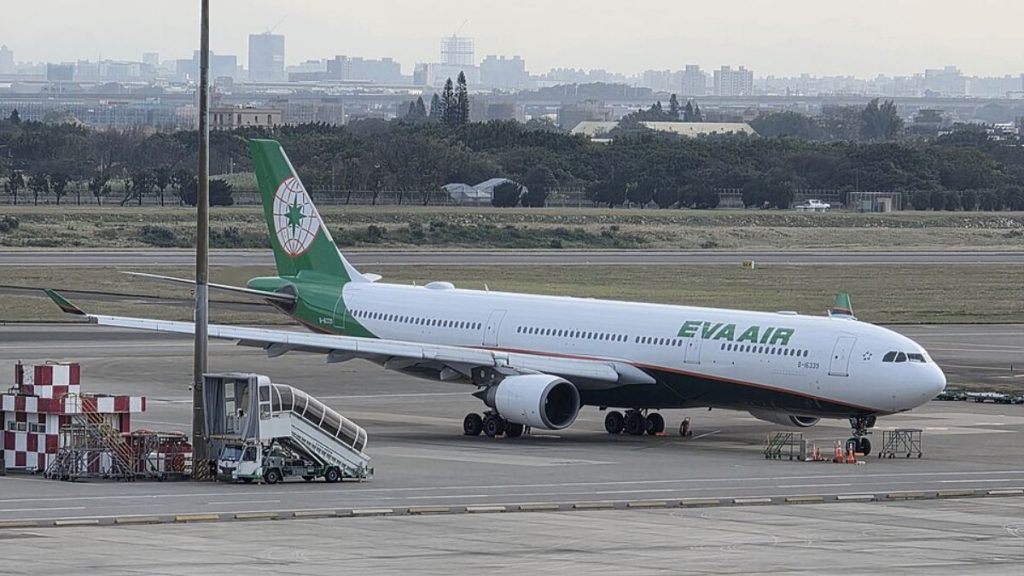
New Delhi: Pakistan has reportedly barred Taiwanese commercial airlines from using its airspace under its “One China” policy, disrupting flight routes between Asia and Europe. Taiwan’s China airlines and EVA Air have diverted services away from Pakistan, with some aircraft instead crossing Russia.
“The aviation division follows the ‘One China’ policy — only mainland China is allowed,” Pakistan’s defence minister, Khawaja Asif, told Bloomberg on Wednesday.
His remarks concerned Taiwanese carriers and should not be read as a general prohibition on all other foreign airlines. Bloomberg, citing Flightradar24 data, reported that China airlines and EVA Air had not crossed Pakistani airspace since Sunday morning. At least a dozen of their Asia-Europe flights had travelled over Russia since then.
The airlines had largely avoided Russian airspace following Moscow’s invasion of Ukraine in February 2022. Bloomberg reported that route changes had added hours to some journeys and increased fuel costs, with aircraft also using alternative corridors across South Asia.
Both airlines declined to comment to Bloomberg. Taiwan’s civil aviation administration did not address the diversions but said it had never prohibited Taiwanese carriers from flying over Russia.
Taiwan’s transport minister, Chen Shih-kai, said airlines choose routes based on safety, flying time and costs, according to Central News Agency. He said the government respected those decisions without directly confirming Pakistan’s reported restriction.
Pakistan’s policy goes beyond diplomatic recognition
Pakistan recognizes Beijing rather than Taipei and supports China’s claim that Taiwan forms part of its territory. Taiwan has its own elected government and rejects Beijing’s sovereignty claim. In a statement on 2 January, Pakistan’s foreign office reaffirmed the “One China” principle, describing Taiwan as an “inalienable part of China”.
Islamabad also opposes Taiwanese independence and rejects proposals recognizing “two Chinas” or “one China, one Taiwan”. It has expressed concern over tensions in the Taiwan Strait and supported Beijing’s opposition to Taiwan’s participation in the world health assembly.
Bloomberg described Pakistan as the first country to impose this specific restriction on Taiwanese airlines, noting that mainland China itself permits them to cross its airspace.
Pakistan and China maintain extensive economic and defence cooperation, including the China-Pakistan economic corridor, part of Beijing’s Belt and Road Initiative. China is also Pakistan’s largest military equipment supplier. There is, however, no verified evidence that Beijing directed the aviation restriction.
Questions over scope and duration
International aviation rules recognize states’ sovereignty over their airspace, subject to applicable agreements and obligations. Restrictions can require airlines to seek alternative flight clearances and revise routes, affecting schedules and operating costs.
The precise legal basis of Pakistan’s reported decision remains unclear. No official aviation notice specifying whether it covers all Taiwanese commercial operators, provides exemptions or has an expiry date could be independently verified.
Further clarification from Pakistan’s aviation authorities is needed to establish the measure’s full scope and duration.