


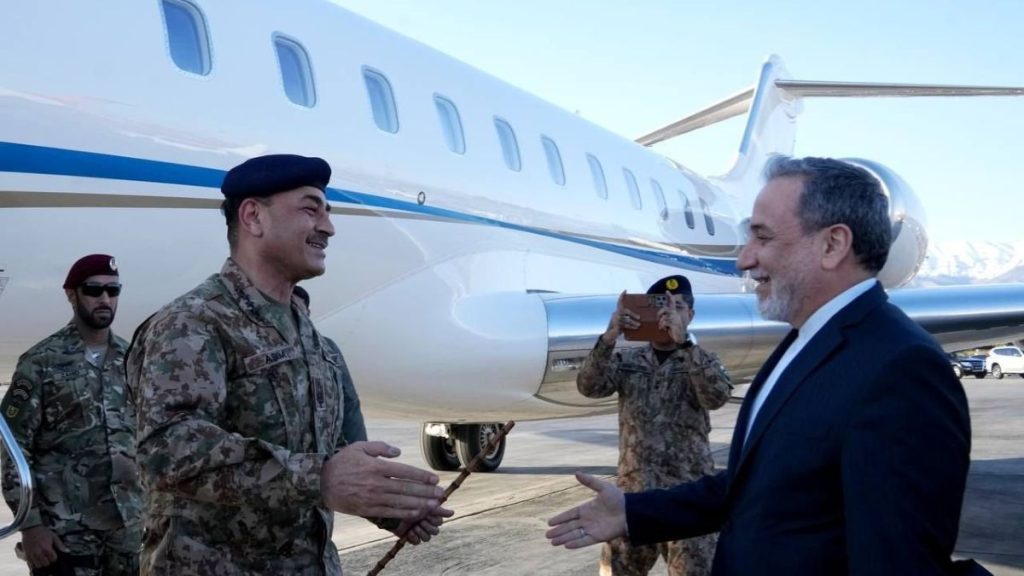
Pakistan Army chief Asim Munir, on Friday (May 22, 2026), arrived in Tehran on a diplomatic visit and to hold talks with the Iranian leadership on measures to end the West Asia war, even as Islamabad mediates the peace talks with the US.
Earlier, US Secretary of State Marco Rubio expressed the hope that the diplomatic efforts to end the war would make progress, though he cautioned that Washington was “dealing with very difficult group of people,” while referring to the Iranian leadership.
Asim Munir was received by Iranian Interior Minister Eskandar Momeni and his Pakistani counterpart Mohsin Naqvi, who camped in Tehran for the last few days, carrying messages to and between Iran and the US on the agenda for peace negotiations.
Pakistan’s military announced Munir had “arrived in Tehran as part of ongoing mediation efforts.” The Pakistani Army chief’s arrival in Tehran gains significance as diplomatic efforts to end the West Asia war gathered pace and Iran was considering the latest peace proposal from the US, even as President Donald Trump was potentially readying the American forces for fresh military strikes.
Iranian Foreign Ministry spokesman Esmaeil Baqaei cautioned that Munir’s visit did not mean “we have reached a turning point or a decisive situation” with “deep and extensive” disagreements remaining.
Weeks of negotiations since an April 8 ceasefire, including the historic face-to-face talks hosted by Islamabad in mid-April, have failed to produce a permanent agreement or restore full access to the Strait of Hormuz that remains blockaded by Iran since the war began on February 28.
Trump has described the stop-start negotiations this week as teetering on the “borderline” between a deal and renewed attacks. On Friday (May 22), he announced that he won’t attend his son’s wedding on Saturday (May 23) due to “circumstances pertaining to government.”
Earlier, the White House was considering fresh military strikes on Iran if no peace deal was reached, though no decision was taken after some of the US allies in West Asia requested not to go ahead with the attacks.
“In recent days, many countries, both regional and non-regional, have been trying to help bring the war to an end. However, Pakistan remains the official mediator,” Baqaei said.
Iranian Foreign Minister Abbas Araghchi, who met Munir on Friday (May 22), said Tehran was engaged in the diplomatic process despite what he called “repeated betrayals of diplomacy” by the US and “military aggression against Iran.”
“Despite its strong suspicion of the United States, the Islamic Republic of Iran has entered this diplomatic process with a responsible approach and with all seriousness and is striving to reach a reasonable and fair result,” Araghchi said.
Rubio, speaking on the margins of a NATO meeting in Sweden, said there had been “some progress” in the talks, but warned that Washington was “not there yet.”
“It may not change,” Rubio said, adding, “We’re dealing with a very difficult group of people. And if it doesn’t change, then the president’s been clear he has other options.” Rubio said Trump “prefers the negotiated option” but had expressed concern that a deal “maybe … is not possible.”
Meanwhile, the European Union nations moved Friday (May 22) toward sanctions on Iranian officials and others blamed for blocking the strait.
Baqaei said Hormuz and the US blockade of Iranian ports were also under discussion. “The issue of ending the war on all fronts, including Lebanon, is very important,” he added.