


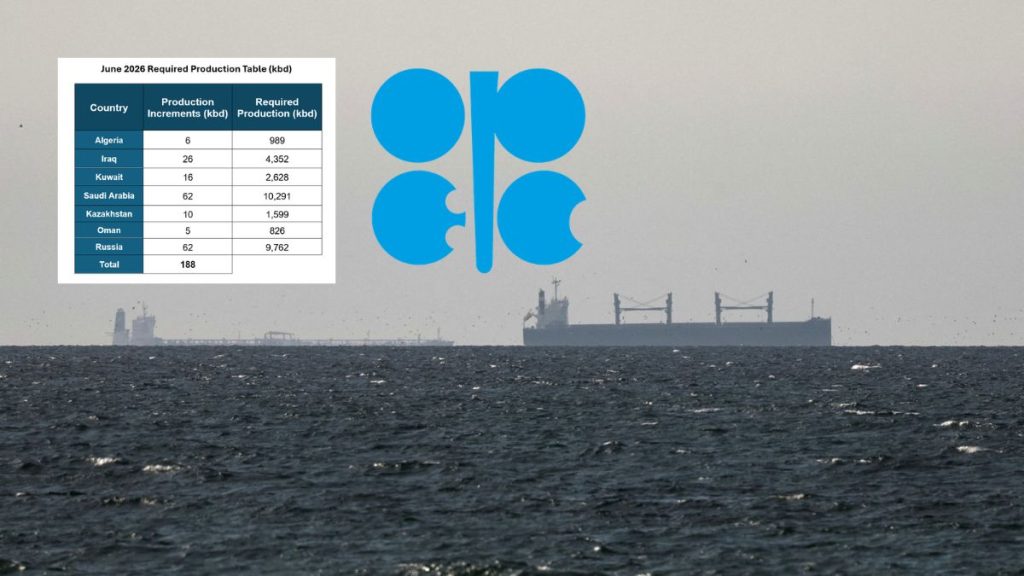
In a global oil market already rattled by conflict and supply shocks, OPEC+ has chosen continuity over caution. The alliance has decided to modestly increase oil output for June, in its first meeting without the United Arab Emirates (UAE). The decision, taken during a virtual meeting on Sunday (May 3, 2026), marks the first major policy signal from the group following the UAE’s exit last week on May 1.
On paper, the increase appears straightforward. Seven key producers – Saudi Arabia, Iraq, Kuwait, Algeria, Kazakhstan, Russia, and Oman- have agreed to raise output targets by 188,000 barrels per day in June. It is the third consecutive monthly increase, suggesting a steady unwinding of earlier production restraints.
But the reality on the ground tells a different story. With the Strait of Hormuz effectively choked by the ongoing Iran war, much of this additional oil may never reach global markets anytime soon. According to analysts quoted by news agency Reuters, the move is more on the symbolic side, a signal that OPEC+ is prepared to act when conditions stabilise.
OPEC+’s message is deliberate, that it wants to project control and readiness, even as logistical bottlenecks undermine its ability to deliver.
What does the UAE’s exit mean for OPEC+ unity?
The absence of the UAE from this decision is significant. As one of the few members with the capacity to rapidly increase production, its departure removes a key pillar of OPEC+’s supply flexibility. Despite this, the group appears keen to demonstrate that its core decision-making engine remains intact.
The UAE’s exit has inevitably raised doubts about internal cohesion, and this latest move can be seen as an attempt to counter that narrative. By pressing ahead with planned increases, OPEC+ could be telling markets that it remains operationally and strategically unified.
West Asia conflict impact on the global oil market
The backdrop to this decision is a war that has upended one of the world’s most critical energy corridors. Since late February, the conflict involving Iran has led to severe disruptions in shipping through the Strait of Hormuz, a chokepoint through which a significant portion of global oil supply flows.
Exports from major Gulf producers, including Saudi Arabia, Iraq, Kuwait, and previously the UAE, have been throttled, not because of production limits, but because of the inability to move crude out of the region. The result has been a dramatic tightening of supply.
Oil prices have surged past $125 per barrel, hitting levels not seen in four years. The ripple effects are already being felt across industries, with warnings of jet fuel shortages looming and inflationary pressures building worldwide.
Even before the latest escalation, OPEC+ production had already dropped sharply. Output in March fell by 7.7 million barrels per day compared to the previous month, highlighting the scale of disruption caused by constrained exports.
Can OPEC+ actually deliver more oil anytime soon?
Industry executives and traders are clear that any meaningful increase in physical supply depends entirely on the reopening of the Strait of Hormuz. Without that, additional output exists largely as a theoretical figure. Even if the waterway were to reopen soon, restoring normal flows would not be immediate.
Shipping schedules, insurance constraints, and logistical bottlenecks mean it could take weeks or even months for supply chains to stabilise. In this context, OPEC+’s decision looks less like a response to current shortages and more like a placeholder for a post-conflict scenario.
Much now hinges on geopolitics rather than production policy. As long as the West Asia conflict continues to disrupt Hormuz, the global oil market will remain under strain, regardless of OPEC+ decisions.