


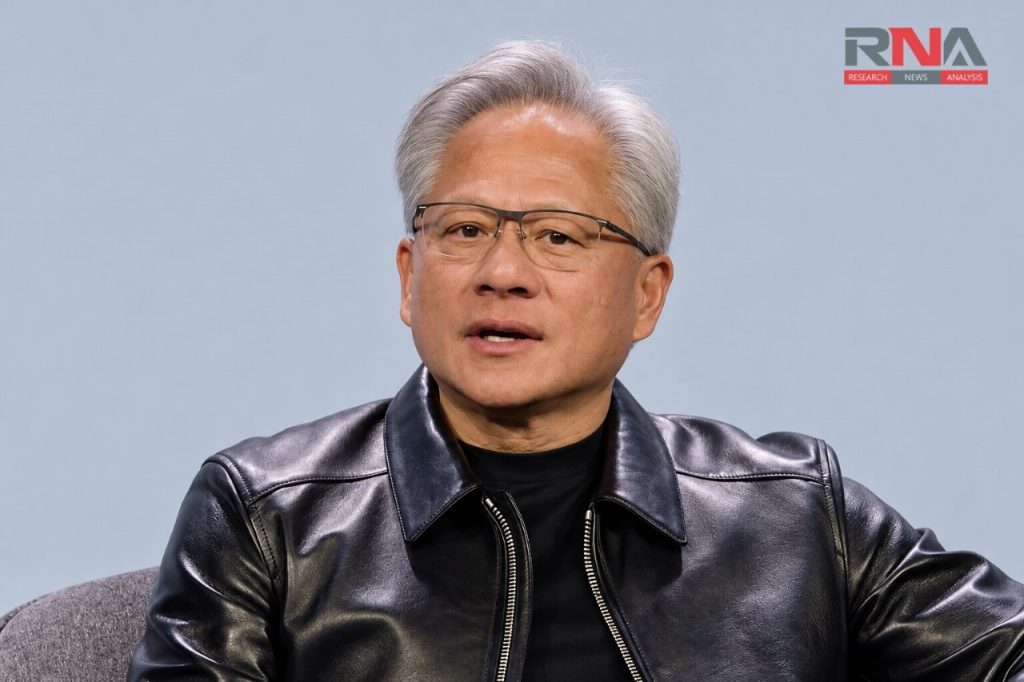
New Delhi: Nvidia, the world’s most valuable semiconductor company and a central player in the global artificial intelligence revolution, is facing a major corporate and national security controversy after allegations emerged that its chief executive, Jensen Huang, had been targeted by a suspected Chinese intelligence operative. The revelations have prompted an independent investigation by the company’s board, unsettled technology investors and raised fresh questions about Beijing’s alleged efforts to penetrate strategically important American technology businesses.
In a statement issued on Sunday, Nvidia confirmed that independent directors, assisted by external legal counsel, would examine reports suggesting that Huang had become the target of a foreign intelligence operation. Although the company maintained that it had found no reason to believe its commercial secrets or American national security had been compromised, it acknowledged the seriousness of the allegations and pledged a thorough review.
The controversy centres on Alice Huang, a Chinese businesswoman and former executive of Singapore-based cloud computing company Megaspeed, who allegedly developed a personal relationship with the Nvidia chief executive. According to investigations reported by the New York Times and subsequently detailed by Reuters, American intelligence officials concluded that she was an asset of China’s intelligence apparatus, although those allegations have not been independently established.
Huang, 63, subsequently acknowledged having been unfaithful to his wife and apologized to his family and Nvidia employees, accepting responsibility for his conduct. However, he did not publicly identify the woman involved, and his admission does not establish that he knowingly participated in espionage or disclosed confidential information.
The allegations have nevertheless attracted considerable attention because Megaspeed has separately faced American scrutiny over suspicions that its operations facilitated access to advanced Nvidia processors despite Washington’s restrictions on technology exports to China. The Singapore-based company reportedly purchased more than $4.8 billion worth of Nvidia chips over two years, making its business relationships particularly relevant to the investigation.
The central national security concern is whether a personal relationship could have provided access to sensitive commercial information, corporate strategy or discussions concerning American technology policy. There is currently no publicly established evidence that such information was compromised, and Nvidia’s board has expressed confidence in Huang’s continued leadership.
China rejects allegations as markets react
Beijing strongly rejected the accusations on November 9, describing reports of a Chinese intelligence connection as politically motivated attempts to discredit the country. The Chinese foreign ministry spokesman, Guo Jiakun, dismissed the allegations, insisting that the purported espionage narrative was unsupported and amounted to a smear campaign.
The controversy has also drawn attention from Washington, where senior Republican lawmakers have sought congressional briefings on the allegations and their possible national security implications. The US president, Donald Trump, said he had not discussed the matter with Huang but described him as an honourable individual and expressed hope that the situation would be resolved.
Financial markets responded nervously, with Reuters reporting that Nvidia shares fell more than six per cent in Frankfurt trading on Monday, potentially erasing approximately $270 billion from the company’s market capitalization at those prices. The decline came against an already uncertain backdrop for artificial intelligence investments, as investors questioned whether enormous expenditure on computing infrastructure would produce sustainable financial returns.
However, the wider semiconductor sector showed signs of resilience, with Taiwan’s TSMC and South Korea’s Samsung Electronics and SK Hynix recovering from previous losses. This divergence suggested that investors were distinguishing between the immediate reputational risks confronting Nvidia’s leadership and the underlying demand for advanced computing chips.
Why the controversy matters beyond Nvidia
The implications extend well beyond one company’s management because Nvidia’s processors underpin much of the world’s advanced artificial intelligence infrastructure, including systems with significant defence and intelligence applications. Any uncertainty affecting the company’s leadership, technology partnerships or regulatory relationships could therefore influence investment decisions across the international semiconductor supply chain.
The allegations are particularly sensitive because Huang has repeatedly advocated greater access to the Chinese market, arguing that excessive American export restrictions could accelerate Beijing’s development of indigenous alternatives. Washington, meanwhile, has sought to prevent advanced computing technologies from strengthening China’s military modernization and surveillance capabilities, placing Nvidia at the intersection of commercial interests and strategic competition.
Under revised American export regulations introduced in January this year, certain advanced processors, including Nvidia’s H200, became eligible for case-by-case licensing subject to security safeguards. The latest controversy could complicate that delicate policy balance, particularly if congressional scrutiny produces demands for tighter oversight of technology transfers and relationships with foreign customers.
For India, which is expanding its domestic semiconductor ecosystem and sovereign artificial intelligence capabilities, the episode highlights the security risks associated with dependence on foreign suppliers of strategically important technologies. It also illustrates how corporate governance, intelligence vulnerabilities and geopolitical rivalries are becoming increasingly interconnected as advanced computing emerges as a critical component of economic and military power.
The immediate question is whether Nvidia’s independent investigation will establish any actual breach of sensitive information or conclude that the controversy concerns personal misconduct without wider security consequences. Until those findings emerge, allegations of Chinese intelligence involvement remain contested, even as the episode intensifies scrutiny of one of the world’s most influential technology companies.