


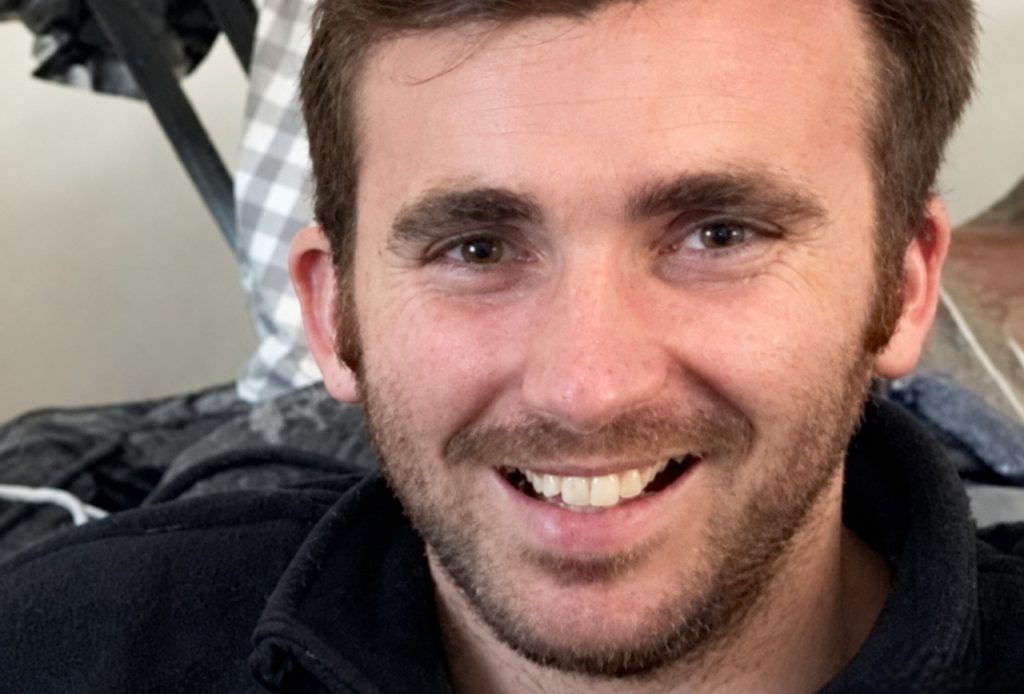
New Delhi: A British paratrooper died from injuries sustained in an explosion while observing Ukrainian troops test a new defensive capability away from the front line, an inquest has established. Lance Corporal George Hooley, 28, was wounded on December 6, 2025, and died in a Kyiv hospital three days later, becoming the first British service member reported to have died in Ukraine since Russia’s full-scale invasion in February 2022.
The findings, reported on Friday, clarify the sequence of events behind a death that Britain’s defence ministry had initially described as an accident. However, the location of the incident, the equipment involved and the precise cause of the explosion remain undisclosed.
The senior coroner for Oxfordshire, Darren Salter, concluded that Hooley suffered multiple injuries in an early-morning blast while attending the Ukrainian test. According to the inquest findings reported by Forces News, he received emergency treatment at the scene and subsequently underwent surgery, but doctors could not save him.
Evidence from British military doctors and Ukrainian medical documents established that Hooley had been treated at more than one hospital before his death in the capital. Salter said the accounts were consistent and found no suspicious circumstances surrounding the death.
A witness account published in a BBC report, described how suddenly the incident unfolded. Hooley’s commanding officer told military police investigators that he heard a loud bang and saw a flash shortly after arriving to meet Ukrainian troops but had his back to the explosion and did not see what caused it.
The inquest was conducted in writing after Salter rejected a media request for a public hearing. Hooley’s family had specifically requested that format, and other interested parties had been consulted and agreed, according to UK’s Independent.
Salter said he had sufficient information to answer the statutory questions, although evidence about the explosion’s circumstances was limited by sensitivity and secrecy. He also said details of the defensive capability would not have been disclosed at a public hearing; the ministry did not answer questions about whether the blast’s cause had been established or anyone held responsible.
The case also drew attention to Britain’s military presence inside Ukraine, where the government has acknowledged that a small number of personnel support Ukrainian forces and protect British diplomatic personnel. Their numbers have not been disclosed, and the presence of members of the Parachute Regiment was not publicly known before Hooley’s death.
Hooley joined the British Army in November 2015 and trained at the Infantry Training Centre in Catterick, finishing top of his cohort on the demanding pre-parachute selection course. The ministry’s official account of his service records previous deployments to Afghanistan, Africa and Eastern Europe.
He earned distinction grades on both his junior non-commissioned officers’ course and the Section Commanders’ Battle Course at Brecon. He was due to be promoted to corporal in January 2026 and had already been entrusted with the responsibilities of that rank during his deployment to Ukraine.
His commanders described a capable junior leader whose professionalism was matched by his ability to support colleagues and strengthen morale. In the ministry’s tribute, the defence secretary, John Healey, said Hooley had served with distinction and would be deeply missed.
Britain’s wider military assistance to Kyiv includes Operation Interflex, a multinational training programme launched in 2022. On June 5 this year, the ministry said it had trained more than 63,000 Ukrainian personnel, including about 11,000 military instructors, with support from 13 partner nations.
The programme is shifting from large-scale basic infantry instruction towards specialist training in aviation, medicine, engineering and logistics, reflecting Ukraine’s changing requirements. The public findings in Hooley’s case do not identify the technology he was observing or explain what caused the fatal blast, leaving those central details unresolved.