


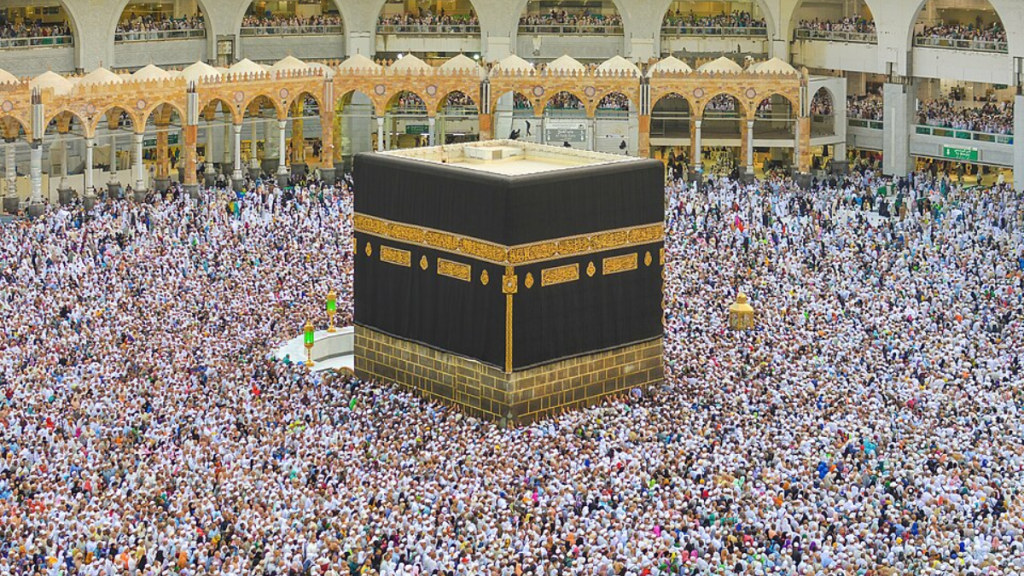
New Delhi: Saudi Arabia briefly issued alerts over possible danger in Mecca, Jeddah and Taif on Tuesday before lifting them within a short period, as the kingdom faces a fresh wave of missile and drone attacks from Yemen’s Iran-backed Houthi movement. The sudden warnings, particularly the alert in the holy city of Mecca, have raised questions about what triggered them and what Riyadh is preparing for as the conflict widens.
The Saudi civil defence first announced possible danger in Jeddah governorate and later issued similar alerts for Mecca city and Taif governorate. Within a short time, however, authorities announced that the danger had passed in all three areas and asked people to continue following civil defence instructions while avoiding gatherings and photography.
The Mecca warning was particularly significant because it was the first such alert issued for the holy city since the latest Middle East war began. Saudi authorities did not publicly specify what triggered the warnings or whether they were linked to a detected missile or drone threat, while the quick lifting of the alerts added to the uncertainty.
The warnings came a day after a series of ballistic missile and drone attacks launched from Yemen reportedly injured 13 people in southern Saudi Arabia. The latest attacks are part of a wider escalation in which the Houthis have demonstrated their ability to threaten Saudi cities and energy infrastructure while expanding their military presence around the Red Sea and the strategic Bab al-Mandab Strait.
The timing of the warnings for Mecca, Jeddah and Taif, along with their quick withdrawal, raises questions about Riyadh’s wider strategy as Houthi attacks intensify. One possibility is that Saudi Arabia could seek to use the growing threat to build a broader regional response against the Houthis, particularly by bringing Muslim countries such as Pakistan and Turkiye into a stronger security role.
There is no evidence that Saudi Arabia is planning a false-flag attack, and such a claim cannot be presented as an established fact. However, if a genuine attack in or near Mecca were blamed on the Houthis, it could create significant political pressure on other Muslim countries to support Saudi Arabia and take a stronger position against the group.
Could a wider Muslim response put pressure on Houthis?
This is where the Mecca alerts could take on a wider regional significance. Mecca is not simply another Saudi city, and any confirmed attack on the holy city could trigger a reaction across the Muslim world that would be very different from an attack on an oil facility or military target.
A genuine Houthi attack on Mecca could therefore strengthen Riyadh’s argument for a broader Muslim response. If countries such as Pakistan and Turkiye joined Saudi Arabia through diplomatic, economic or security measures, the combined pressure could raise the political and strategic cost for the Houthis.
That does not mean Pakistan or Turkiye would automatically enter the war. But a threat to a major Islamic holy site could make it much harder for Muslim countries to remain completely detached, particularly if the Houthis were held responsible for an attack.
Where does the Makkah Defence Alliance fit in?
The possibility of a wider response is particularly relevant because Saudi Arabia, Pakistan and Turkiye signed a defence pact in Mecca on August 7, establishing closer security cooperation and mutual support against external threats. For Riyadh, the agreement provides a framework for stronger ties with two major Muslim powers at a time when the kingdom is once again facing attacks from the Houthis.
So far, however, the pact has not produced any visible joint military action against the Houthis. This leaves Saudi Arabia with a difficult calculation. The kingdom has strengthened its security partnerships with Pakistan and Turkiye, but direct military involvement from either country would carry its own risks and could widen a conflict Riyadh itself has spent years trying to avoid.
For Saudi Arabia, the more useful outcome could be collective pressure rather than another full-scale war. A coordinated response from Muslim countries could strengthen Riyadh’s position, increase pressure on the Houthis and potentially allow Saudi Arabia to confront the threat without returning to the prolonged Yemen conflict.
Why Saudi Arabia fears another Houthi war
Riyadh spent years trying to move away from its war with the Houthis, which began in 2015 and killed an estimated 150,000 people while pushing Yemen towards famine. A 2022 ceasefire largely stopped the fighting and allowed Saudi crown prince, Mohammed bin Salman, to focus on economic reforms, investment and regional stability, but the latest Houthi gains could now pull the kingdom back into the conflict.
The former US ambassador, Michael Ratney, said the developments were “incredibly frustrating” for Riyadh because Saudi Arabia had never wanted the war and had feared many of the consequences now unfolding. The kingdom could increase military operations to push the Houthis away from the Red Sea coast, but doing so could prolong the conflict and expose Saudi oil facilities to heavier missile and drone attacks as Houthi weapons become more advanced.
As earlier reported by RNA Media, the Houthi threat also extends to Saudi oil facilities, ports and shipping routes, creating wider security and economic risks for Riyadh. Saudi Arabia’s energy ministry said on September 11 that its east-west oil pipeline had been targeted several times and shut down as a precaution, while ACLED’s Sherwan Hindreen Ali said the kingdom may have fewer interceptor missiles available because of the wider US-Iran conflict.
A prolonged Houthi activities could therefore put additional pressure on Saudi Arabia’s security and economy. Repeated attacks on critical infrastructure could disrupt energy exports and shipping while forcing Riyadh to divert resources from the economic transformation at the centre of its Vision 2030 plans.