


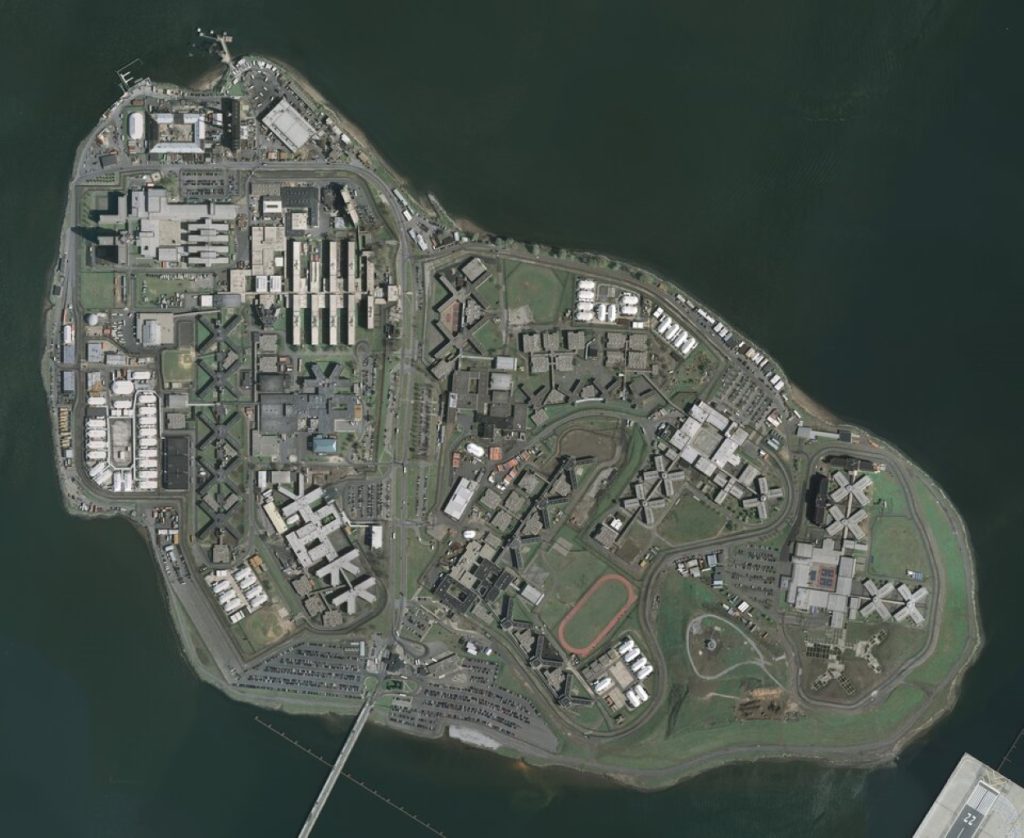
New Delhi: New York City’s mayor, Zohran Mamdani, has unveiled a $290 million strategy to shut down the notorious Rikers Island jail complex by December 2032, postponing its legally mandated closure by more than five years. The ambitious proposal envisages replacing the sprawling detention centre with four smaller jails, substantially reducing the number of people awaiting trial behind bars and overhauling a correctional system that has faced decades of allegations of violence, neglect and institutional failure.
The comprehensive closure blueprint announced on Friday represents the administration’s most detailed attempt to resolve a crisis that has troubled successive New York governments. However, its success will depend on completing expensive construction projects, securing legislative approval for a revised deadline and reducing the city’s jail population by nearly 40 per cent without compromising public safety.
Under the proposal, the current population of approximately 6,600 detainees would fall to no more than 5,500 by 2029 and eventually to 4,100 by the end of 2032. The transition would involve expanded alternatives to detention, faster judicial proceedings, improved rehabilitation services and new facilities designed to provide safer conditions for prisoners and correctional officers.
Four smaller jails to replace Rikers Island
The administration plans to distribute detainees among four purpose-built facilities in Brooklyn, the Bronx, Queens and Manhattan, bringing incarceration closer to courthouses, lawyers and prisoners’ families. Brooklyn’s replacement jail is scheduled to open in 2029, followed by facilities in the Bronx and Queens in 2031, with Manhattan’s jail expected to become operational in 2032.
The four facilities would provide approximately 4,160 beds, supplemented by 340 beds in hospital-based therapeutic units for detainees requiring specialized medical or psychiatric care. This would bring the proposed system’s total capacity to 4,500, leaving limited room for population increases if the administration fails to achieve its reduction targets.
Two therapeutic units at Woodhull Hospital in Brooklyn and North Central Bronx Hospital are expected to open in 2028, a year earlier than previously planned. Another unit at Bellevue Hospital began operating in April 2026, reflecting a broader effort to treat serious physical and mental health conditions outside conventional jail environments.
Why reducing prison population is crucial
The most difficult part of Mamdani’s strategy may be reducing the number of people held in custody rather than constructing replacement buildings. Approximately 85 per cent of Rikers detainees are awaiting trial, meaning most have not been convicted of the offences for which they are being held.
Court delays have contributed substantially to prolonged detention, with criminal cases in New York City taking an average of 431 days to conclude in 2025 – approximately 115 days longer than elsewhere in New York State. The administration intends to establish a coordinated effort involving judges, prosecutors, defence lawyers and government agencies to accelerate proceedings and reduce unnecessary detention.
The proposed changes include expanding supervised-release arrangements, restoring online bail-payment facilities and improving access to housing and rehabilitation programmes for people leaving custody. City officials argue that reducing avoidable incarceration and preventing repeat offending could ease pressure on the jail system without requiring the indiscriminate release of dangerous offenders.
The financial package includes $290 million in planned investments through fiscal year 2030, with $30 million allocated in the November financial plan and annual funding for population-reduction measures expected to reach $76 million in fiscal year 2028. A broader $146 million investment package for that fiscal year would support mental healthcare, substance-use treatment, employment training, education and assistance for victims of crime.
A notorious jail with history of violence
Located on an island in New York’s East River near LaGuardia Airport, Rikers has housed prisoners since the 1930s and acquired an international reputation for overcrowding, violence, inadequate medical care and allegations of mistreatment. Its conditions have repeatedly attracted judicial intervention, civil-rights litigation and campaigns demanding that the complex be permanently closed.
One particularly prominent case involved Kalief Browder, who spent approximately three years at Rikers, much of it in solitary confinement, after being accused of stealing a backpack. His case was eventually dismissed, but he died by suicide in 2015, aged 22, intensifying public scrutiny of prolonged pretrial detention and the treatment of vulnerable prisoners.
In 2019, the New York city council passed legislation requiring Rikers to close by August 31, 2027, but the programme subsequently encountered construction delays, political disagreements and disruption during the Covid-19 pandemic. Mamdani’s predecessor, Eric Adams, had questioned aspects of the borough-based replacement strategy, contributing to disagreements over the future of the complex.
The federal judiciary has also intervened after years of inadequate progress under court-monitored reforms. A judge appointed an outside remediation manager to address persistent failures involving security, staffing, management and the use of force – problems that cannot necessarily be eliminated merely by relocating prisoners to newer buildings.
Political and financial challenges remain
The proposed extension requires city council approval, and its speaker, Julie Menin, has acknowledged that earlier delays made the 2027 deadline increasingly unrealistic. However, councillors have demanded measurable milestones, and prosecutors have cautioned that reducing incarceration must not undermine the city’s progress in maintaining public safety.
Another unresolved issue is the financial burden of operating the new facilities, particularly staffing and long-term maintenance costs. Although an independent estimate suggests that closing Rikers could produce more than $1.2 billion in annual staffing savings, the administration has yet to publish its own detailed projections for the replacement system.
Meanwhile, the city has allocated $67.5 million for demolishing disused structures and intends to examine renewable energy installations, wastewater treatment facilities and other possible uses for the island. Ultimately, Mamdani’s plan will be judged not simply by whether Rikers closes in 2032, but by whether New York can establish a correctional system that balances public safety, judicial efficiency and humane treatment.