


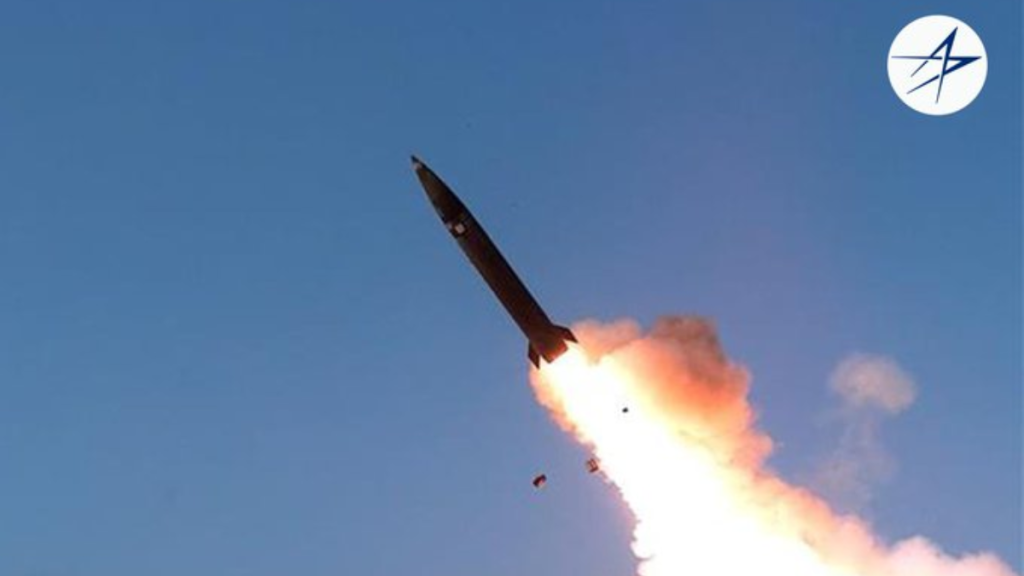
New Delhi: Lockheed Martin has secured a US Army contract worth up to $1.2 billion to produce the Increment 2 version of the Precision Strike Missile (PrSM), a long-range weapon being developed to replace the army tactical missile system (Atacms). The contract comes after the missile successfully completed its second flight test, demonstrating its ability to engage a moving maritime target.
The contract is an indefinite delivery, indefinite quantity (IDIQ) award, meaning it covers the initial purchase of PrSM (precision strike missile) Increment 2 missiles as well as future orders, follow-on production and continued development. Work will be carried out at Lockheed Martin facilities and across its US industrial base.
The PrSM is the US Army’s next-generation long-range precision strike weapon. It is being developed to complement the Atacms and increase the army’s long-range precision fires capability.
What makes Increment 2 different?
The most important feature of Increment 2 is that of a multimode seeker system that makes it possible for the missile to hit moving targets. The baseline PrSM is primarily intended for precision strikes against land targets, while Increment 2 is being developed to also engage moving and relocatable targets on land as well as moving maritime targets.
This means the missile is no longer limited to targets whose location is known and remains fixed. Its new guidance system is designed to help it deal with targets that can move or change position, including ships at sea. US Army documents describe the Increment 2 seeker as being intended for critical, time-sensitive, moving, maritime and relocatable land targets.
Second flight test clears another hurdle
PrSM Increment 2 completed its first flight test in March 2026. During that test, the missile flew about 350 kilometres after being launched from a Himars and demonstrated its new multimode seeker and maritime-strike capability.
The second flight test took place in August. According to Lockheed Martin, the test gathered additional flight data and involved launching the missile from a Himars, deploying protective covers and engaging the target. The company said the test demonstrated the missile’s ability to engage a moving maritime target. Further Increment 2 flight tests are scheduled for 2027.
From testing to production
The latest contract marks a shift for Increment 2 from development and flight testing towards production. Lockheed Martin said it will now begin producing the initial Increment 2 missiles while continuing flight tests and further development of the system.
The company is also expanding its PrSM production capacity. Lockheed Martin said it is working to quadruple production as the US Army moves towards larger orders and continues development of newer PrSM versions.
The broader PrSM programme is being developed in increments, allowing the US Army to add new capabilities over time rather than waiting for a completely new missile system. The US Army’s plans include further improvements to the weapon as it moves through different increments.
Why the maritime capability matters
The addition of a moving-target capability gives the US Army another option for dealing with targets that are not stationary. In particular, the ability to target moving ships expands PrSM beyond a conventional land attack role and gives it a maritime-strike function.
For the US Army, this adds another long-range option that can be used against moving targets from a land-based launcher. The US Army has described Increment 2 as part of its effort to strengthen long-range precision fires across both land and maritime environments.
Lockheed Martin’s latest contract therefore covers more than simply producing another batch of missiles. It moves the new Increment 2 version closer to operational deployment while the company continues testing and developing the system.
Lockheed Martin said additional flight tests and system maturation will continue as the first production missiles are built, with the company preparing to increase production as the US Army places larger Increment 2 orders.