


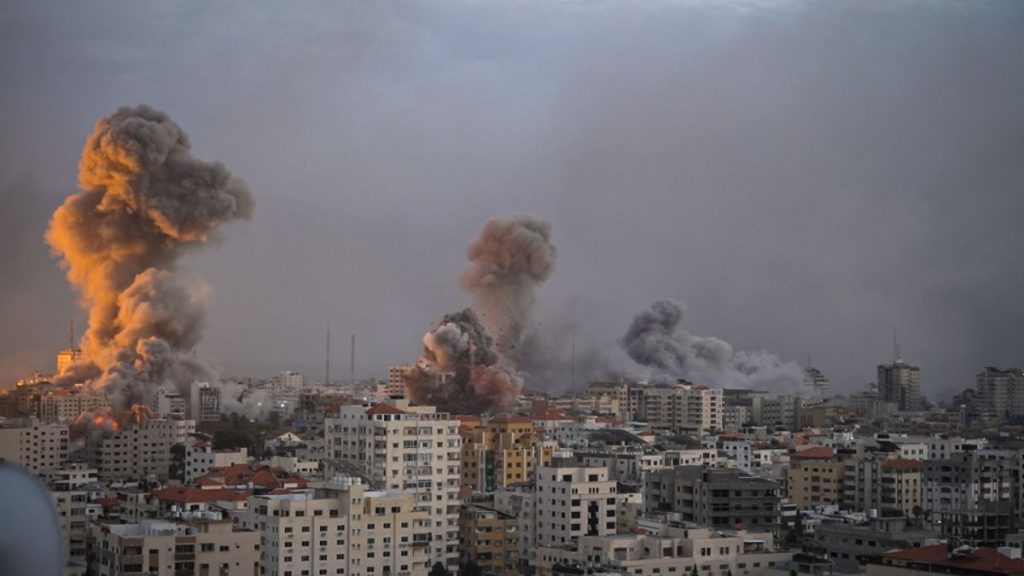
New Delhi: Israeli airstrikes killed at least 19 Palestinians across the Gaza strip on Sunday, according to Palestinian medical sources. The strikes hit residential buildings, displacement tents and civilian areas in multiple locations, including Gaza City, Khan Younis and Deir al-Balah.
Reports said an Israeli strike on a residential apartment in Al-Sousi Tower in western Gaza city killed three members of the Abu Taif family. Medical sources at Al-Shifa Hospital identified the victims as Abdullah Abu Taif, 33; his pregnant wife, Abeer Anan, 29; and their five-year-old son, Azzam.
In al-Qarara, northwest of Khan Younis, three members of the Al-Hams family were killed after their apartment was struck, while three others were injured, according to medical sources at Nasser Hospital, reports said. Medics also said an attack on a home in Deir el-Balah killed Kamal Abu Muailiq, 68; and his wife, Huda, 59.
Separate strikes were also reported across central and southern Gaza. In al-Qarara, northwest of Khan Younis, three members of the Al-Hams family were killed after their apartment was hit, while three others were wounded, according to medical sources at Nasser Hospital. Medics said another attack in Deir el-Balah killed Kamal Abu Muailiq, 68; and his wife, Huda, 59.
The reports further said that two Palestinians were killed in a drone strike on a tent sheltering displaced people in Gaza City’s Remal neighbourhood, while another strike on a vehicle in the city killed four more. Palestinian health officials described Sunday’s attacks as the highest daily death toll recorded in weeks.
Medical infrastructure also hit
A day earlier, on Saturday, an Israeli strike hit medicine warehouses attached to Al-Aqsa Martyrs Hospital in Deir al-Balah. Gaza’s health ministry said two storage facilities were destroyed and two more severely damaged.
The ministry’s director-general, Munir al-Bursh, said the destruction of medical supplies turned medicine and illness itself into “a tool of war”. Al Jazeera reported that Israeli warplanes had carried out strikes over the previous 48 hours, often without prior warning or evacuation orders.
Trump’s ceasefire plan, and Israel’s response
The latest strikes came despite the US president, Donald Trump, and the newly formed “Board of Peace” and International Stabilization Force announcing progress on a 20-point Gaza peace roadmap on Friday. The board said Hamas had accepted the implementation roadmap, although Israel has not officially endorsed the proposal.
Officials in the Israeli prime minister’s office said Israeli forces would not withdraw from Gaza until Hamas had fully surrendered its weapons. They also sought guarantees that Israel would be able to continue military operations if required.
Separately, the Israeli energy minister, Eli Cohen, said there was no agreement requiring Israel to suspend attacks while the plan was under negotiation. Speaking to Israel’s Army Radio, Cohen said Israel, which he claimed already controls about 70% of Gaza, should seek full control of the territory if Hamas does not disarm.
Toll since ceasefire
Despite the ceasefire that took effect on October 10, 2025, violence has continued across Gaza. According to Gaza health authorities and UN agencies, at least 1,222 Palestinians have been killed and 4,053 injured in Israeli attacks since the truce came into force.
The latest escalation follows what local health authorities described as the deadliest month of 2026 so far, with 152 Palestinians killed in July. Israeli affairs analyst Mohanad Mustafa told Al Jazeera that Israel has interpreted ceasefire terms differently from mediators, allowing military operations to continue. He said sustained US pressure remains the only factor likely to influence Israel’s position.