


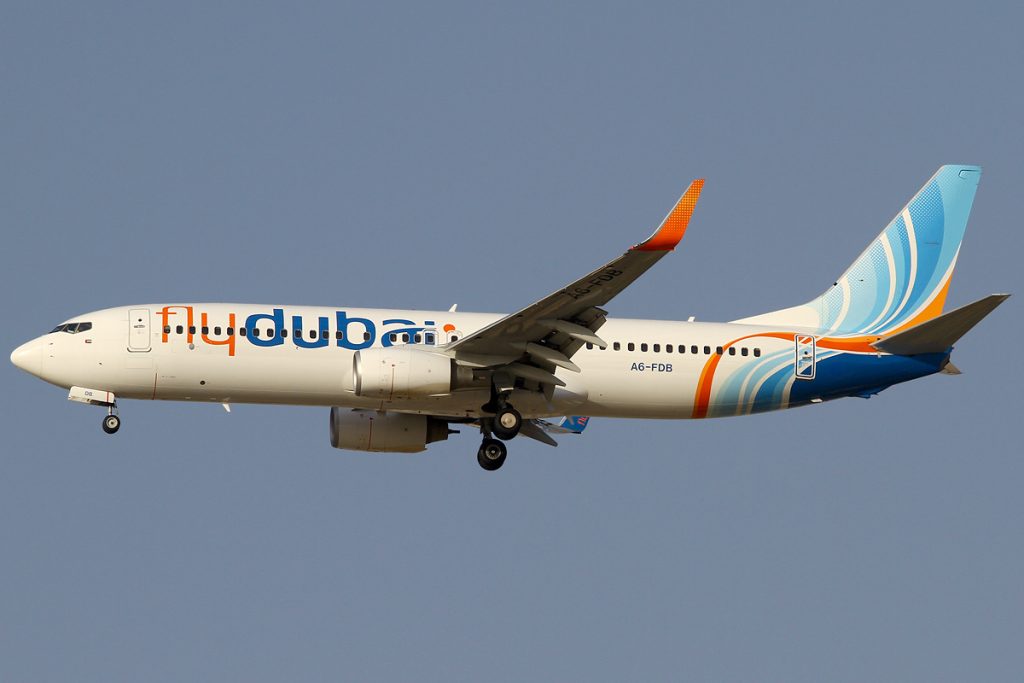
New Delhi: Israel scrambled fighter jets and prepared to shoot down a Tel Aviv-bound Flydubai aircraft if it continued towards the country after an attack on its Indian captain, according to a report citing Israeli sources. The aircraft instead diverted to Saudi Arabia after passengers and crew overpowered the alleged attacker, averting both a crash and a possible military interception.
The new account adds a military dimension to the emergency aboard Flight FZ1073 on September 30 when Captain Smit Machchhar was attacked inside the cockpit. Media reports said Israeli authorities activated contingency procedures designed for a hijacked passenger aircraft that could be used to strike a target on the ground.
According to the account, the Israeli Air Force received no response when it tried to contact the cockpit after the aircraft descended sharply. An emergency committee was convened, a command centre established and Israeli airspace closed as fighters were dispatched.
Israel recalled its fighters when the aircraft turned towards Saudi Arabia, whose air force reportedly scrambled its own jets. The flight subsequently landed at Tabuk, in northwestern Saudi Arabia, after pilots travelling aboard helped regain control.
Had the aircraft continued closer, Israeli fighters would reportedly have entered Jordanian airspace to inspect its cockpit and cabin, looking for signs of a hijacking. Their observations would have been passed to the emergency committee, with the defence minister and prime minister brought into the decision if the suspected hijackers remained unresponsive.
Only the prime minister could have authorized shooting down the aircraft, the report said, describing the measure as a last resort to prevent an attack on an airport or densely populated target. The reported preparations do not establish that a shoot-down order was issued or that Israeli fighters actually intercepted the jet.
The civilian emergency began while the Boeing 737 Max was flying from Dubai towards Tel Aviv, with most passengers reported to be Israeli. The UAE prosecutor general subsequently said the co-pilot had attacked Machchhar with an emergency crash axe and described the incident as a terrorist attack.
Despite his injuries, Machchhar managed to unlock the cockpit door, enabling passengers and crew to enter and restrain the attacker. In a video call with the prime minister, Narendra Modi, he described falling to the floor, recognizing that the aircraft was descending and using his remaining strength to open the door.
Independent flight-tracking data published by Flightradar24 recorded steep changes in altitude before the aircraft stabilized at approximately 15,000 feet. It transmitted code 7700, indicating a general emergency, then code 7500, indicating unlawful interference, before returning to the emergency code as it approached Tabuk.
The investigation has also produced allegations of advance planning, although these remain attributed to sources familiar with the inquiry. Reuters reported on Monday that Israeli officials said the suspect had sought employment with an airline serving Tel Aviv and intended to crash the aircraft into Ben Gurion Airport.
Sources have identified the suspect as Hamam al-Hammami, an Omani national, but UAE authorities and Flydubai had not publicly disclosed his identity in that report. He was transferred from Saudi Arabia to UAE custody, and Reuters said no formal charges had been announced at the time of publication.
Attention is now turning to how the suspect passed employment and aviation-security checks. The Associated Press reported, citing officials and other informed sources, that he had previously been removed from flying duties in Oman over concerns about extremist views, although the details of those concerns were not disclosed.
The prime minister of Israel, Benjamin Netanyahu, has ordered a review of civil aviation security, while questions persist over responsibility for screening foreign crews. Although the US president, Donald Trump, suggested a possible Iranian connection, regional officials had found no Iranian nexus, leaving the suspect’s motives and any outside involvement subject to the continuing investigation.