


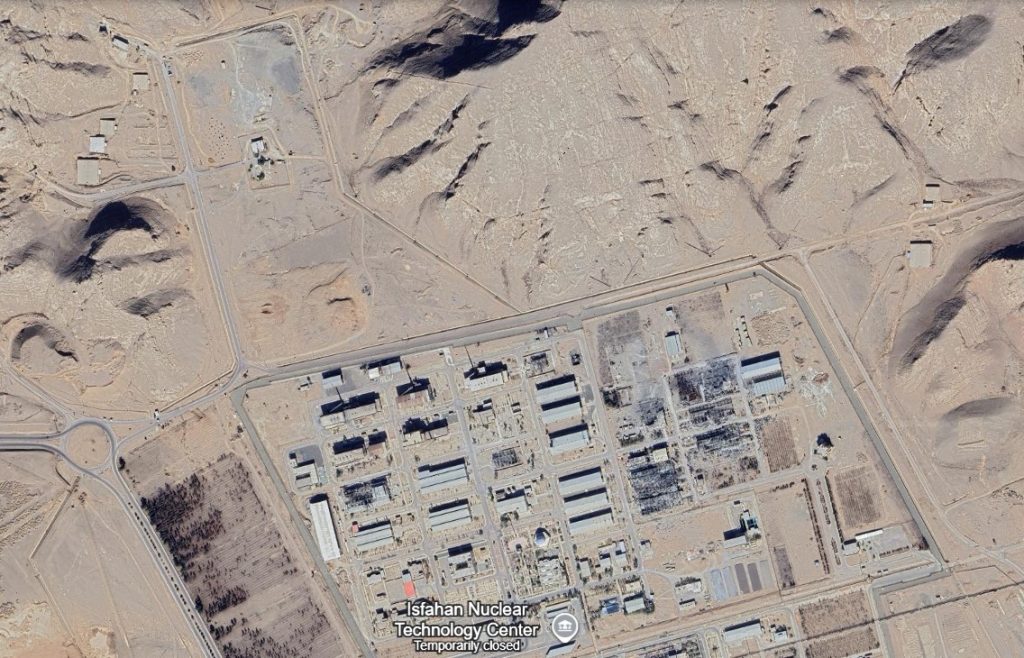
New Delhi: The United Nations’ nuclear watchdog has renewed its demand for access to Iran’s nuclear installations, warning that prolonged restrictions on inspections have left critical questions unanswered about Tehran’s enriched uranium reserves and the activities of an underground facility near Isfahan. The latest warning from the International Atomic Energy Agency comes as Iran insists that international monitoring cannot return to normal under continuing threats of American military action, deepening a diplomatic impasse with significant consequences for nuclear security in West Asia.
In a confidential report circulated to member states on Friday, the IAEA urged Iran to adopt a phased approach towards restoring inspections, emphasizing that independent verification was essential to establishing whether nuclear material remained exclusively in peaceful use. The agency expressed particular concern about the Isfahan Fuel Enrichment Plant (IFEP), a facility declared by Tehran in June 2025 but never examined by international inspectors.
The report, which is expected to feature prominently at next week’s meeting of the IAEA’s 35-member board of governors, reflects growing international concern over the breakdown of monitoring arrangements following successive military confrontations involving Iran, Israel and the United States. Although Tehran has permitted limited inspections at certain unaffected installations, the agency remains unable to establish the present condition of several strategically important nuclear facilities or independently account for highly enriched uranium accumulated before the attacks.
Why Isfahan facility has become a major concern
The most immediate concern centres on the underground enrichment installation at Isfahan, where Iranian authorities have neither provided inspectors with access nor supplied sufficient technical information about the facility’s configuration. According to a Reuters report published on Friday, the IAEA cannot establish the plant’s precise location, its safeguards status or whether nuclear material is currently stored inside it.
Iran formally notified the agency about the installation on June 12, 2025, and inspectors were scheduled to examine it the following day, but the outbreak of Israeli military strikes prevented that visit. Subsequent American and Israeli attacks damaged or destroyed several enrichment-related installations, including facilities associated with Isfahan, leaving the watchdog without a reliable means of establishing what survived or whether material was relocated.
The uncertainty is particularly significant because the director general of the IAEA, Rafael Mariano Grossi, indicated earlier this year that substantial quantities of Iran’s most highly enriched uranium might have been stored within the Isfahan tunnel complex. However, the agency has not established that the newly declared enrichment plant is operational, that uranium enrichment is taking place there or that nuclear material has been diverted for military purposes.
Unresolved question of enriched uranium
Before inspections were disrupted in June 2025, the IAEA estimated that Iran possessed approximately 440.9 kilograms of uranium enriched to 60 per cent purity, substantially exceeding the limits established under the 2015 nuclear agreement. Uranium enriched to this level remains below the roughly 90 per cent generally associated with nuclear weapons, but it represents a considerable technical advance beyond the low-enriched uranium ordinarily used in commercial nuclear power reactors.
The distinction matters because uranium enrichment becomes progressively more demanding at lower concentrations, meaning that material already enriched to 60 per cent could potentially be processed further towards weapons-grade purity relatively quickly if suitable infrastructure remained available. Nevertheless, possessing highly enriched uranium does not, by itself, establish the existence of a nuclear weapons programme, since producing a functioning nuclear explosive device also requires additional technical capabilities and decisions.
The immediate problem for international inspectors is not simply the quantity Iran previously possessed but their inability to determine how much remains, where it is located and whether its condition has changed. Without physical inspections, updated inventories and access to relevant facilities, the agency cannot independently verify Tehran’s declarations or provide reliable assurances about the non-diversion of nuclear material.
Iran links inspections to military threats
Tehran maintains that the restrictions are a consequence of American and Israeli attacks rather than evidence of an intention to conceal prohibited nuclear activities. Iranian authorities have told the IAEA that negotiations on restoring routine inspections cannot proceed under continuing American threats, particularly when nuclear installations themselves remain potential military targets.
Iran’s foreign ministry spokesman, Esmaeil Baghaei, reiterated this week that Tehran remained committed to the Treaty on the Non-Proliferation of Nuclear Weapons or Nuclear Non-Proliferation Treaty (NPT), even as security concerns constrained cooperation with inspectors. The government has argued that the circumstances created by military attacks must be addressed before normal safeguards arrangements can be restored.
The IAEA acknowledges that the attacks have created exceptional operational and security difficulties but maintains that Iran’s treaty-related inspection obligations remain applicable. The agency has therefore proposed gradual technical measures that could permit inspectors to return without requiring an immediate resolution of the wider political confrontation.
Limited cooperation has continued at the Bushehr nuclear power plant, where inspectors conducted verification activities in September, demonstrating that some technical engagement remains possible. The absence of comparable access to damaged enrichment facilities, however, leaves the most sensitive questions surrounding Iran’s nuclear programme unresolved.
Why the dispute matters beyond Iran
The latest report also adds to diplomatic tensions following the IAEA board’s September 9 decision to report Iran’s safeguards non-compliance to the UN security council, a move opposed by Russia and China. According to the Arms Control Association, the resolution passed by 23 votes to three, reflecting substantial international concern despite disagreements over how Tehran should be treated.
The dispute has implications extending beyond nuclear proliferation, particularly as the continuing confrontation in West Asia threatens regional stability, energy supplies and maritime security around the Persian Gulf and Strait of Hormuz. For India, which has significant economic, commercial and strategic interests across the region, a further deterioration in Iranian nuclear diplomacy could complicate an already fragile security environment.
The fundamental difficulty is that military strikes may damage nuclear infrastructure without necessarily eliminating nuclear expertise, enriched material or the technological capacity to rebuild. Conversely, restricting inspections deprives the international community of independently verified information, increasing the possibility that uncertainty itself could drive further military escalation.
For now, the IAEA’s position remains that renewed access and reliable verification offer the most practical route towards reducing uncertainty and rebuilding diplomatic confidence. Whether Tehran and Washington can establish conditions for such cooperation will determine whether the present monitoring crisis becomes a foundation for renewed negotiations or another source of confrontation in an already volatile region.