


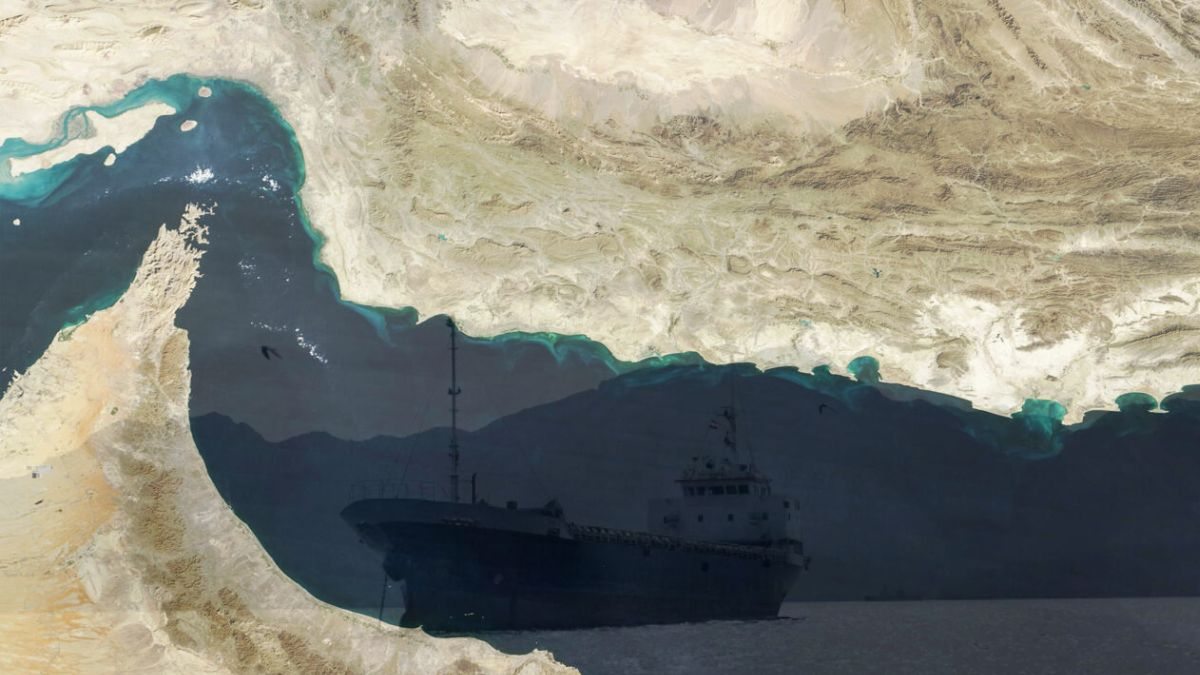
Iran, on Sunday (May 10, 2026), warned France and the United Kingdom that its armed forces would launch “a decisive and immediate response” to any warships deployed by them in the Strait of Hormuz on escort missions.
The immediate provocation for the Iranian warning was a two-day meeting beginning on Monday (May 11, 2026) that France and the United Kingdom hosted to decide on a European naval mission in the Strait of Hormuz to escort cargo ships stuck there due to an Iranian blockade.
“We remind them that both in times of war and in times of peace, only the Islamic Republic of Iran can establish security in this Strait (of Hormuz) and it will not allow any country to interfere in such matters,” Iranian Deputy Foreign Minister Kazem Gharibabadi posted on X.
“Any deployment and stationing of extra-regional destroyers around the Strait of Hormuz, under the pretext of ‘protecting shipping’ is nothing but an escalation of the crisis, the militarisation of a vital waterway, and an attempt to cover up the true root of insecurity in the region,” he said.
France and the United Kingdom are leading efforts to launch a European naval coalition to provide safety to the merchant vessels transiting the Strait of Hormuz.
The UK Defence Ministry announced, on Saturday (May 9), that it would send a destroyer to West Asia, arguing that this would strengthen confidence among commercial shipping and support mine-clearing efforts once hostilities end.
“The pre-positioning of HMS Dragon is part of prudent planning that will ensure that the UK is ready, as part of a multinational coalition jointly led by the UK and France, to secure the strait, when conditions allow,” a ministry spokesperson said.
However, French President Emmanuel Macron clarified on Sunday (May 10) that France had “never envisaged” a naval deployment in the Strait of Hormuz, but rather a security mission that would be “coordinated with Iran.”
Over 40 nations are meeting in London to work out their military plan for a European-led naval mission in the Strait of Hormuz once there’s a stable ceasefire. This coalition would offer demining, escorting, and air policing capabilities led by the UK and France.
“We are turning diplomatic agreement into practical military plans to restore confidence for shipping through the Strait of Hormuz,” UK Defence Secretary John Healey, who will co-chair the gathering along with his French counterpart Catherine Vautrin, said.
The meeting is similar to the one held in April, when over 44 nations’ military planners discussed the practicalities of a multinational mission led by the UK and France to protect navigation in the key waterway.
Iran also warned on Sunday (May 10) that nations implementing the American sanctions against it would face difficulties transiting the Strait of Hormuz.
In early May, the US imposed new sanctions on Iranian interests and warned ships against paying a toll to Iranian authorities to pass through the narrow waterway.
The US and the UK have drafted a UN resolution calling on Iran to halt restrictions on shipping through the waterway, which Tehran blocked on February 28 after a joint airstrike by the Israelis and the Americans.
“Countries that comply with the United States by imposing sanctions on the Islamic Republic of Iran will certainly face difficulties crossing the strait,” Iranian Army official Mohammad Akraminia said.
“We have established a new legal and security system in the Strait of Hormuz. From now on, any vessel wishing to pass through it must coordinate with us,” he said. The system was “now in force” and would bring “economic, security, and political gains,” he added.
Iran has effectively shut the Strait of Hormuz, through which about a fifth of the world’s oil and liquefied natural gas typically flows, after war erupted in West Asia. The US has also imposed a naval blockade since April 13, following a ceasefire announcement on April 8.
US President Donald Trump previously criticised the NATO partners for not committing a naval force to help reopen the Strait of Hormuz. He specifically called out the UK for offering to send aircraft carriers much later than he said the US needed them, mocking the ships as “toys.”