


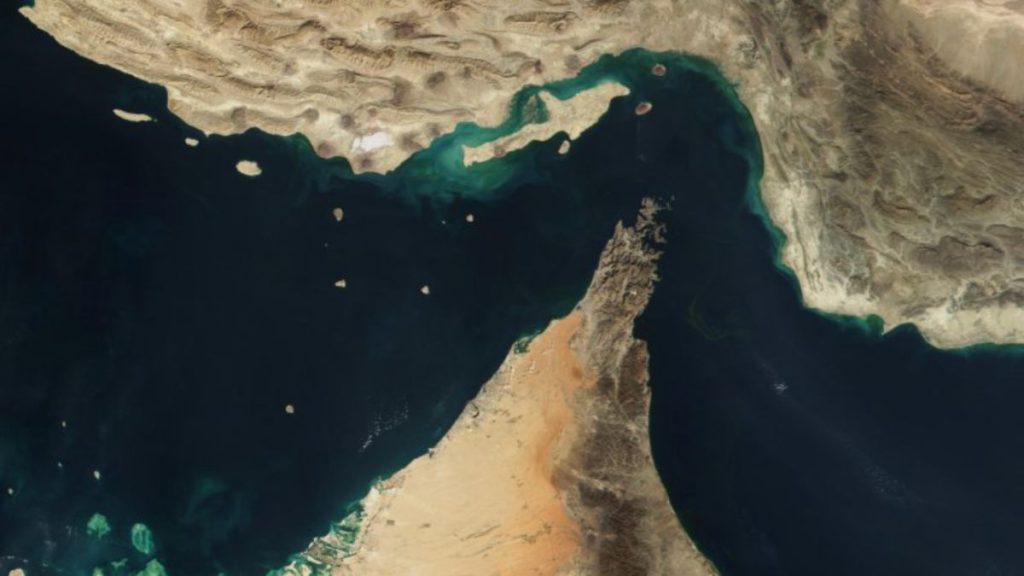
New Delhi: Iran has said the Strait of Hormuz will not reopen fully unless the US meets a set of demands, as talks with Oman continue over a possible arrangement for commercial shipping. The conditions come as the US maintains its blockade of Iran and looks for a way to allow vessels to pass safely through the strategic waterway.
Iran’s Supreme National Security Council said the Strait of Hormuz would stay closed until Washington changes its policy towards Tehran. According to the reports, its demands include, an end to US threats and the naval blockade, withdrawal of US forces, compensation for war damage, lifting of sanctions, and the release of frozen Iranian funds.
The Iranian foreign minister, Abbas Araghchi, said talks with Oman over arrangements for shipping through the strait were nearing their final stage. However, he made clear that reaching an understanding on navigation would not automatically mean that the waterway would fully reopen.
The position puts the future of the strait at the centre of the wider US-Iran confrontation. Tehran is seeking concessions beyond shipping, while Washington wants commercial traffic to move without giving Iran greater control over an international maritime route.
US blockade continues
The diplomatic efforts are taking place alongside continued US military action against shipping linked to Iranian ports. Centcom said it had redirected 53 commercial vessels, disabled 2 and boarded 2 others as part of its enforcement of the blockade.
Centcom also said more than 30 vessels had been allowed to pass for humanitarian purposes.
The US military has continued to keep its carrier-based aircraft ready during the operation. Centcom released footage showing sailors maintaining F/A-18E Super Hornets aboard the USS Abraham Lincoln as the carrier operated in support of the blockade.
The command also released footage of a US Marine Corps F-35C fighter launching from the carrier while it was operating in the Arabian Sea. The military activity comes as Washington maintains pressure on Tehran while diplomatic efforts continue.
Fresh attack reported on shipping
A separate attack on commercial shipping was reported in the Strait of Hormuz. The UAE said Iran targeted an Abu Dhabi National Oil Company (ADNOC) linked tanker with a missile, but no casualties were reported.
The UK Maritime Trade Operations agency also reported that a vessel off Oman was hit by an unidentified projectile. It was unclear whether the two incidents involved the same vessel.
The UAE said the incident was part of a wider pattern of attacks on commercial vessels since the conflict began. ADNOC said more than a dozen of its vessels had come under missile or drone attacks, with one crew member killed and 20 others injured.
Oman has emerged as a key channel for discussions over the strait. Muscat said talks with Iran were continuing in a positive atmosphere and warned that further attacks on commercial vessels could complicate efforts to restore maritime traffic.
The discussions are focused on creating a temporary arrangement under which commercial vessels could move through the waterway using designated routes. Earlier reporting indicated that Iran and Oman were considering an arrangement in which the two countries would oversee different parts of the passage.
The proposed system is intended to address the immediate problem of getting ships moving again. But any arrangement remains dependent on the broader dispute between Iran and the US, including disagreements over the blockade and the terms of a wider settlement.
Washington seeks a safe route
The US vice-president, JD Vance, said Washington was also working on a system that could allow commercial vessels to pass through the Strait of Hormuz safely. He said the discussions with Iran included a commitment that commercial ships would not be attacked.
Vance said Washington wanted to increase the flow of oil and gas through the waterway while continuing to put pressure on Tehran. He also indicated that the US was looking beyond the immediate shipping issue and wanted Iran to make longer-term changes in its relationship with Washington.
That creates a difficult situation for both sides. Iran wants the blockade and wider US pressure addressed before fully reopening the route, while the US wants shipping restored without giving Tehran concessions that could strengthen its position.
The Strait of Hormuz remains critical because of its role in the movement of oil and gas from the Gulf. Any prolonged disruption therefore affects not only Iran and the US, but also shipping companies, energy markets and countries dependent on supplies passing through the region.