


Iran, on Wednesday (May 13, 2026), said it would welcome any Indian initiative to end the West Asian war and ensure security and stability in the region, even as it held up a BRICS consensus on a joint declaration on the war with the US and Israel.
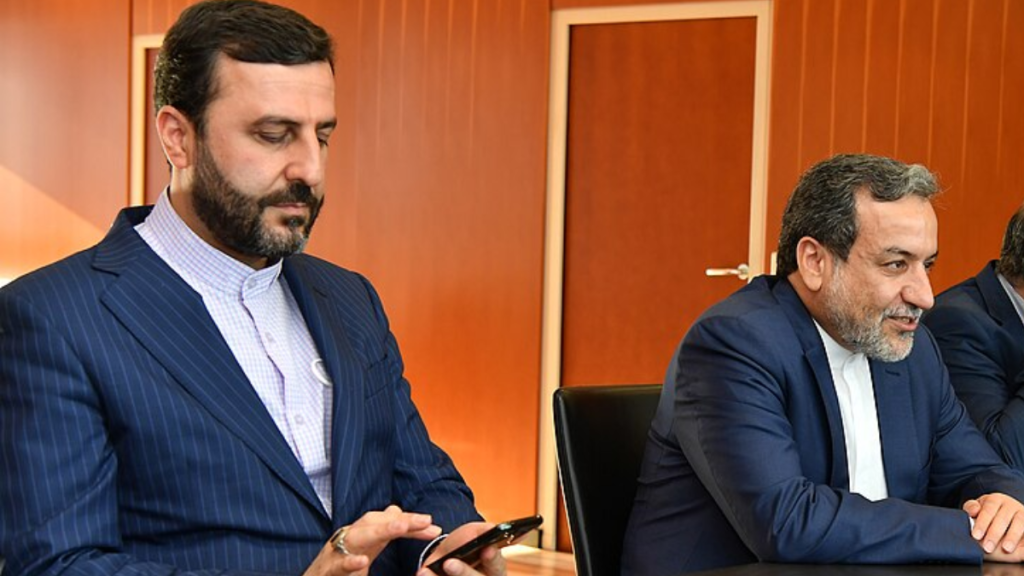
Iran’s Deputy Foreign Minister Kazem Gharibabadi, who was in New Delhi ahead of the BRICS foreign ministers meeting, told a group of journalists that Iran was fully prepared for both negotiations with the US that led to the “termination of war” or to resume hostilities.
He said Iran would welcome any initiative by the “great nation of India” that brought peace, security, and stability to the West Asian region. India and other developing nations, he said, should “do their best to prevent the resumption of war.”
Gharibadai was interacting with the media before the Iranian Foreign Minister Abbas Araghchi arrived for the meeting, when he made these remarks.
“For Iran and the rest of the world, insecurity, instability, and war will have negative consequences,” he said. Dismissing the impression that this is a war between Iran, Israel, and the US, he said this conflict has “global consequences and effects.”
“It’s the responsibility of developing and independent countries like India, which look toward peace, stability, and security,” he added.
Gharibabadi, who met Secretary (West) Sibi George of the External Affairs Ministry, said he had requested the Indian side to come up with an initiative to end the West Asia conflict. “India is a big, important country. If India comes up with an initiative, we will welcome that,” he said.
The Iranian official said a BRICS member state was holding up consensus in finalising a joint declaration for the grouping’s summit to be held in September by insisting on the inclusion of text condemning Iran.
Though he did not directly name the country, it was apparent he was referring to the United Arab Emirates (UAE). Differences between Iran and the UAE have held up joint statements in recent BRICS meetings.
“We are in favour of having the final declaration because first, this is happening during the presidency of India, and we want to have a successful meeting. Second, it’s not good to signal to the world that BRICS has been divided,” Gharibabadi said.
Asked if he was referring to the UAE, he replied that only one of Iran’s neighbours is a member of BRICS and hoped this country would show flexibility in finalising the joint declaration.
The UAE joined BRICS when the grouping was expanded in 2024. While Saudi Arabia too was invited to join, it has not yet taken on full membership of the bloc.
“There is one neighbouring country of Iran that is insisting on condemning Iran in the final declaration,” Gharibabadi said. “We have not attacked our neighbouring countries… We have targeted military bases of the US in neighbouring countries.”
He claimed that Iran had documented thousands of attacks by US fighter jets and missiles launched from its neighbouring nations. “It is unacceptable for Iran to be condemned in the joint declaration without any condemnation of the actions of Israel and the US,” he said
Gharibabadi replied in the affirmative when asked if the UAE and Saudi Arabia carried out any attacks on Iran. He referred to the Iranian documentation of attacks from the two nations and the criticism and warning Tehran issued to them.
“We have sent the documents to them to show that they engaged directly. This new piece of information that has been released in the Western media, we had it before,” he added.
Gharibabadi made it clear that all vessels using the Strait of Hormuz will henceforth have to pay a fee or charge for navigation and rescue services provided by Iran and Oman.
“Iran and Oman, as the two coastal states, are providing some services…We haven’t charged vessels in the past decades, but now we have come to the conclusion that it’s time to charge the vessels,” he said.
“It’s not a toll. We are not a member of the UN Convention on the Law of the Sea of 1982, so we do not have any international obligation,” he said.
The protocol and arrangements being finalised will be non-discriminatory, in accordance with international law, and transparent, he added.
Meanwhile, India is expected to strongly raise the issue of safe maritime passage through the strategically vital Strait of Hormuz during bilateral talks between External Affairs Minister S Jaishankar and Araghchi on the sidelines of the BRICS meeting.
The talks assume significance as at least 13 Indian-flagged vessels remain stranded in and around the Persian Gulf amid continuing tensions linked to the ongoing West Asia conflict and disruptions around the Strait of Hormuz, one of the world’s most critical oil shipping chokepoints.