


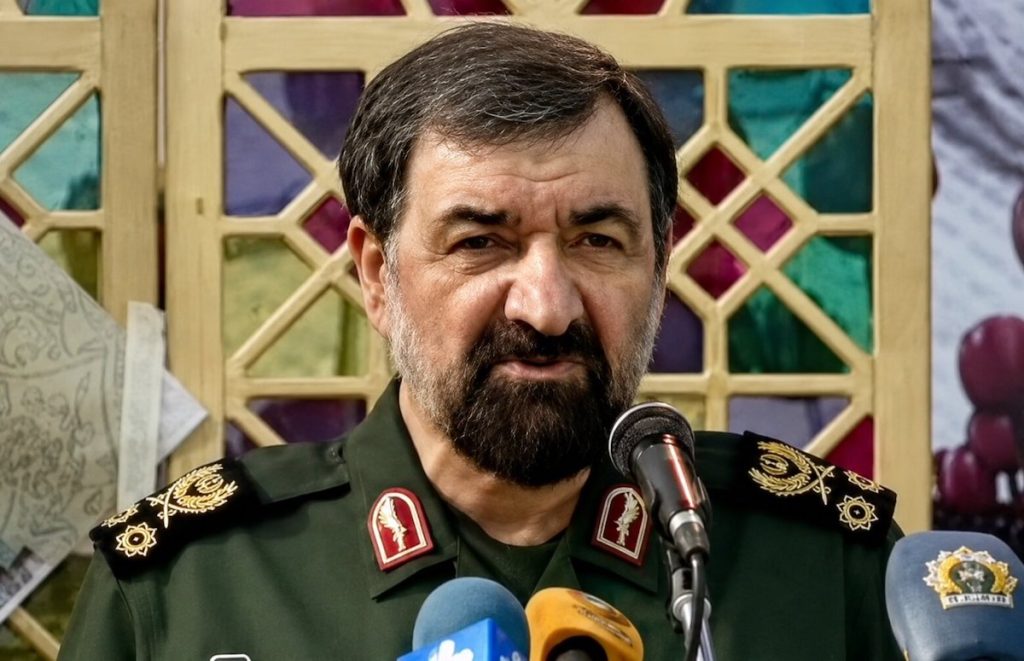
New Delhi: Iran has appointed the former commander in chief of the Islamic Revolutionary Guard Corps, Mohsen Rezaei, as the new secretary of its Supreme National Security Council. The move, confirmed by Tehran on Sunday, hands one of the regime’s most consequential offices to a hardline veteran of the Iran-Iraq war, just months after the post’s previous holder was assassinated.
The appointment follows the resignation of Rezaei’s predecessor as secretary, Mohammad Bagher Zolghadr, who had held the post only since March. Zolghadr had stepped into the role after his own predecessor, Ali Larijani, was killed in a US-Israeli strike on March 17 amid the war that has engulfed Iran since February that year.
That conflict had already claimed an even more senior casualty. The then supreme leader, Ali Khamenei, was killed in a US-Israeli strike on February 28, 2026, and was succeeded by his son, the current supreme leader, Ayatollah Mojtaba Khamenei.
Announcing the appointment, the spokesman for the Iranian presidency, Mehdi Tabatabaei, said Rezaei’s elevation followed Zolghadr’s move to new responsibilities. Zolghadr has, in turn, been appointed political adviser to the supreme leader, who thanked him for his service in a separate decree.
Two roles, one appointment
The president of Iran, Masoud Pezeshkian, named Rezaei as secretary of the security council, while the supreme leader separately designated him his personal representative on the same body. It is a dual appointment that concentrates considerable authority in one figure, echoing the structure of Larijani’s own tenure before his death.
Analysts read the move as an attempt by the supreme leader to tighten his grip on a council whose standing has been battered by the loss of two secretaries within five months. It also signals continuity with the security establishment’s hardline wing at a moment when Tehran remains locked in confrontation with Washington and Tel Aviv.
Rezaei, 71, is no newcomer to the summit of Iran’s security apparatus. He led the Revolutionary Guards from 1981 to 1997, a command spanning almost the entirety of the Iran-Iraq war, and later spent more than two decades as secretary of the Expediency Discernment Council, the body that arbitrates disputes between parliament and the Guardian Council.
He also served as vice-president for economic affairs under the late president, Ebrahim Raisi, between 2021 and 2023, and has stood unsuccessfully for the presidency on several occasions. More recently, Rezaei worked as a military adviser to the supreme leader as the war with the US and Israel unfolded.
His public remarks have already signalled where his priorities lie. In July, Rezaei described control of the Strait of Hormuz – now central to the standoff with Washington – as “more important than dozens of atomic bombs”.
Why it matters beyond Tehran
The Supreme National Security Council outranks Iran’s parliament on matters of state once its decisions are endorsed by the supreme leader, making its secretary one of the most powerful unelected officials in the country. Placing a Revolutionary Guards loyalist at its head suggests Tehran’s wartime leadership is closing ranks around figures steeped in military rather than diplomatic tradition.
For India, the appointment carries its own weight. New Delhi depends on the Strait of Hormuz for a substantial share of its crude oil and liquefied natural gas imports, and continues to operate the Chabahar port under a long-term arrangement with Tehran despite the region’s turbulence.
A security council chief openly preoccupied with Hormuz’s strategic value is unlikely to ease the calculations of Indian shipping and energy planners already contending with elevated war-risk premiums in the Gulf. New Delhi has so far maintained studied neutrality in the Iran-US-Israel conflict, and Rezaei’s rise does little to simplify that balancing act in the months ahead.