


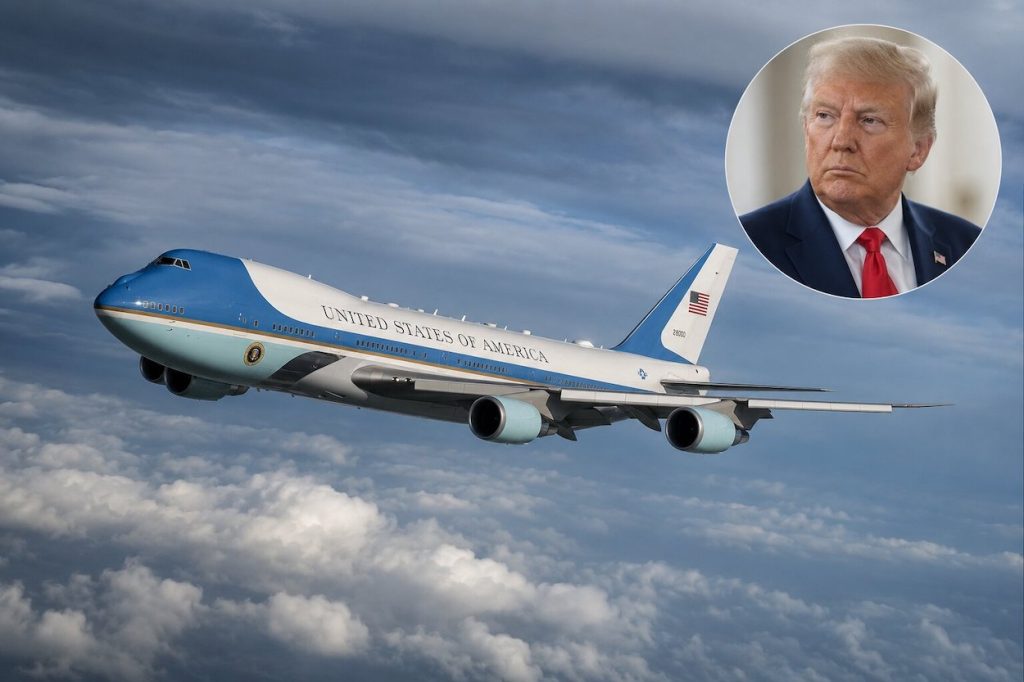
New Delhi: The US president, Donald Trump, was secretly flown out of Turkey aboard a smaller military aircraft after intelligence indicated that Iran knew the exact floor of his Ankara hotel and could target the aircraft carrying him with a surface-to-air missile. The extraordinary operation on July 8, 2026 used the familiar presidential jet as an apparent decoy after Trump publicly boarded it at the end of the Nato summit.
US intelligence had received information from several sources about a possible missile attack, including a report that a person had been seen with a shoulder-fired weapon near the summit, the New York Times reported, citing two US officials. The intelligence suggested that the threat was directed at whichever aircraft carried Trump, rather than solely at one particular presidential jet.
The apparent precision of Iran’s knowledge – extending to the floor of the building where Trump was staying – particularly alarmed US officials. The information contributed to a hastily devised plan to conceal his departure from Ankara and mislead anyone monitoring the presidential aircraft.
However, subsequent reporting has raised questions about the intelligence behind the operation. The Washington Post reported that CIA analysts regarded the Israeli-supplied warning as “low confidence” and did not consider the underlying information compelling, although the Secret Service decided that it could not risk dismissing it.
A three-aircraft deception
Trump had arrived in Ankara aboard a refurbished Boeing 747-8 donated by Qatar and intended to serve as an interim presidential aircraft. Before his departure, he unexpectedly announced that he would fly to RAF Mildenhall in Britain aboard an older blue-and-white presidential jet “for old time’s sake”, while the Qatari aircraft travelled ahead.
Television cameras recorded Trump boarding the older aircraft at Ankara airport, creating the impression that he would leave Turkey aboard it. Once out of public view, however, he and several aides were moved from the aircraft in an airport catering truck and driven to a smaller, less conspicuous US Air Force C-32A.
The C-32A, a military version of the Boeing 757-200 used to transport senior US leaders, carried Trump to Britain and was escorted by F-16 fighter aircraft, according to the Post. The older presidential jet departed separately and reached RAF Mildenhall minutes later, carrying senior administration officials, White House staff and the travelling press corps.
Trump was later seen descending from the older aircraft at Mildenhall, although it remains unclear how he was transferred back to it after landing. He subsequently boarded the Qatari-donated Boeing 747-8 for the onward journey to the United States.
Technically, Air Force One is the radio call sign assigned to any US Air Force aircraft carrying the president, rather than the permanent name of a particular plane. The C-32A therefore became Air Force One while Trump was aboard, while the larger aircraft serving as the visual decoy ceased to carry that designation, according to the US Air Force.
Senior officials remained on decoy aircraft
The US secretary of state, Marco Rubio, and the US treasury secretary, Scott Bessent, remained on the older presidential jet, along with the White House communications director, Steven Cheung, other officials and a 13-member press pool. Rubio had been briefed about the aircraft switch, according to Reuters, although accounts differ over how much other passengers knew about the threat.
The US defence secretary, Pete Hegseth, travelled with Trump aboard the C-32A, while the White House deputy chief of staff, Dan Scavino, Trump’s executive assistant, Natalie Harp, and the director of Oval Office operations, Walt Nauta, were reportedly moved with him in the catering truck. Journalists and some White House employees aboard the larger aircraft apparently believed that Trump was travelling with them and were instructed to keep their window blinds closed.
The arrangement has prompted questions about whether officials, journalists and military personnel aboard the apparent decoy were unnecessarily exposed to danger. Associated Press reported that the episode also raised concerns because Rubio and Bessent occupy senior positions in the presidential line of succession.
Trump later confirmed that the Secret Service had instructed him to change aircraft and said he followed its recommendations without challenging the decision. He argued, without offering evidence, that the smaller aircraft carrying him may have faced the greater danger because an attacker could have anticipated the deception.
Credibility of warning questioned
A person briefed on the operation told Reuters that the Secret Service regarded the warning as credible and imminent and had little time to prepare. A second source, however, said the intelligence indicated hostile intent but did not reveal a settled operational plan, which was one reason both aircraft were permitted to leave Ankara.
The Post reported that Israel had passed the warning to the CIA, whose analysts expressed doubts about its reliability to administration officials. Some US officials reportedly suspected that the intelligence may have been intended partly to influence Trump’s approach towards Iran, although the White House and the Israeli government have not publicly addressed that claim in detail.
The White House said only that Trump had faced several threats, including from Iran, and that every necessary measure had been taken to protect him. The CIA declined to comment, while Turkish authorities did not immediately offer a substantive account of the incident.
Iran has repeatedly threatened retaliation against Trump and other former US officials since the American drone strike that killed the commander of the Islamic Revolutionary Guard Corps’ Quds Force, Major General Qassem Soleimani, in Baghdad in January 2020. The Ankara episode nevertheless remains an intelligence-based security operation: publicly available reporting has not established that a missile was recovered, an alleged attacker was detained or a fully developed Iranian attack plan was uncovered.