


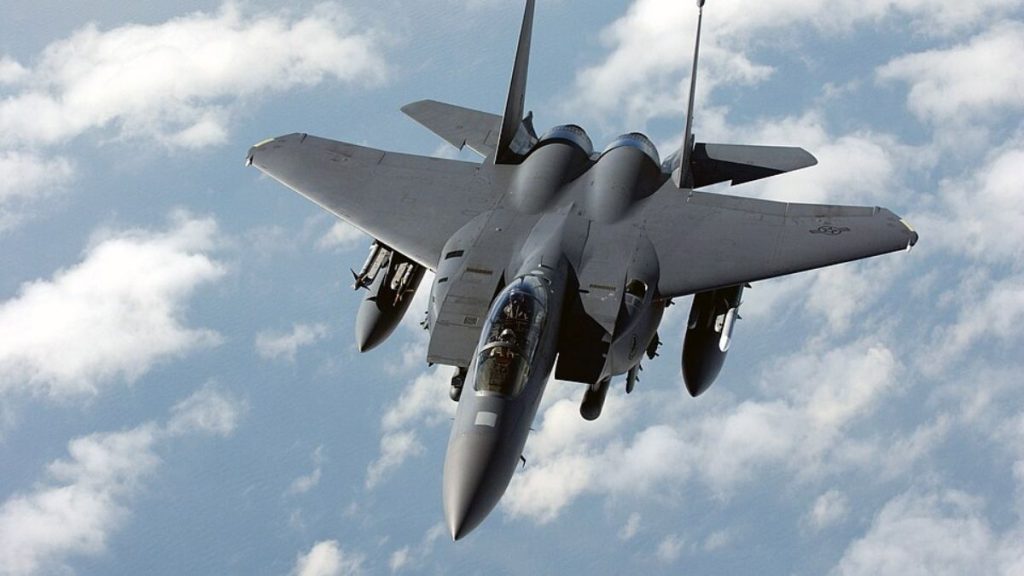
A Chinese-made shoulder-fired missile shot down an American F-15 fighter aircraft in southwestern Iran in April, which resulted in a dangerous rescue mission, a US media report said on Saturday (May 30, 2026).
An NBC News report claimed China could have supplied Iran with a long-range early-warning radar that spotted the F-15, a stealth aircraft with capabilities to evade detection, quoting unnamed American officials with knowledge of the matter.
The report said China had provided Iran with the radar in the early days of the West Asia war that began on February 28 with the US and Israel airstrikes in Tehran that killed then Supreme Leader Ayatollah Ali Khamenei.
The US is still probing the circumstances under which the F-15 Strike Eagle was shot down, the first time in decades that an American combat jet was downed in enemy fire.
However, it was not clear when the radar and the missile were supplied to Iran, the report said, noting that the use of Chinese-made weapons had complicated Washington’s relationship with Beijing.
US President Donald Trump was in Beijing for a summit meeting with his Chinese counterpart, Xi Jinping, in the middle of April, when the former sought China’s help in ending the Iran war.
The negotiations to end the war are currently ongoing, but Trump has yet to put his seal of approval on a peace proposal conveyed to the US by Iran, through the mediator, Pakistan.
While Iran continues its blockade of the Strait of Hormuz, disrupting energy supply chains, the US has done a tit-for-tat through its naval forces in West Asia, preventing cargo ships from entering and leaving Iranian ports. Both sides have targeted each other’s ships in retaliatory strikes, though.
A fragile ceasefire between the US-Israel combine and Iran is currently holding, even as discussions to extend the temporary halt in military confrontation by another two months are progressing.
NBC News reported that when the F-15 was shot down, Trump said it was struck by a shoulder-launched missile, a 40-pound 7-foot inexpensive weapon, also called the MANPADS or Man-Portable Air Defence Systems.
The two-man crew of the fighter jet safely ejected from the aircraft’s cockpit inside Iran. While the pilot was rescued within seven hours, the weapons system officer could be located and brought back to safety only after two days from the Zagros Mountains, the Pentagon said then.
In reaction to the NBC News report, the White House referred to Trump’s comments in a TV interview, when he said Xi had assured him that China would not provide military equipment to Iran. Trump had also said at the White House last week that Xi promised him that he was not sending any weapons to Iran.
A Chinese embassy spokesperson in Washington responded to media queries, saying, “China always acts prudently and responsibly on the export of military products, and exercises strict control in accordance with China’s laws and regulations on export control and due international obligations. China opposes groundless smear and ill-intentioned association.”