


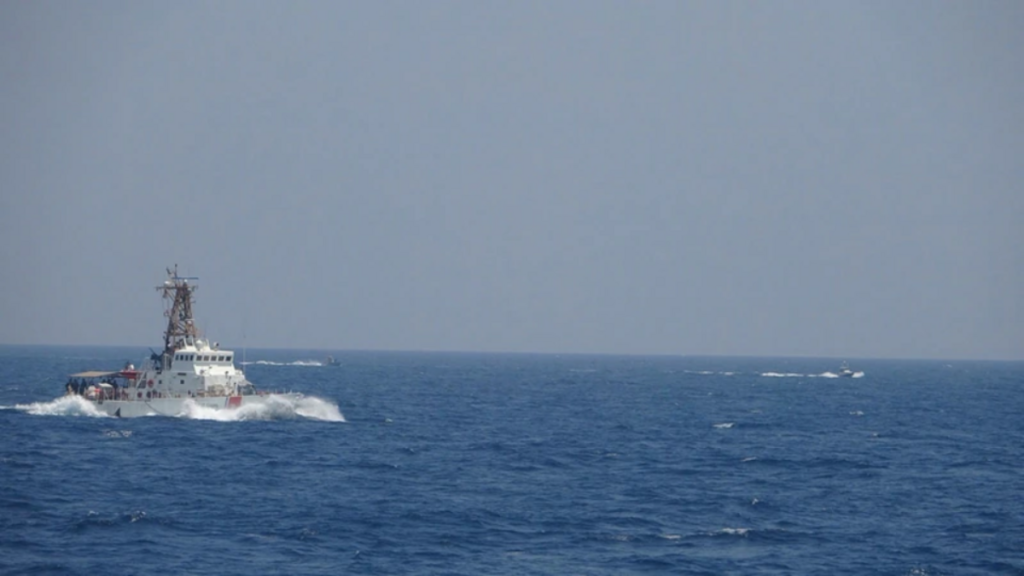
New Delhi: Iran has demanded compensation from Ukraine for a deadly strike on an Iranian vessel in the Caspian Sea. It rejected Kyiv’s explanation that the July 25 attack was unintentional and reopening a dispute that had appeared to ease after direct diplomatic contact.
Iran’s foreign ministry spokesperson, Esmail Baghaei, said on Monday that Tehran remained unconvinced by Ukraine’s account. One sailor was killed and another injured in an explosion aboard the vessel, according to Iran. Baghaei said Ukraine “must certainly compensate us” and warned that Tehran would seek compensation itself if Kyiv failed to act. Iran has not publicly specified the amount sought or what measures it could take.
What happened in Caspian Sea?
The circumstances surrounding the strike remain contested. Iran has described the affected ship as a commercial vessel and called the attack an act of aggression. It summoned Ukraine’s chargé d’affaires in Tehran after the incident and said it reserved the right to defend its interests.
Ukraine, however, has said its forces were targeting maritime logistics linked to Russia’s war effort. The security service of Ukraine said its drones struck the Port Olya 2 cargo ship and the Begey general cargo vessel, which it said were under international sanctions and had transported military cargo between Iran and Russia. Ukraine also reported attacks on a Russian missile boat, an offshore oil platform and other targets in the Caspian basin.
Public reporting has not conclusively established that the Iranian vessel on which the sailor was killed was one of the ships identified by Ukraine. That distinction is important because Tehran presents the incident as an attack on civilian shipping, while Kyiv frames its wider Caspian campaign as action against military-linked logistics.
Kyiv says it does not want new front
The dispute briefly threatened a sharper escalation. Iran’s foreign minister, Abbas Araghchi, said in late July that the attack “cannot go unanswered”. Following a telephone conversation with Araghchi, Ukraine’s foreign minister, Andrii Sybiha, said Kyiv wanted to avoid unnecessary escalation and that Ukrainian operations were aimed at defending the country against Russian aggression, not at targeting civilians.
Araghchi subsequently said Ukraine had described the strike as unintentional. Mohsen Rezaei, a senior adviser to Iran’s supreme leader, later claimed Tehran had prepared strikes against three sites in Ukraine but cancelled them after what he called an apology from Kyiv. He provided no evidence and Ukraine has not publicly confirmed offering an apology.
Iran-Russia military ties drive dispute
The confrontation cannot be separated from Iran’s military relationship with Russia. Ukraine has faced Iranian-designed Shahed attack drones since 2022, while US authorities have repeatedly sanctioned companies and individuals involved in supplying the systems and helping Russia establish domestic production.
The US Department of the Treasury has said Iran and Russia cooperated on producing Iranian-designed one-way attack drones at Russia’s Alabuga facility under a $1.75bn arrangement, with Russian officials discussing production of thousands of drones a year. Kyiv argues that such cooperation gives it a security interest in disrupting military supply chains linked to Iran.
Tehran, in turn, rejects Kyiv’s justification and insists that responsibility for the death aboard its vessel rests with Ukraine.
The episode comes as Iran remains locked in a wider conflict with the US and Israel while Russia’s war against Ukraine continues. The Caspian Sea is consequently emerging as another arena where the military and economic interests surrounding the two conflicts intersect.