


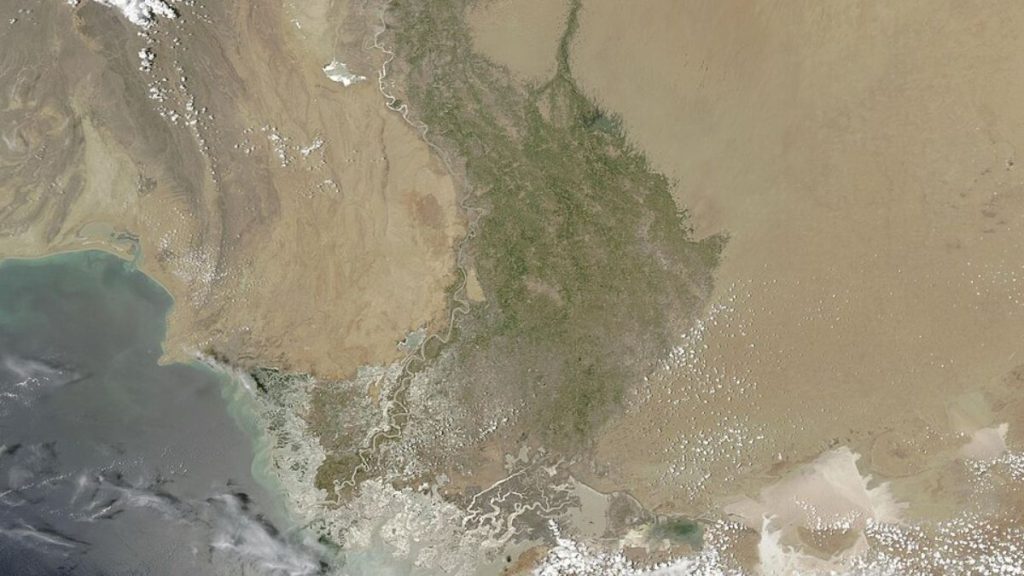
Just a year after putting the Indus River Water Treaty with Pakistan in abeyance over the Pahalgam terror attacks, India has proposed to build two major infrastructure projects on the Chenab River for Rs 2,620 crore.
The two projects involve the Rs 2,352-crore Chenab-Beas Link Tunnel in Himachal Pradesh, and another Rs 268-crore sediment bypass tunnel at Salal Dam in Jammu and Kashmir.
The two projects are likely to come up for approval at the earliest, as the project includes the construction of an 8.7-km tunnel to divert surplus water from the Chenab basin to the Beas river system in Himachal Pradesh to benefit Punjab, Haryana, Delhi, and Rajasthan.
The Chenab waters from Lahaul’s Chandra River, a tributary, would be channelled to the Beas basin through hydraulic systems and the tunnels to generate an additional 4,000 MW of electricity in Himachal Pradesh.
The project would turn out to be a significant boost for both water resources and electricity for the northern Indian states. The project would prevent the surplus waters in the Indus River system from flowing into Pakistan and, at the same time, divert the waters for use in the other states in northern India.
Under the Chenab-Beas tunnel project, there is also a proposal to build a 19-metre-high barrage in the Lahaul valley. The project will not just help generate more hydropower, but also expand the better use of the waters of rivers originating in India.
Meanwhile, in the United Nations Security Council meeting on Tuesday (May 26, 2026), India slammed Pakistan, accusing it of sponsoring cross-border terrorism and violating the principles of sovereignty, territorial integrity, and peaceful coexistence, all part of the UN Charter.
At the UNSC Open Debate, India’s Permanent Representative to the UN, Ambassador Harish Parvathaneni, reminded Pakistan that it will have to accept that there are “consequences” to its actions.
He underscored that New Delhi has “every right” to defend itself from terror attacks perpetrated by its neighbour. “I am compelled to respond to baseless and unwarranted remarks made by Pakistan today. India would like to set the facts straight,” Parvathaneni told the UNSC.
“Independent India began its life battling with cross-border aggression by Pakistan, which coveted Indian territories that had become a part of India as a result of their complete, legal, and irrevocable accession,” he said.
The diplomat said Pakistan’s use of cross-border terrorism and its doctrine of ‘bleeding India by a thousand cuts’ exposed its hollow rhetoric of commitment to the UN Charter.
He said, “India has every right to defend itself from such cross-border terrorism. Pakistan will have to accept that there are consequences to its sponsorship of cross-border terrorism.”
Parvathaneni added that by waging several wars and inflicting unprovoked aggression against India and through its continued sponsorship of cross-border terrorism, Pakistan has violated the principles of sovereignty and territorial integrity and peaceful coexistence.
He said, “Pakistan’s harnessing of the malevolent forces of terrorism, religious extremism, violent radicalism, and anti-India rhetoric has continued unabated since its creation.”
“The facts in this regard are on public record and need no further elucidation. Pakistan must credibly and irrevocably end its support for all forms of terrorism,” he added.
Parvathaneni’s strong condemnation of Pakistan came during the 15-member UNSC debate hosted under China’s chairship on ‘Upholding the purposes and principles of the UN Charter and strengthening the UN-centred international system’.
Earlier, Pakistan Deputy Prime Minister and Foreign Minister Ishaq Dar raised the issue of Jammu and Kashmir and also referred to the suspension of the Indus Waters Treaty by India post the Pahalgam terror attacks by The Resistance Force, an offshoot of Islamabad-sponsored Lashkar-e-Toiba.