


India, on Saturday (May 16, 2026), rejected the Hague-based Court of Arbitration’s (CoA’s) latest award under the 1960 Indus Waters Treaty (IWT), kept in abeyance by New Delhi following the April 2025 Pahalgam terror attack in Jammu and Kashmir, calling the award illegal, null, and void.
“The illegally constituted so-called Court of Arbitration (CoA) has, on 15 May 2026, issued what it termed an award concerning maximum pondage supplemental to the award on issues of general interpretation of the Indus Waters Treaty,” Ministry of External Affairs (MEA) spokesperson Randhir Jaiswal noted.
Responding to media queries on the Arbitration Court’s award, Jaiswal said, “India categorically rejects the present so-called award, just as it has firmly rejected all prior pronouncements of the illegally constituted CoA.”
He said, “India has never recognised the establishment of this so-called CoA. Any proceeding, award, or decision issued by it is null and void. India’s decision to hold the Indus Waters Treaty in abeyance remains in force.”
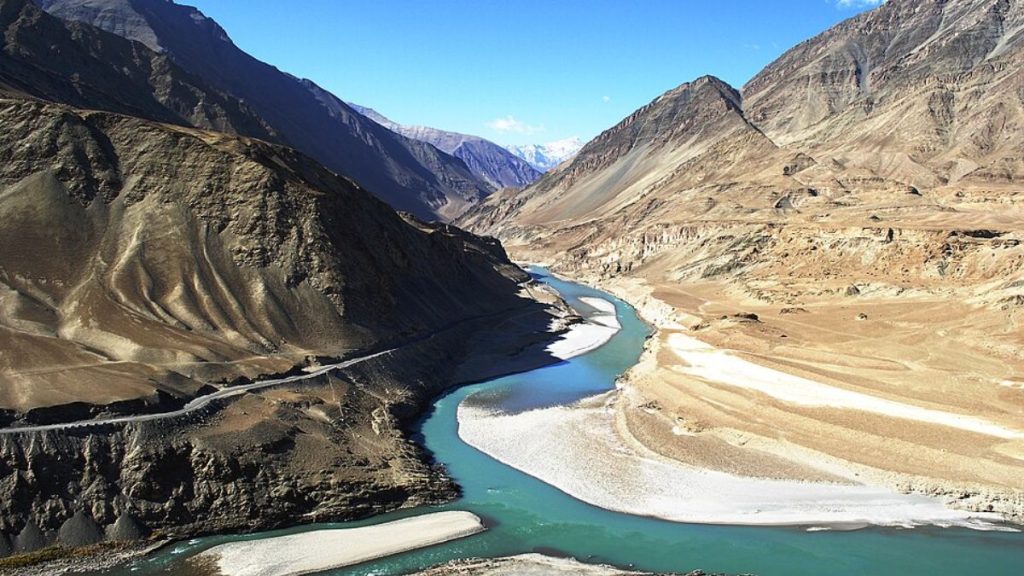
Signed between India and Pakistan on September 19, 1960, the IWT deals with the use of the Indus River water system between the two nations.
After the 2025 Pahalgam attacks, New Delhi exercised its rights as a sovereign nation under international law and suspended the IWT until Pakistan credibly and irrevocably abjured its support for cross-border terrorism against India
“Until such time that the Treaty is in abeyance, India is no longer bound to perform any of its obligations under the Treaty. No Court of Arbitration, much less this illegally constituted arbitral body which has no existence in the eye of law, has the jurisdiction to examine the legality of India’s actions in exercise of its rights as a sovereign,” the MEA had said in June 2025.
Last year, the MEA had slammed the “so-called” Court of Arbitration for issuing what it characterised as a “supplemental award” on its competence concerning the Kishenganga and Ratle hydroelectric projects in the Indian Union Territory of Jammu and Kashmir.
“India has never recognised the existence in law of this so-called Court of Arbitration, and India’s position has all along been that the constitution of this so-called arbitral body is in itself a serious breach of the Indus Waters Treaty and consequently any proceedings before this forum and any award or decision taken by it are also for that reason illegal and per se void,” the MEA had then said.
India questioned such “charades” at Pakistan’s behest, terming them as “desperate attempts” to escape accountability for its role as the global epicentre of terrorism.
“Pakistan’s resort to this fabricated arbitration mechanism is consistent with its decades-long pattern of deception and manipulation of international forums,” the MEA said earlier.