


New Delhi: The India-New Zealand Free Trade Agreement (FTA) will come into force on October 20, coinciding with Vijayadashami, with all Indian exports receiving duty-free access to the New Zealand market from the day the pact takes effect. The agreement is aimed at doubling bilateral trade to about $5 billion over the next five years, alongside expanded investment and professional mobility commitments.
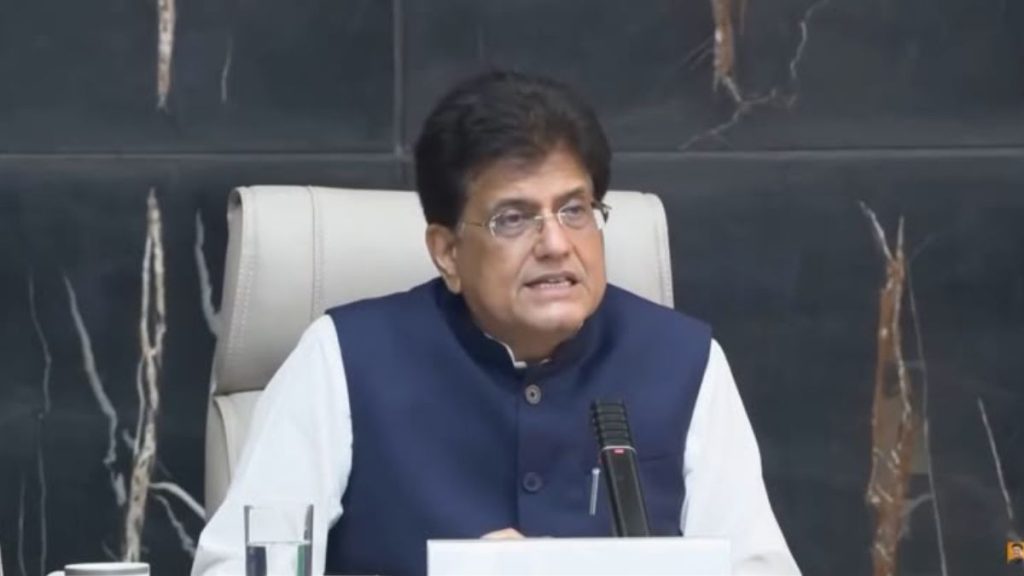
In a post on X, the Union commerce and industry minister, Piyush Goyal, said the agreement would come into force on October 20, coinciding with Vijayadashami. Calling it “a vijay (victory) for both nations”, he said the pact would take effect after the two countries completed the required domestic processes.
New Zealand will eliminate tariffs across 100 per cent of its tariff lines for Indian goods from entry into force. Indian government documents identify textiles and apparel, leather and footwear, engineering goods, pharmaceuticals, marine products, gems and jewellery, handicrafts and automobiles among sectors expected to benefit from the zero-duty access.
According to the Union commerce ministry, India has offered more selective access to New Zealand. It will liberalize about 70 per cent of its tariff lines, covering about 95 per cent of bilateral trade. New Zealand says 57 per cent of its current exports to India will become duty-free immediately, rising to 82 per cent over time, while another 13 per cent will receive significant tariff reductions.
Sensitive Indian sectors remain protected. Dairy products, onions, sugar, spices, edible oils, rubber and selected copper and aluminium products are among the exclusions, while products such as apples, kiwifruit, honey and milk albumin receive restricted or quota based access under specified conditions.
The agreement also commits New Zealand to promote private sector investment into India with the aim of increasing it by $20 billion over 15 years. The provision covers investment cooperation rather than a guaranteed $20 billion transfer and is not subject to the agreement’s dispute settlement mechanism. The investment chapter also contains a rebalancing mechanism under which India can take proportionate remedial measures after consultations if it determines that New Zealand has not fulfilled the investment commitment.
Professional mobility is another component. New Zealand will provide 1,667 three-year temporary employment entry visas annually, capped at 5,000 at any one time, covering 13 skilled occupations and designated Indian professions including yoga instructors, chefs, music teachers and ayurvedic practitioners. The broader sectors include information technology, engineering, healthcare, education and construction.
The pact also provides up to 1,000 working holiday visa places annually for young Indians. Eligible Indian graduates can receive post-study work rights of up to two years after a bachelor’s degree, three years after a master’s degree and four years after a doctorate, while qualifying STEM bachelor’s graduates can receive up to three years.
The agreement also establishes a dedicated framework for health and traditional medicine services, including ayurveda and yoga. Its customs provisions require goods to be released within 48 hours once regulatory requirements are met, with authorities endeavouring to clear perishable goods and express consignments within 24 hours.
New Zealand’s parliament passed the implementing legislation on September 16 by 93 votes to 29. From October 20, Indian exports will receive the full tariff-free treatment committed under the agreement, while New Zealand’s tariff concessions in India will take effect according to their immediate and phased schedules.