


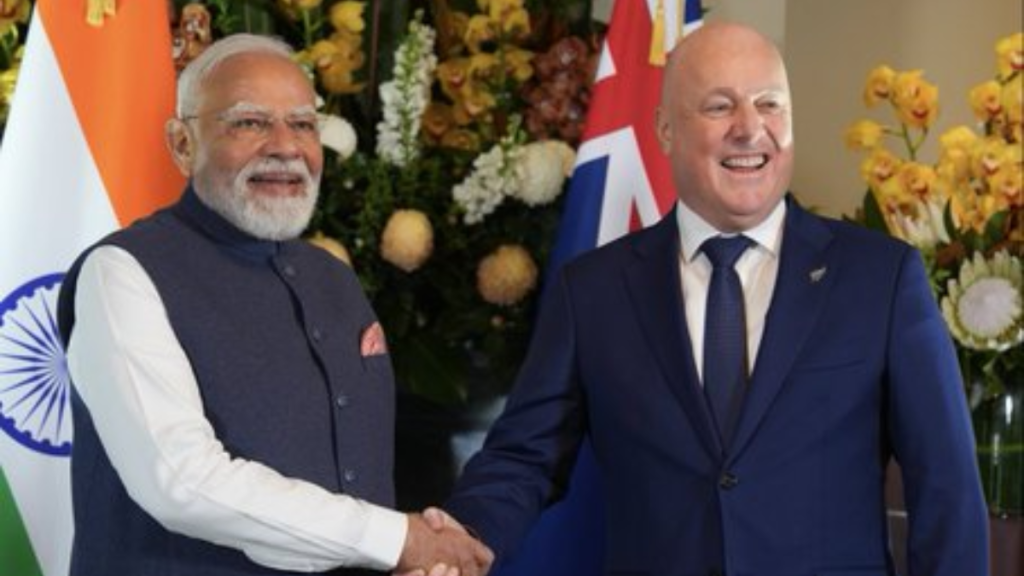
New Delhi: The India-New Zealand Free Trade Agreement (FTA) came into force on Tuesday, removing import duties on all Indian goods entering New Zealand and opening new opportunities for exporters, students and skilled professionals. The agreement was signed on April 27, 2026, in New Delhi by the commerce and industry minister, Piyush Goyal, and his New Zealand trade counterpart, Todd McClay.
The New Zealand prime minister, Christopher Luxon, announced the development in a post on X, crediting his government’s work with the Indian prime minister, Narendra Modi, for delivering the deal. He said New Zealand businesses would gain access to more than a billion additional customers with significantly reduced tariffs, helping them expand sales, invest and create jobs. The two countries completed their ratification processes on September 21, clearing the way for implementation.
What the agreement includes
The agreement removes import duties on all Indian goods entering New Zealand from day one. These include textiles, clothing, leather, footwear, gems and jewellery, engineering goods, cars and auto parts, chemicals, medicines, agricultural products and processed foods. Wooden logs, cooking coal and metal scrap will also enter duty-free.
India has offered tariff benefits on about 95 per cent of New Zealand’s exports by value. About 57 per cent will become duty-free immediately, rising to 82 per cent over time. Tariffs on another 13 per cent will be reduced. But India has kept sensitive sectors such as dairy, sugar and edible oils out of the concessions.
Selected New Zealand agricultural products will receive preferential access under quotas and conditions. Tariffs on New Zealand apples will fall from 50 per cent to 25 per cent under an initial annual quota of 32,500 tonnes, which will increase to 45,000 tonnes over six years. Kiwifruit will get duty-free access under an initial annual quota of 6,250 tonnes, rising to 15,000 tonnes over six years. Mānuka honey will receive a 75 per cent tariff reduction over five years.
The agreement covers 118 services sectors, including IT, healthcare, education, financial services and telecommunications. New Zealand has also made commitments in about 139 services sub-sectors under most-favoured-nation provisions, allowing India to benefit from certain improved terms offered to other FTA partners. The agreement also provides access for healthcare and traditional medicine services, including Ayurveda, yoga and other Ayush systems.
According to the agreement, customs provisions aim to reduce delays and costs. India has committed to releasing goods within 48 hours and endeavouring to clear perishable goods and express consignments within 24 hours. Pharmaceutical and medical device exporters are also expected to benefit from streamlined regulatory procedures.
The FTA introduces two temporary employment entry visa categories for Indian nationals in highly skilled jobs and selected professions. Up to 5,000 Indian visa holders can stay in New Zealand at a time, with most places reserved for jobs on New Zealand’s green list. Applicants must meet eligibility requirements, including having a qualifying job offer from an accredited employer. The visas are valid for three years but do not offer a pathway to permanent residence.
From November 16, Indian graduates with New Zealand PhDs will be eligible for post-study work visas of up to four years, compared with three years previously. Eligible bachelor’s and master’s graduates in science, technology, engineering and maths subjects can qualify for visas of up to three years. Indian students are also covered by a commitment to retain at least 20 hours of in-study work rights if New Zealand changes its current policy, which allows eligible international students to work up to 25 hours a week.
A working holiday scheme for Indian nationals aged 18 to 30 will be introduced within two years. It will offer up to 1,000 places annually, allowing successful applicants to stay for up to 12 months, subject to eligibility conditions.
How India stands to gain from India-New Zealand ties
The FTA comes after talks that began in March 2025 and ended in December of that year. It will help the countries achieve their target to double bilateral trade in goods and services to NZ$7bn, about ₹35,000 crore, by 2030. The Indian diaspora of about 300,000 people in New Zealand also enhances cultural and commercial ties.
Duty-free access may help Indian exporters become more competitive in textiles, footwear, engineering goods, pharmaceuticals and gems and jewellery. The agreement also aims to facilitate US$20bn in New Zealand investment into India over 15 years, although this remains a future commitment.
A partnership for agricultural productivity will support farmers in India through the transfer of technology and improved cultivation practices, particularly for apples, kiwifruit and honey. The agreement also promotes cooperation in tourism, sports and traditional knowledge, while helping Indian geographical indication products access the New Zealand market.
The first export of a JCB machine from India to New Zealand was flagged off on the day the agreement took effect.
While the agreement expands market access, its benefits will depend on businesses using the new provisions. Indian exporters will still need to meet certification, product standards and food-safety requirements. Export growth will also be affected by freight costs and shipping times.