


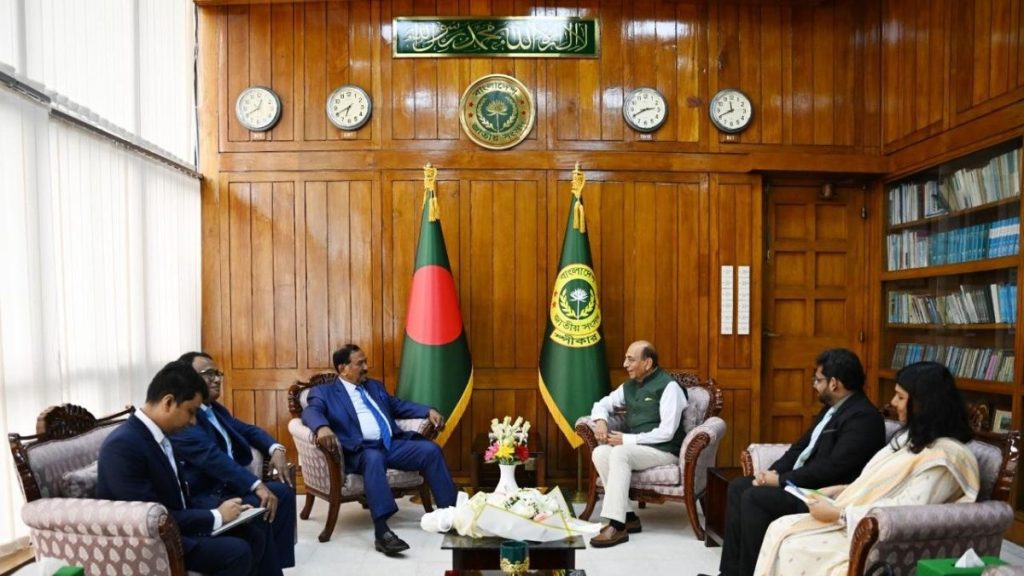
New Delhi: India and Bangladesh are exploring a more structured parliamentary relationship through friendship groups, reciprocal delegation visits, cooperation between legislative committees and support for digitising parliamentary records. The proposals emerged from separate meetings between the Indian high commissioner to Bangladesh, Dinesh Trivedi, and the Bangladesh parliament speaker, Major Hafiz Uddin Ahmad (retired), and the deputy speaker, Barrister Kayser Kamal, at the Jatiya Sangsad in Dhaka.
Trivedi said engagement between the two parliaments was important for strengthening people-to-people ties between India and Bangladesh. He also reiterated an invitation from the Lok Sabha speaker, Om Birla, for Ahmad and Kamal to visit India.
The discussions come amid continuing diplomatic engagement between New Delhi and Dhaka following the formation of the government led by the Bangladesh prime minister, Tarique Rahman, in February.
What India and Bangladesh discussed
One of the central proposals was the formation of parliamentary friendship groups involving lawmakers from different political parties in the two countries. Trivedi said such groups could provide parliamentarians with a mechanism to communicate regularly, exchange views and strengthen contacts between the peoples of India and Bangladesh.
According to the Bangladesh parliament secretariat, the discussions also covered reciprocal visits by parliamentary delegations under the guidance of the two Speakers and closer cooperation between parliamentary committees. Such exchanges would add a legislative dimension to the existing bilateral engagement between the two countries.
Digitization of parliamentary records was another area discussed. Trivedi spoke about India’s experience in digitising parliamentary documents, proceedings and historical records, while Kamal sought Indian cooperation for Bangladesh’s proposed e-Parliament system.
The deputy speaker said closer parliamentary cooperation could facilitate the exchange of experience in information technology and help modernise legislative work. The meeting between Trivedi and Ahmad also covered the Rohingya crisis and rehabilitation, parliamentary delegation exchanges and cooperation in sports and culture, according to Bangladeshi reporting.
Recent India-Bangladesh engagement
The parliamentary discussions follow a series of exchanges since the Tarique Rahman led government assumed office on February 17.Trivedi met Rahman on August 10 in their first formal meeting, with the two sides discussing bilateral relations and issues of mutual interest. The following day, the Indian envoy met the prime minister, Narendra Modi, in New Delhi and sought his guidance on strengthening India-Bangladesh relations through what the Indian high commission described as a constructive and people centric approach.
The possibility of Rahman visiting India has also remained under discussion. Asked about a potential visit following his meetings at the Bangladesh Parliament, Trivedi said the decision rested with the Bangladesh prime minister.
The envoy described Rahman as “intelligent” and “pro-people” and said dialogue between India and Bangladesh would continue.
India has extended an invitation to Rahman for a bilateral visit, while he has also been invited in his capacity as Bimstec chair to attend the BRICS outreach session in New Delhi. No visit has yet been formally confirmed.
The parliamentary outreach comes against the backdrop of a bilateral relationship that has faced strains in recent years but has continued to see diplomatic exchanges at multiple levels.
Ahmad acknowledged that India-Bangladesh relations had experienced “various ups and downs” and had evolved with changing circumstances.
He said the relationship should be built around ties between the peoples of the two countries and move forward with mutual respect and recognition of each other’s independence and sovereignty.
Why parliamentary ties matter
Trivedi said closer engagement between the two legislatures could reinforce people-to-people relations between what he described as two sovereign and democratic countries.
He said parliament represents the people and that lawmakers belonging to different political parties could use friendship groups to maintain communication and exchange views regularly.
Kamal similarly said parliamentary diplomacy could provide a platform for sharing institutional experience, particularly as Bangladesh works to develop its e-Parliament system and modernise legislative processes.
The proposals under discussion would therefore give lawmakers on both sides more regular channels for interaction beyond occasional high level political meetings.
For India and Bangladesh, the focus remains on practical parliamentary mechanisms rather than a new diplomatic initiative. The proposals now on the table include friendship groups, greater committee level contact, cooperation on digitization and reciprocal parliamentary delegation visits.
Birla’s invitation to Ahmad and Kamal to visit India provides a possible next step in taking that engagement forward.