


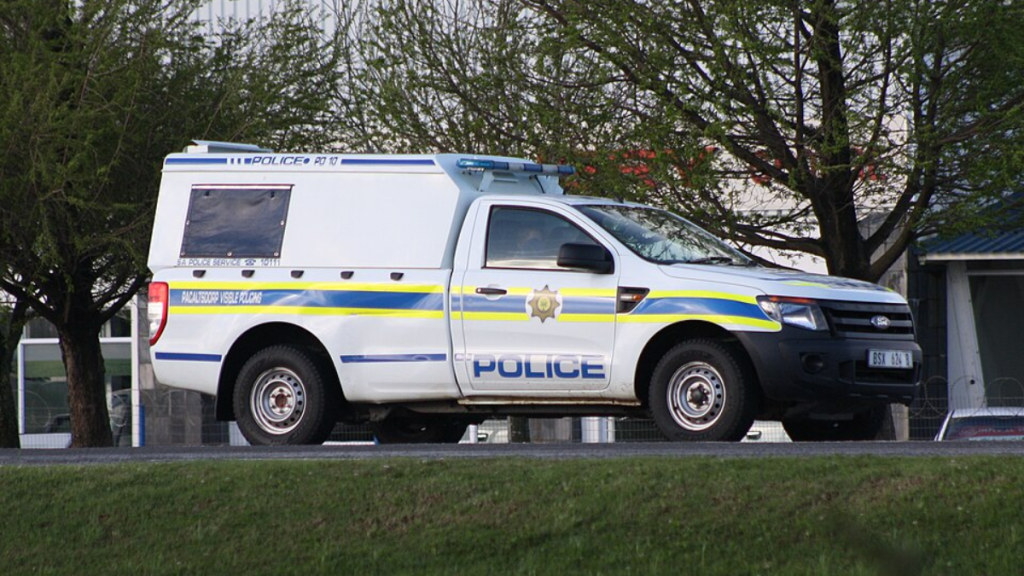
New Delhi: Police in South Africa are trying to establish what lies behind nine women being found dead in Ekurhuleni over roughly two months, with investigators yet to determine whether the cases are connected. The latest discovery in Boksburg has brought renewed attention to the country’s long-running crisis of violence against women and the measures being taken to protect those at risk.
The woman was found on Thursday morning in Dawn Park, a residential area of Boksburg, east of Johannesburg. She is believed to have been in her thirties and was found half-naked and wrapped in a sheet, according to the details reported by Al Jazeera.
The police investigation has not produced evidence linking all nine deaths so far. Police told Reuters that detectives are examining several possibilities, including whether the killings could involve one perpetrator, several offenders or copycat crimes.
That uncertainty has become part of a wider concern among organizations supporting women who face abuse. The national shelter movement of South Africa (NSMSA) said its helpline and shelters were dealing with cases involving death threats, stalking, strangulation, coercive control and repeated breaches of protection orders.
The organization also told Al Jazeera that the growing severity of these cases points to a broader problem rather than a collection of unrelated incidents. It said violence against women has become normalized in some communities, while shelters are simultaneously dealing with greater demand and limited resources.
One of the nine deaths was that of Elizabeth Moselakgomo, a 38-year-old mother who went out for her regular run on September 9. She left home at about 5.30pm and was later reported missing after failing to return, with her eight-year-old daughter alerting other relatives.
Moselakgomo was found dead on September 12. Her case has also raised questions about how far the precautions women are expected to take can actually protect them, according to Nokukhanya Khanyile-Lenake, a specialist paediatrician and mental health advocate who spoke to Al Jazeera.
Khanyile-Lenake pointed to the fact that Moselakgomo’s daughter recognized that her mother had not returned and acted by informing family members. “And that still wasn’t enough,” she said, arguing that women are already taking extensive precautions because of the threat of gender-based violence.
Those concerns have also shaped the reaction to police advice issued after the deaths. Women have been urged to avoid walking or running alone and to stay away from isolated places, but Princess Eurika Mogane, a commissioner at South Africa’s commission for gender equality, said such messaging can leave women feeling that they must change their lifestyle to avoid such crimes against them.
“A lot of the women in South Africa right now are saying, ‘You are basically telling us to adjust our lives to perpetrators,’” Mogane told Al Jazeera. The national shelter NSMSA said women were already changing routes, avoiding certain times, sharing their locations and limiting their movements in attempts to stay safe.
The shelter movement said the focus should instead remain on those committing violence and on institutions responsible for protection. “The responsibility for violence lies with perpetrators, while the responsibility for protection lies with society and the state,” it said.
The debate comes against the backdrop of a major government declaration last year. South Africa classified gender-based violence and femicide as a national disaster in November 2025, while parliament says the country’s femicide rate is five times the global average.
The president of South Africa, Cyril Ramaphosa, has pledged that perpetrators will be brought to justice, and authorities have said police deployments and patrols have been increased in areas considered high risk. Mogane, however, questioned whether the declaration had resulted in sufficient practical improvements, particularly in forensic services and survivor shelters.