


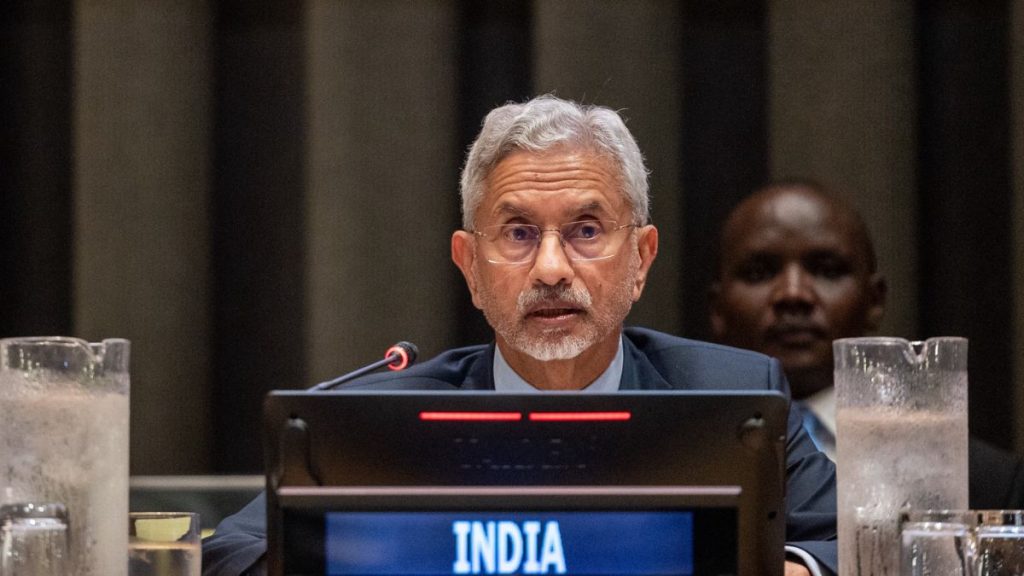
New Delhi: The external affairs minister, S Jaishankar, on Tuesday has called for “reformed multilateralism”, saying rising geopolitical tensions, conflicts and intensifying competition were placing the global order under growing strain. Speaking at the inaugural Partners for Multilateralism, International Law, Peace and Prosperity (P4M) Summit in New York on Monday, he argued that multilateral institutions needed more participative deliberations, greater transparency and stronger international cooperation.
The summit was held on the margins of the 81st session of the UN general assembly high-level week. Australia, Barbados, Brazil, Canada, the European Union, India and Kenya were the seven initial co-sponsors of P4M, an open platform intended to support the UN and other multilateral formats, build cross-regional coalitions and advance reform of multilateral institutions as the international system becomes more contested and multipolar.
Jaishankar said the world had for decades been undergoing a steady rebalancing of power, but “extreme competition, geopolitical tensions and actual conflicts” had given that transition a more difficult character. If left unchecked, he said, those pressures could undermine the spirit of international cooperation.
He linked “reformed multilateralism” to wider participation and more transparent decision making, while stressing that international law, rules and norms should remain central to multilateral cooperation. He said more participative deliberations and transparent decisions were overdue and could strengthen confidence in the UN system.
The minister said cooperation was essential across peace and international security, climate action and climate justice, emerging technologies, development finance, counterterrorism, resilient supply chains, disaster preparedness and pandemics. He presented these as practical challenges that countries could not address effectively through fragmented responses.
‘4F crisis’, technology and supply chains
Jaishankar also referred to an interconnected “4F crisis” of fuel, food, fertilizer and finance, saying it could not simply be left to take its own course. The emergence of new technologies and capabilities, he said, strengthened the case for appropriate frameworks and guardrails, while vulnerabilities created by chokepoints, dominance and disruption required greater de-risking and diversification.
Where there was a “compelling cause or a powerful case”, he said, like-minded countries should have the confidence to work together. Jaishankar stressed that respect for international law, rules and norms had to remain at the heart of such cooperation.
“For multilateralism to forge ahead, its advocacy and its practice must both be strengthened,” he said. Jaishankar argued that more participative deliberations and greater transparency in decision-making could help restore “hope and optimism” in the UN system.
The P4M declaration adopted at the summit commits its co-sponsors to a more effective, representative and inclusive multilateral system. It also calls for resilient supply chains, reform of the multilateral trading system and international financial architecture, and stronger cooperation on artificial intelligence, climate change and global health.
The summit was convened collectively by leaders of the seven initial co-sponsors, including the European council president, António Costa, and the prime minister, Narendra Modi. Costa said the initiative was designed to support the UN, build bridges across regions and translate shared commitments into practical action.
For India, joining P4M as a co-sponsor adds another platform to New Delhi’s broader push for more representative global governance.