


New Delhi: Saudi Arabia said its air defences intercepted a ballistic missile fired by Yemen’s Houthi rebels towards Riyadh on September 19, 2026, marking the first attempted attack on the kingdom’s capital since the latest escalation between the two sides. The strike came days after the Iran-aligned group captured the strategically important Greater and Lesser Hanish islands, extending its reach along a maritime corridor vital to international trade and energy supplies.
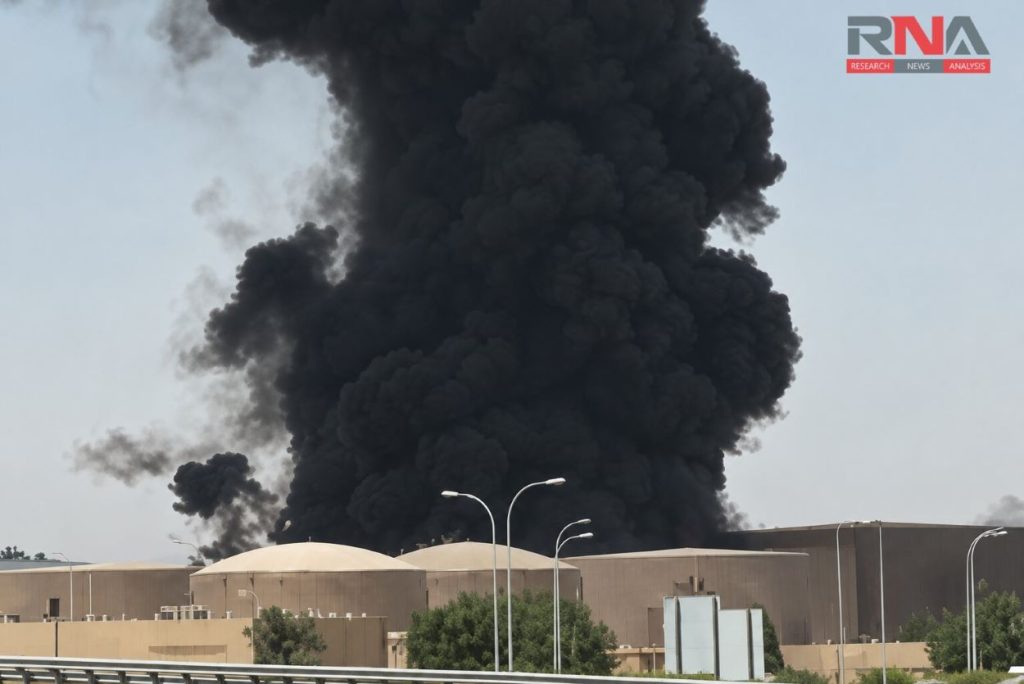
The Saudi-led military coalition said the missile was destroyed before it could hit the capital, where residents reported hearing an explosion and later saw smoke rising near King Khalid International Airport. No casualties or damage from the intercepted missile were reported, although a fire at a fuel storage facility near the airport caused disruption to flight operations.
Air-raid alerts were sent to residents of Riyadh, Jeddah and several other cities during the night, an unusual precaution that reflected the widening geographical range of the attacks. Saudi authorities subsequently announced an all-clear but advised people not to gather in public places as security agencies assessed the threat.
The Houthis claimed that their forces had attacked “sensitive sites” in Riyadh and installations belonging to the state-owned oil company, Saudi Aramco, at the Red Sea port of Yanbu. The group’s military spokesman, Brigadier General Yahya Saree, said cruise missiles, ballistic missiles and drones had been used in the operation, although the claims could not be independently verified.
Saudi Arabia also reported attempted attacks on civilian infrastructure in Yanbu, Taif, Baysh and the Farasan Islands, saying they had been thwarted. Yanbu is especially important because it is the western terminus of the kingdom’s East-West Crude Oil Pipeline (aka Petroline), which allows crude to reach the Red Sea without passing through the increasingly vulnerable Strait of Hormuz.
The latest assault represented the most direct Houthi attempt to strike Riyadh since fighting between the rebels and the Saudi-backed Yemeni government intensified in July. It also followed a series of attacks on Saudi cities, military positions and energy infrastructure that have renewed fears of the kingdom being drawn back into a prolonged war in Yemen.
On September 16, the Saudi-led coalition claimed it had intercepted a Houthi drone south of Mecca before the aircraft allegedly entered restricted airspace over Islam’s holiest city. The coalition’s spokesman, Turki al-Malki, described the safety of Mecca and its pilgrims as a “red line”, but the Houthis denied targeting either the city or any religious site.
Two days later, Saudi civil-defence authorities said debris from another intercepted Houthi drone killed a Yemeni resident in the kingdom, the first reported civilian death in Saudi Arabia during the renewed confrontation. A succession of missile and drone launches has also wounded civilians and forced the authorities to activate warning systems across several provinces.
Capture of islands widens Houthi reach
The attack on Riyadh followed a rapid Houthi advance along Yemen’s western coast, during which the group seized the port of Mokha, Perim Island and the Greater and Lesser Hanish islands. These gains have increased its ability to observe – and potentially threaten – vessels travelling through the southern Red Sea.
The Hanish archipelago lies about 160 kilometres north of the Bab al-Mandab Strait, which links the Red Sea with the Gulf of Aden and the wider Indian Ocean. Control of the islands gives the Houthis positions from which they could deploy surveillance equipment, drones, anti-ship missiles or small attack craft closer to one of the world’s most heavily used maritime chokepoints.
Perim Island is even more sensitive because it sits inside the Bab al-Mandab, separating the strait into two navigable channels. The combination of Perim, Mokha and the Hanish Islands provides the group with a chain of positions overlooking approaches to the waterway, although possessing the territory does not automatically give it complete control over passing ships.
The Houthis have said they intend to target only vessels connected with Saudi Arabia and have denied seeking to close the Red Sea to all commercial shipping. Their ability to distinguish between ships under operational conditions remains uncertain, however, and any attack or misidentification could raise insurance costs, discourage shipping companies and prompt vessels to take the longer route around Africa.
The territorial gains have placed the Saudi-backed, internationally recognized Yemeni government under severe military pressure. Government forces have promised to regroup and recover the captured areas, but the speed of their retreat has raised questions about command failures, defensive preparations and the cohesion of anti-Houthi formations.
Fighting has also intensified in Taiz province and other contested areas, with both sides reporting substantial casualties. Saudi Arabia has responded with airstrikes against Houthi-controlled territory, reviving patterns of warfare that devastated Yemen during the earlier phase of the civil war.
The Houthis said Saudi forces carried out 26 strikes within 24 hours and more than 300 attacks over the preceding week. Saudi authorities have not confirmed those totals, and independent verification remains difficult because access to many of the affected areas is restricted.
Two pressure points for Saudi oil exports
The renewed confrontation is especially dangerous for Saudi Arabia because it places pressure on both its oil infrastructure and its Red Sea export route. The kingdom has relied increasingly on the east – west pipeline to move crude from fields near the Gulf to Yanbu, reducing its dependence on shipments through the Strait of Hormuz.
Attacks on the pipeline and Yanbu, combined with a stronger Houthi presence near the Bab al-Mandab, could expose the same supply chain at two different points. Industry estimates cited by international media suggested that between 2.6 million and four million barrels a day had recently been transported through the pipeline to the Red Sea coast.
A sustained disruption would affect far more than Saudi Arabia because the Bab al-Mandab is a principal route for energy shipments and container traffic between Asia, Europe and the Mediterranean. Vessels avoiding the waterway must sail around the Cape of Good Hope, adding time, fuel consumption and freight costs.
India would be vulnerable to the secondary effects even if its own oil cargoes were not directly targeted. Higher crude prices, costlier marine insurance and longer voyages could increase India’s import bill and add pressure to domestic fuel prices, inflation and the rupee.
Brent crude rose above $106 a barrel during the week of the Houthi territorial advances, with markets already strained by the wider Iran conflict and Ukrainian attacks on Russian energy facilities. Analysts warned that commercial stockpiles and emergency buffers that had previously moderated price rises were being depleted, leaving the market more sensitive to further disruptions.
Washington keeps its distance as UN voices alarm
The United States has indicated that it does not presently intend to enter a direct conflict with the Houthis on Saudi Arabia’s behalf, despite its long-standing security relationship with Riyadh. Washington nevertheless issued a security advisory urging US citizens in the Middle East to remain vigilant and reconsider non-essential travel through the region.
Saudi Arabia has reportedly sought additional air-defence support from France, Britain, Pakistan and Egypt as the volume of Houthi missile and drone attacks tests its interceptor stocks. The kingdom operates several advanced air-defence systems, but inexpensive drones and repeated missile launches can impose heavy financial and logistical costs even when most threats are destroyed.
The United Nations Security Council condemned Houthi attacks affecting civilian and energy infrastructure and urged countries to enforce the UN arms embargo against the group. It also called for cooperation to prevent the transfer of weapons, military training, financing and other assistance that could sustain the campaign.
The humanitarian consequences inside Yemen are worsening rapidly, with the International Organization for Migration reporting that nearly 105,000 people had fled their homes by September 16. Schools have been converted into temporary shelters, and thousands of Yemenis have crossed the Red Sea to Djibouti to escape the advancing front lines.
The seizure of the Hanish Islands and attempted strike on Riyadh show that the renewed war is developing simultaneously on land, in the air and across the maritime domain. What began as another round of fighting inside Yemen now threatens Saudi cities, energy infrastructure and one of the main shipping arteries connecting the Indian Ocean with Europe.