


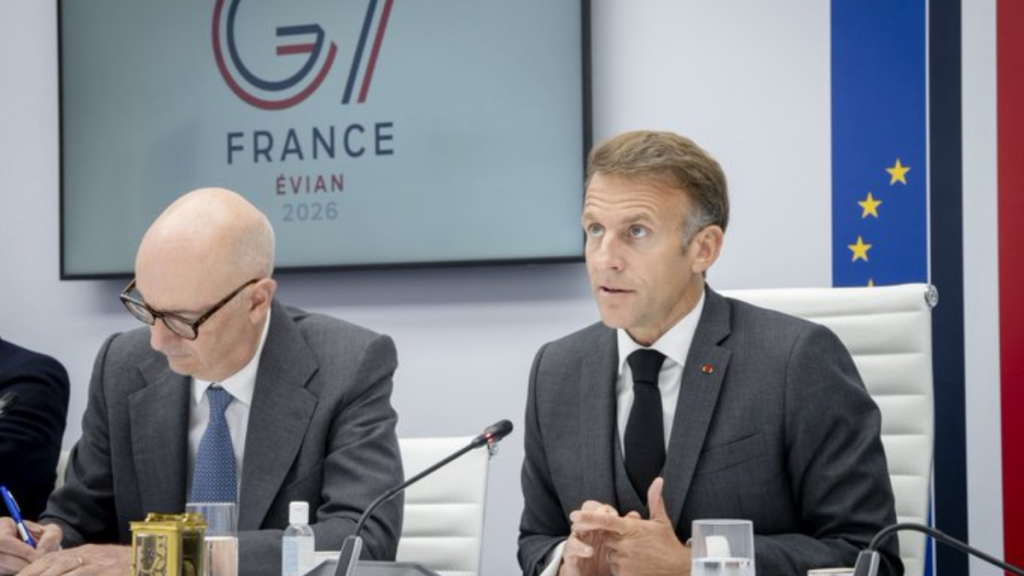
New Delhi: An emergency release of oil and refined fuel is being prepared for global markets as rising diesel prices and supply disruptions put pressure on governments to act. The G7 has decided to make up to 100 million barrels available over four months, with a diesel release planned within the first 20 days and refineries being asked to increase output where possible.
The leaders of Canada, France, Germany, Italy, Japan, the UK and the US decided at a virtual meeting, chaired by the French president, Emmanuel Macron, as France holds the G7 presidency. The International Energy Agency (IEA) will coordinate the release as the countries aim to reduce pressure on fuel markets hit by disruptions in the Middle East and tighter supplies.
What the G7 decided
The release will start immediately and continue for four months. The G7 has not said how much each country will release or how the 100 million barrels will be divided between crude oil, diesel and other fuel products. The countries will also coordinate refinery maintenance to avoid several refineries shutting down at the same time and will try to increase production where possible. They have also asked countries with large refining capacity to produce more fuel, especially diesel.
The IEA has been asked to monitor the impact of the measures on energy security and market stability. It will submit a follow-up report within 20 days with recommendations for further action, including replenishing strategic reserves. The G7 also agreed to keep energy and petroleum-product trade open between its members and called on other producers to avoid export restrictions that could further tighten supplies.
The joint statement addressed the situation around the Strait of Hormuz, calling for the “immediate and full restoration” of navigational rights and principles through the strategic waterway.
The G7 condemned Iran’s continued attacks against regional neighbours and its disruption of international trade and energy security. It also commended the US for efforts to maintain the free flow of commerce through Hormuz.
The group said it would continue sanctions against Russia while working with the IEA and other partners to prevent further disruption to fuel, gas and commodity markets.
What Macron said
France currently holds the G7 presidency, and Macron had announced plans for the group to take coordinated action on the energy situation to ease pressure on fuel prices. After the meeting, Macron said the G7 had agreed to increase refinery production, release strategic reserves and avoid restrictions on energy trade between partner countries.
In a post on X, formerly Twitter, Macron said the measures included making refinery production more flexible, releasing up to 100 million barrels through the IEA over four months and taking no measures to restrict the exchange of energy and petroleum products between partner countries.
Trump welcomes release of European diesel stocks
The US president, Donald Trump, welcomed the decision, particularly the contribution of European diesel reserves. “Europe has just agreed to release a massive amount of their heavily stocked diesel oil. The process will begin immediately,” Trump wrote on Truth Social. The G7 statement did not specify how much Europe would release.
The move followed US pressure on European countries. Reuters earlier reported that Washington had warned France and Germany that it could restrict diesel exports if European countries did not release some of their emergency fuel reserves.
Why diesel prices are rising
Several supply problems are driving up diesel prices at the same time. The Iran conflict and disruption around the Strait of Hormuz have affected energy flows, while Ukrainian attacks on Russian refineries and Moscow’s fuel export restrictions have reduced Russian diesel supplies.
Trump has repeatedly blamed the Russia-Ukraine war for higher diesel prices. However, RNA Media cited a study that also pointed to the Iran conflict and disruption around the Strait of Hormuz as major factors behind the current supply squeeze. The rise in prices is therefore linked to several overlapping pressures rather than a single cause.
What it means for Trump
The G7 decision comes weeks before the November US midterm elections, and high fuel prices have become a growing concern for American consumers. AP reported that voters have expressed frustration over rising fuel costs linked to the Iran conflict, while Trump has faced pressure to bring prices down.