


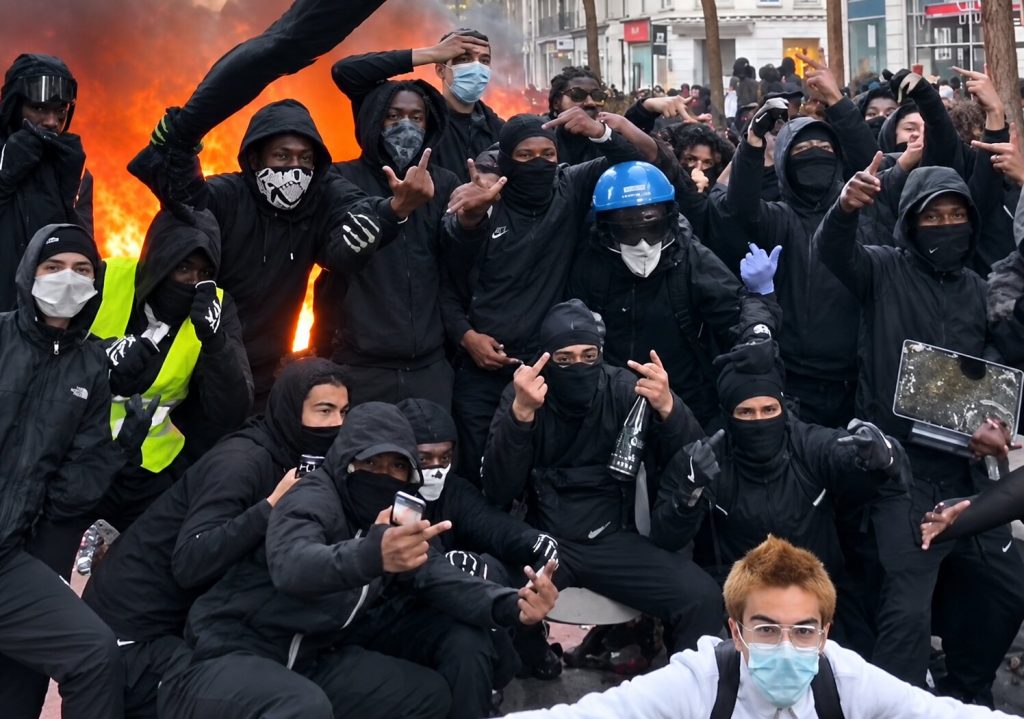
New Delhi: France arrested about 1,200 people after nationwide protests over deteriorating school conditions and rising living costs were accompanied by arson, looting and clashes with police on October 17, 2026. The unrest brought together student demonstrators, trade unionists and yellow vest activists, widening a dispute over education into a broader expression of frustration with public services and household finances.
The authorities estimated that 550,000 people demonstrated across the country, while the CGT trade union put participation at 800,000. The prime minister, Sébastien Lecornu, said 150 police officers and gendarmes were injured, as violence in several cities overshadowed substantial peaceful participation.
In Paris, much of the main march passed peacefully before confrontations and scattered attacks spread through parts of the capital. Police deployed tear gas and water cannon, while shops were looted and fires burned in streets where demonstrators had gathered.
The damage extended well beyond Paris, with a fire at the town hall in Limoges causing part of its roof to collapse and a tourist office in Lyon also set ablaze. In Marseille, protesters forced their way into the town hall after using security barriers to batter its entrance, before police intervened.
The demonstrations followed weeks of protests by secondary-school pupils demanding more teachers, better facilities and adequate classroom resources. Complaints about missed lessons, overcrowding and deteriorating buildings have increasingly intersected with wider concerns about inequality and the affordability of everyday essentials.
That convergence helped draw workers and former yellow vest participants into Saturday’s mobilization, giving the student campaign a broader social base. The yellow vest movement first emerged in 2018 against planned fuel-tax increases before expanding into sustained opposition to living costs and economic inequality.
The government has attempted to ease the education dispute, with the education minister, Édouard Geffray, promising 3,000 additional supply teachers during a television interview on October 8, 2026. The commitment has so far failed to end the protests, which have continued to draw support beyond schools.
The president, Emmanuel Macron, said those responsible for attacks on public buildings, businesses and town halls would face prosecution and punishment. Lecornu accused some groups of using the demonstrations to advance a political agenda through violence, while distinguishing their actions from peaceful expressions of public grievances.
The confrontations have also sharpened political divisions over policing and responsibility for the disorder. The left-wing leader, Jean-Luc Mélenchon, condemned looting and arson while criticizing police conduct, whereas the National Rally leader, Marine Le Pen, accused the far left of hijacking legitimate demand.
Police tactics were already under scrutiny before Saturday’s demonstrations, following serious injuries to teenagers during earlier protests. The interior minister, Laurent Nuñez, told the Senate that 36 investigations into alleged police violence had been opened, including cases involving severe injuries.
Among the incidents being investigated were reports that one teenager lost an eye after being struck by a police projectile and another lost a hand after picking up a stun grenade. Police have, in turn, described sustained attacks on their personnel, while criticism of the government’s handling of the unrest has extended to parts of the police establishment itself.
The unrest comes as France struggles to reconcile demands for stronger public services with pressure to contain public debt and secure parliamentary backing for its budget. The administration faces competing pressures to restrain spending and address the grievances sustaining the demonstrations.