


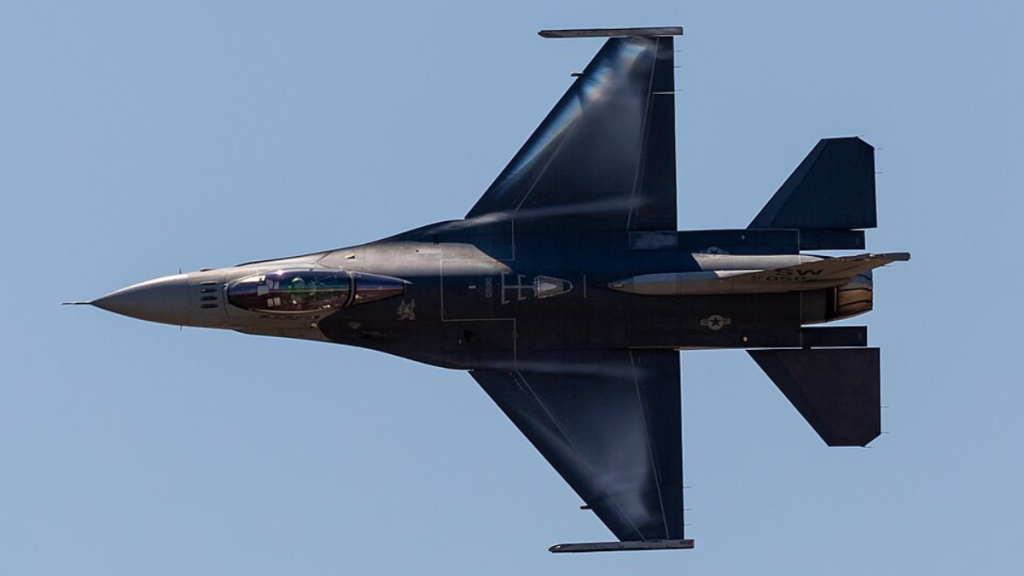
New Delhi: Nearly a year after F-16 fighter jets began joining Ukraine’s air force, the country has suffered another setback with the loss of its fourth aircraft during combat mission. While the pilot survived by ejecting safely, the latest incident highlights the demanding conditions under which Ukraine’s air force continues to operate.
The Ukrainian air force said the fighter experienced an emergency while carrying out a mission against Russian aerial threats. The pilot managed to eject before the aircraft crashed and was later taken for medical checks. Authorities said the crash caused no civilian casualties, and an investigation has been launched to establish what went wrong.
This crash marks yet another incident in a series of crashes involving the F-16 aircraft since Ukraine began using them in battle. Prior crashes have resulted in the death of two veteran pilots, illustrating how dangerous these missions can be.
Nevertheless, despite the loss, the F-16s have turned into one of the most important assets of the country’s army. These fighters have allowed Ukraine to increase its efficiency in dealing with Russian drones and cruise missiles and also offered additional options for assistance in the front-line combat zone. The F-16 was considered by Ukrainians as a way to bring their forces into the modern era.
Ukraine’s F-16 fleet has been built through military assistance from several European allies. The Netherlands and Denmark have supplied most of the aircraft delivered so far, while Norway has also committed fighter jets. Belgium has pledged to provide aircraft in the future, although deliveries have yet to begin.
The latest aircraft loss comes at a time when Russia has intensified its long-range attacks on Ukrainian cities and military infrastructure. Fresh missile strikes on Kyiv killed at least one civilian, while neighbouring Poland activated fighter aircraft to safeguard its airspace during the attack.
As the air campaign grows more intense, Ukraine is seeking not only more combat aircraft but also stronger missile defences. The Ukrainian president, Volodymyr Zelenskyy, said after returning from Washington that the United States had agreed to let Ukraine manufacture Patriot interceptor missiles under licence, a move Kyiv hopes will reduce its dependence on foreign supplies over time.
Ukraine’s air defence remains one of its biggest military challenges. Although its forces continue to destroy large numbers of Russian drones and cruise missiles, intercepting ballistic missiles such as the Iskander and Kinzhal remains far more difficult. Patriot systems are currently regarded as the only operational defence with a proven record against these weapons.
However, the availability of Patriot interceptors has become a growing concern. Stocks have been stretched by multiple international conflicts, while missile production has struggled to keep pace with rising demand. Defence analysts say Russia is producing ballistic missiles at a much faster rate than Western countries are manufacturing interceptor missiles, creating a widening imbalance.
Ukraine’s allies have responded by promising additional support, including more defence systems, funding for Patriot production and assistance for Ukraine’s domestic missile programmes. The United States has also approved $60 billions of dollars in funding to expand Patriot missile manufacturing.