


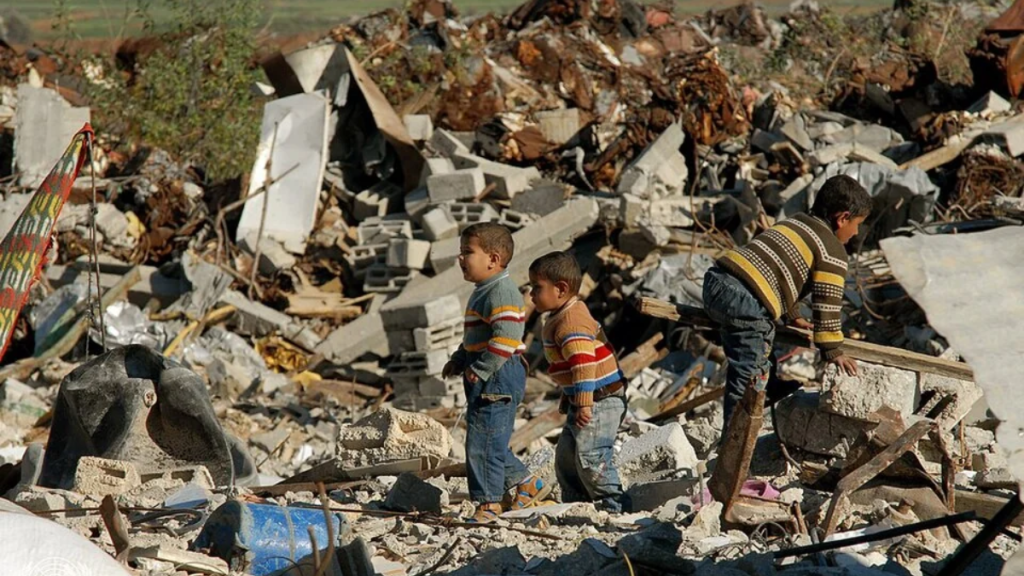
New Delhi: Gaza is facing a growing pollution crisis as damaged sewage systems release untreated wastewater into the Mediterranean Sea and destroyed buildings leave behind potentially dangerous waste. A new report by Oxfam and the UK-based Conflict and Environment Observatory (CEOBS) has found signs of possible environmental contamination across more than 99 per cent of the territory.
According to the report “Environmental War Crimes”, the Israeli military actions have impacted about 78 per cent of the land in Gaza. Heavy metals, explosives, asbestos from destroyed buildings, and many other pollutants form some of the key causes of pollution highlighted by the report.
The executive director of Oxfam International, Amitabh Behar, called it “environmental war crimes” and labelled it “an ongoing genocide in Gaza.” According to him, the destruction would have long-term effects on the wellbeing and safety of people in the future.
Oxfam and CEOBS used satellite images, scientific data and other publicly available information to assess the damage. Their findings identified Gaza City, Khan Younis, Rafah, Jabalia and areas along Salah al-Din Road among the places facing particularly high contamination risks.
The report found that only 19 per cent of Gaza’s sewage pumping stations are still working. Just 30 per cent of the wastewater network remains partly operational, allowing around 40,000 cubic metres of untreated sewage to flow into the Mediterranean Sea every day.
Another 15,000 cubic metres of wastewater enter the ground daily through damaged pipes and waste collection systems. This increases the risk of groundwater pollution and exposes nearby communities to harmful bacteria.
Water tests have also found signs of sewage contamination in Gaza’s groundwater. In July, bacteria linked to human or animal waste were detected in 19 per cent of the 79 wells tested, compared with 2 per cent in 2021.
The destruction of homes and public infrastructure has also created huge piles of rubble. The United Nations Environment Programme (UNEP) estimates that more than 61 million tonnes of debris have accumulated across Gaza, with some of it potentially containing dangerous materials.
Pollution raises long-term health concerns
Oxfam warned that breathing dust from destroyed buildings and smoke from burning waste could cause breathing problems and lung damage. Children and pregnant women could face particular risks from prolonged exposure.
According to reports, doctors in Gaza have reported more respiratory infections linked to dust from destroyed buildings. People are also burning plastic, old clothes and other waste to cook food and keep warm, adding to air pollution.
Palestinian dermatologist Dr Alaa Abu Hajar said, that cases of long-term skin diseases had increased five-fold since the war began, BBC reported. He linked the rise to pollution and poor living conditions in overcrowded displacement camps, where children are particularly affected.
Oxfam has called for an independent environmental assessment to identify dangerous substances and measure pollution levels across Gaza. It says this work should happen before large-scale cleaning and reconstruction begin, with proper safety measures for workers handling the waste.
The organization also warned that restrictions on the entry of testing equipment and technical experts had made it difficult to determine the full extent of contamination. Without proper testing and clean-up, rebuilding could expose residents to harmful substances for years.
Israel has rejected genocide allegations in the ongoing case at the international court of justice (ICJ), calling them baseless and distorted. It says its military campaign is an act of self-defence following Hamas’s October 7, 2023, attack and maintains that it takes steps to reduce harm to civilians.
Meanwhile, Gaza’s Hamas-run health ministry has reported that at least 74,746 Palestinians have been killed since the war began. The United Nations considers the ministry’s casualty figures reliable and says humanitarian conditions remain extremely difficult.