


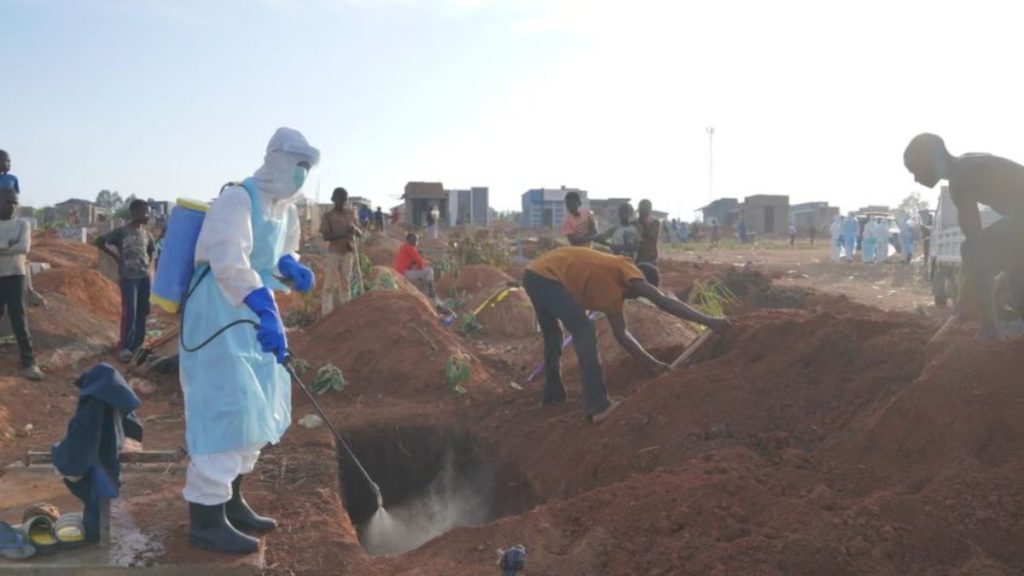
New Delhi: The Ebola outbreak in the Democratic Republic of the Congo (DRC) has become the deadliest in the country’s history, with 4,945 confirmed cases and 2,325 deaths recorded through August 15. The toll has surpassed the 2,299 deaths reported during the DRC’s 2018-2020 epidemic.
The DRC health ministry declared the outbreak on May 15 after laboratory tests confirmed cases of Bundibugyo virus disease. Two days later, World Health Organization (WHO) Director General Tedros Adhanom Ghebreyesus declared the outbreak a Public Health Emergency of International Concern.
WHO said on August 14 that the outbreak was in a phase of “intense transmission”. By August 12, it had spread to 54 health zones across six provinces, with 4,665 confirmed DRC cases and 2,184 deaths, giving a case fatality ratio of 46.8 per cent. On August 17, Tedros called it the second-largest Ebola outbreak ever recorded and said it was spreading faster than any previous outbreak.
Why is Ebola spreading so fast?
The outbreak is unfolding amid insecurity, population displacement, cross border movement and limited access to health services. WHO says attacks on health facilities, weak infection-prevention capacity and difficulties reaching affected communities have disrupted surveillance, case detection and contact tracing.
Contact follow-up reached 84.2 per cent on August 12. WHO also recorded at least 155 infections among health workers by August 9, including 45 deaths, while 12 attacks on healthcare had been reported since the international emergency was declared.
The rise in mortality has been particularly sharp. WHO recorded a 17.7 per cent case fatality ratio in the DRC on June 6; by August 12, it had reached 46.8 per cent. WHO says rapid recognition, testing and early supportive care can reduce mortality, making delayed detection and treatment a critical concern.
The current epidemic nevertheless remains smaller than the 2014-2016 West Africa outbreak, the world’s largest recorded Ebola epidemic. WHO says more than 28,600 people were infected and 11,325 died during that crisis.
Neighbours remain at risk
Uganda recorded 20 confirmed cases and two deaths linked to the DRC outbreak. WHO said on August 14 that Uganda had reported no further transmission after its most recent imported case was discharged on July 16, although heightened surveillance remains in place because transmission continues across the border.
WHO and the Africa Centres for Disease Control and Prevention (Africa CDC) have launched a six-month continental preparedness and response plan seeking $518 million. Covering June to November, it supports surveillance, laboratory testing, clinical care, infection prevention, community engagement and cross-border preparedness, with additional measures being strengthened in 10 priority countries.
At a high-level meeting on August 17, Tedros called for faster sharing of alerts, genomic information and contact-tracing data, synchronised screening at border crossings and stronger joint financing. WHO continues to advise against unnecessary restrictions on international travel and trade.
Vaccine trials bring an Indian link
There is no licensed vaccine or specific approved treatment for Bundibugyo virus disease. However, two vaccines designed specifically against the virus have entered human trials, while WHO is also advancing treatment research.
The University of Oxford launched the first Phase I trial of its ChAdOx1 BDBV vaccine in July. The Serum Institute of India (SII) manufactured and stockpiled about 620,000 doses of the investigational vaccine and supplied 4,000 doses for the trial. Health Canada has separately authorised Moderna to conduct a Phase I trial of an mRNA vaccine candidate.
The WHO-sponsored Platform Adaptive Randomised Trial for New and Repurposed Filovirus Treatments (PARTNERS), which began enrolment in July, is testing investigational therapies in the DRC. Tedros said on August 17 that 100 patients had been enrolled.
WHO has deployed more than 200 experts, shipped about 300 tonnes of supplies and is moving to triple treatment capacity. The immediate challenge is to find transmission chains earlier, get patients into care sooner and prevent continuing transmission inside the DRC from seeding sustained outbreaks across its borders.