


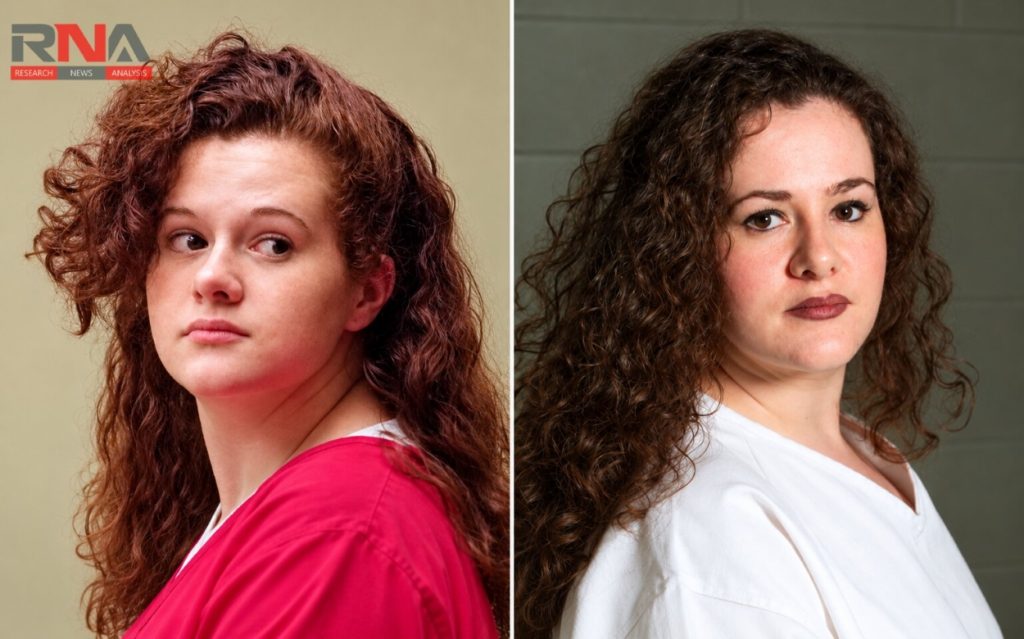
New Delhi: Christa Pike continued breathing after Tennessee officials administered two doses of a lethal injection drug on Wednesday, turning her scheduled execution into a prolonged procedure that ended with her transfer to hospital. The failure has prompted an independent review and a pause in further executions this year, while her lawyers say she remains critically ill.
The 50-year-old was due to die at Riverbend Maximum Security Institution in Nashville for the 1995 murder of 19-year-old Colleen Slemmer, a fellow student at a vocational training centre. As RNA Media reported earlier, Pike was 18 when she committed the crime and would have been the first woman executed in Tennessee in more than 200 years.
The execution, originally scheduled for 10am, was delayed after a federal appeals court issued a temporary stay to examine a challenge concerning the treatment of evidence about Pike’s childhood sexual abuse. The US supreme court subsequently lifted that stay, allowing prison officials to proceed that evening despite dissent from three justices.
According to an AP account from inside the prison, the viewing curtain opened at 7.27pm, revealing Pike strapped to a gurney with an intravenous line in her arm. She spoke of being at peace, sang with her spiritual adviser and later complained that her arm hurt.
Officials closed the curtain at 7.46pm and reopened it three minutes later, according to the WLPN, the Nashville public radio station. Pike could be heard making loud snoring sounds, and when the curtain closed again at 8.06pm, those sounds continued through the chamber’s microphone.
Her lawyer, Randy Spivey, said he sought telephone access at about 8.22pm to demand that the execution stop and medical treatment begin. He received confirmation around 8.50pm that an ambulance was coming; emergency vehicles arrived outside the prison around 9.14pm.
Media witnesses had been escorted out at about 8.53pm, when the microphone was switched off, without an announcement that Pike had died. The Tennessee department of correction later confirmed her transfer to an outside medical facility and maintained that its staff had followed the approved execution procedure.
As RNA Media reported after the failed attempt, the governor, Bill Lee, ordered an outside investigation and suspended the remaining execution scheduled for 2026. The intervention followed his earlier refusal to grant Pike clemency.
Critical condition and questions over lethal injection
Pike was in critical condition and receiving lifesaving treatment on Thursday, her lawyers said. They had limited information about her prognosis and renewed their request for her death sentence to be commuted.
Spivey described repeated attempts to obtain vein access, while another lawyer, Steve Ferrell, said Pike had a lifelong blood disorder and a history of difficulty having blood drawn. Ferrell suggested that the intravenous line might have delivered the drug into surrounding tissue, but officials had not established the cause of the failure.
Separately, Reuters reported that Spivey described discolouration and blistering around injection sites, and said Pike complained of severe arm pain. Her legal team characterized the ordeal as “chemical torture”, an allegation that places the conduct of the procedure under scrutiny alongside its effectiveness.
Tennessee uses pentobarbital, a barbiturate, under a single-drug protocol adopted in 2024. The department said the chemical had consistently worked and that the protocol permitted no further procedures beyond those attempted that evening.
However, an WPLN’s examination of the protocol identified a significant gap. It allows a second dose when the first fails to cause death but does not specify what follows if the second also fails. Lee said the available information suggested staff had followed the prescribed process, while acknowledging that the outcome required investigation.
This was Tennessee’s second unsuccessful execution attempt this year, following the abandonment of Tony Carruthers’s lethal injection in May because officials could not establish the required intravenous access. The state subsequently executed Anthony Darrell Hines in August, despite calls for an investigation and a pause following Carruthers’s case.
The distinction matters because Pike apparently received execution drugs before being taken alive to hospital, rather than having the attempt stopped before injection. The Death Penalty Information Center described her survival as unprecedented in its records of modern US executions, although the precise delivery of the drugs remains unresolved.
Pike has acknowledged participating in Slemmer’s killing, while her clemency campaign cites severe childhood abuse and later diagnoses of bipolar disorder and post-traumatic stress disorder. Her then-boyfriend, Tadaryl Shipp, who was 17 at the time, received life imprisonment with the possibility of parole.
Slemmer’s mother, May Martinez, who travelled to witness the execution, told AP that its failure had denied her daughter justice. Pike’s prognosis, the cause of the failed injections and the findings of the independent review remained unresolved in the available reporting.