


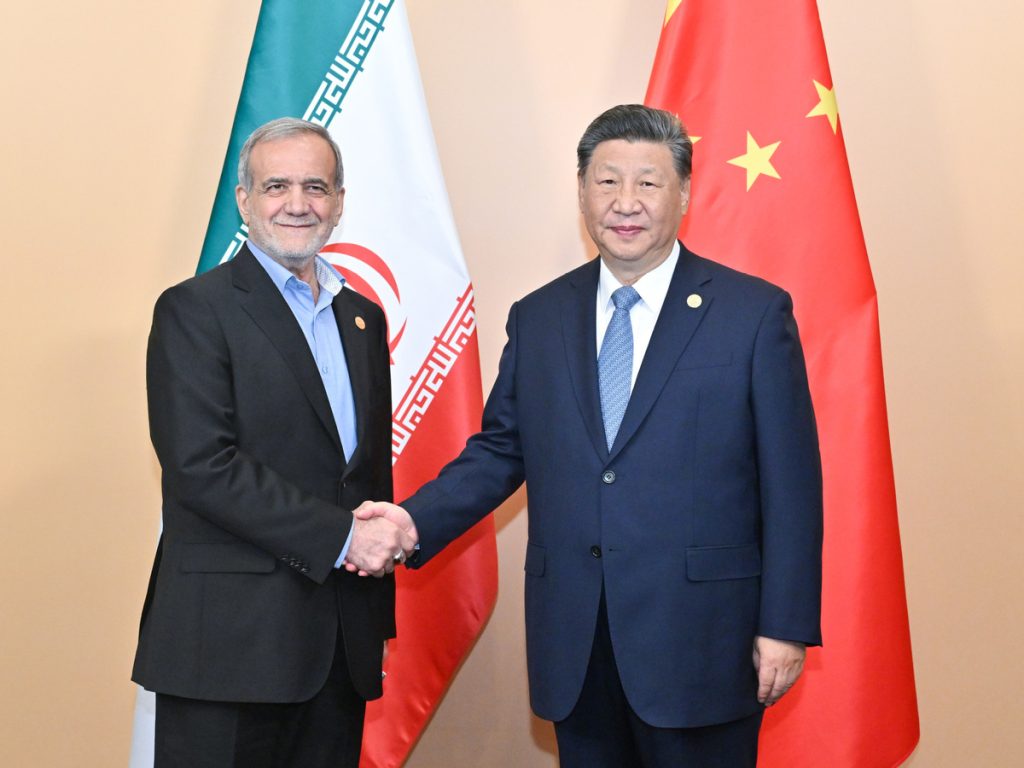
New Delhi: China has privately urged Iran to use its influence over Yemen’s Houthis to help contain the group’s recent military expansion, following an appeal from Saudi Arabia for Beijing’s intervention, according to three Iranian sources familiar with the discussions cited by Reuters. The reported move highlights the growing pressure on China to use its close relationship with Tehran to protect maritime and energy interests as fighting around the Red Sea and Bab al-Mandab Strait intensifies.
The Saudi appeal followed rapid Houthi advances along Yemen’s Red Sea coast and in areas around the Bab al-Mandab, a strategic maritime chokepoint linking the Red Sea with the Gulf of Aden. The developments have increased the exposure of Saudi oil exports and commercial shipping at a time when the wider regional conflict has already placed severe pressure on established energy routes.
Beijing has publicly called for restraint, dialogue and the restoration of safe navigation, but its reported private message to Tehran appears to have been more direct. The sources said China wants Iran to employ whatever influence it has with the Houthis to prevent the conflict from extending further into maritime corridors on which the Chinese economy depends.
It remains unclear how the Chinese message was conveyed or whether it was delivered during Iranian foreign minister Abbas Araqchi’s visit to China on Wednesday. The Iranian sources, who spoke on condition of anonymity, also did not indicate that Tehran had committed to taking specific measures against the Houthis.
Iran’s reported response was that lasting stability in the region depended on ending the ongoing US-Israeli war against Iran. The position suggests that Tehran continues to view the wider regional conflict as the principal driver of instability, rather than treating Houthi military activity as an issue that can be addressed separately.
For Beijing, however, the issue has a direct economic dimension. China is the world’s second-largest economy and obtains a substantial share of its oil imports from the Middle East, while trade with the Gulf Cooperation Council states is estimated at about $300 billion a year, according to the Middle East Institute’s Alex Vatanka, cited by Reuters.
The simultaneous vulnerability of the Strait of Hormuz and Bab al-Mandab is particularly significant. With Hormuz already effectively closed in the current regional crisis, sustained disruption around Bab al-Mandab could place pressure on another major maritime artery used to move energy and other goods between the Middle East, Europe and Asia.
The strategic importance of the Houthi advance has also increased because of the group’s reported gains along Yemen’s western coast and around the Bab al-Mandab. Other reporting this week has described the Houthis as gaining effective control of strategically important territory near the chokepoint, raising concerns about their ability to influence shipping through one of the world’s most important maritime gateways.
The episode also places Beijing in an unusual diplomatic position. Saudi Arabia, which has traditionally viewed Iran and its regional partners through a security lens, has now turned to China – a country that maintains close economic ties with Tehran and helped broker the restoration of Saudi-Iranian diplomatic relations in 2023 – seeking assistance with a problem directly involving an Iranian-aligned group.
China’s leverage over Iran is substantial but not unlimited. Beijing is Iran’s principal oil customer and an important economic partner, yet Chinese investment in Iran has lagged behind the scale of its economic engagement with several Gulf Arab states, giving Tehran its own room for manoeuvre.
The question now is whether Beijing is prepared to go beyond diplomatic persuasion if the Houthis continue to threaten Saudi territory and Red Sea shipping. It is widely believed, especially among western capitals, that China was among the few countries that is still capable of pressing Tehran on the issue, while analysts cited in the report said the real measure of Chinese influence would be whether Beijing was willing to attach meaningful consequences to its demands.
For Saudi Arabia, the appeal to China reflects the widening complexity of the regional crisis. For China, meanwhile, the episode illustrates the increasingly difficult balance between maintaining its strategic relationship with Iran, preserving ties with the Gulf Arab states and protecting the maritime energy routes that underpin its economy.
The outcome could therefore become a practical test of the diplomatic influence Beijing has accumulated across the Middle East in recent years. If Houthi operations around the Red Sea and Bab al-Mandab continue to threaten shipping, China will face increasing pressure to translate its economic and diplomatic leverage over Tehran into a more tangible effort to stabilize the region.