


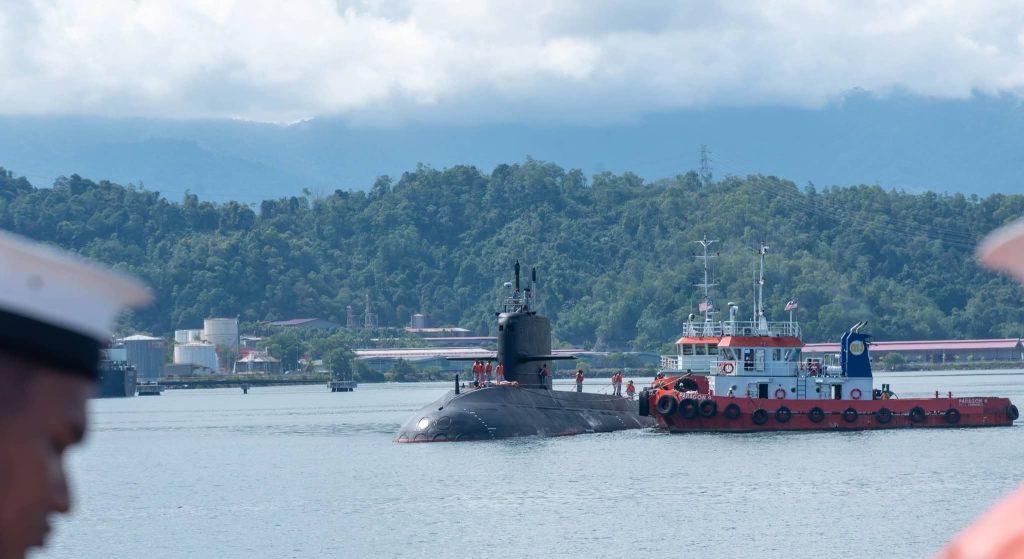
Pakistan has acquired a submarine fleet with one small imperfection: the engine. The Pakistan Navy commissioned PNS Hangor, the first of eight Chinese boats, at Sanya on April 30, and the vessel reached Karachi on June 11.
The deal, signed in 2015 and valued at an estimated $4–5 billion, promised a quiet, modern undersea force. What it delivered was a propulsion system chosen by Berlin’s export policy and Beijing’s convenience, with Islamabad’s preferences apparently an afterthought.
The Hangor was designed around Germany’s MTU 396 diesel, a benchmark for quiet running. Berlin refused export licences, citing the European Union’s arms embargo on China, and China Shipbuilding & Offshore International Company stepped in with its own CHD620. Before Pakistan, no navy had publicly adopted that engine for active submarine service, and the People’s Liberation Army – Navy (PLA-N) does not appear to use it – a recommendation of sorts.
Thailand, buying the related S26T, was less trusting. It insisted on more than 6,000 hours of bench testing and secured guarantees on warranty, compensation and safety. Pakistan has published no comparable evaluation, and its navy did not respond to questions on the substitution.
This matters because submarines live by silence. The Hangor’s Stirling-cycle air-independent propulsion (AIP) plant is admirably quiet at slow speed, but it produces modest power and cannot quickly recharge the battery. That duty falls to the diesels, which force the boat to snorkel – precisely when it is easiest to find.
A louder engine makes a hard choice harder. The commander can surface briefly and dive with a half-charged battery, or charge fully within an adversary’s hearing. AIP does not mask machinery noise, and a submarine is only as stealthy as its noisiest system, however quiet its quietest one.
The risk, naturally, is not shared equally. China acquires a service record for its engine without troubling its own fleet, as eight Pakistani hulls patrolling the Arabian Sea will clock sea hours no test bench can. Pakistan keeps any failures, along with a heavy reliance on Chinese spares, overhauls and crew training.
Such reliance is hardly new. Pakistan took 61 per cent of Chinese arms exports in 2021–25, while China supplied 80 per cent of its imports. A customer this loyal is rarely in a position to ask for what Bangkok demanded.
Islamabad prefers to speak of partnership. The navy hailed a “time-tested and enriching friendship”, and Admiral Naveed Ashraf called Chinese platforms reliable. Yet equals share design authority, test data and exposure to failure; here China designs, specifies and certifies, while Pakistan accepts and absorbs.
Deliveries have meanwhile slipped well beyond the original schedule, partly because of the engine change. A fleet counted in hulls impresses little if the boats wait in dock for spares, and the same funds might have strengthened surface ships or maritime patrol aircraft.
Pakistan has chosen numbers over capability. Unless it demands the scrutiny that Thailand did, it will remain a proving ground for Chinese hardware – and a deterrent that falters just when the diesels must run.