


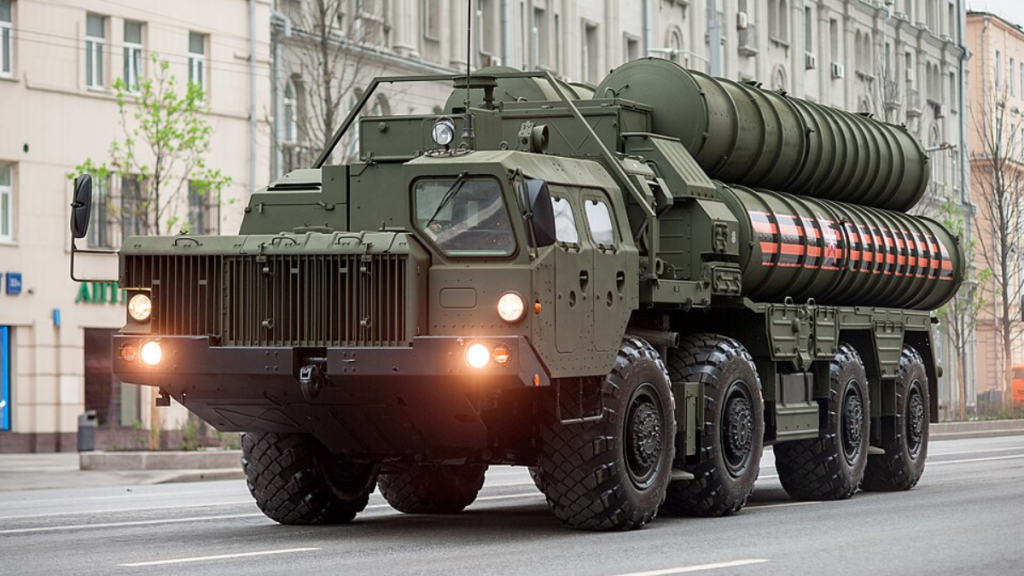
New Delhi: India has received the fourth squadron of the Russian-built S-400 “Triumf”, rechristened in India as S-400 “Sudarshan”, marking another step in strengthening the country’s layered air-defence network. The shipment reached an Indian port on Monday and is being delivered in multiple consignments, defence sources said.
The latest squadron forms part of the 2018 agreement between India and Russia worth $5.4 billion for the acquisition of five S-400 squadrons. While three squadrons were inducted earlier, deliveries of the remaining systems were pushed back due to disruptions caused by the Russia-Ukraine conflict.
Several media outlets reported, the newly arrived equipment includes launchers, radars, sensors and missile components. The remaining consignments are expected to arrive shortly, after which the system will be assembled and deployed by the Indian Air Force at a designated operational location.
The S-400 emerged as a key element of India’s air-defence architecture during Operation Sindoor in May 2025, when it was reportedly employed against Pakistani drones and cruise missiles. The Indian Air Force later highlighted the system’s capabilities through an official video, claiming it achieved a long-range engagement of a high-value airborne target from beyond 300 kilometres.
The final S-400 squadron remaining under the 2018 contract is likely to arrive before year-end, completing India’s acquisition of all five systems.
India is also looking to expand its inventory. In March, the Defence Acquisition Council approved a proposal to procure five additional S-400 systems, a move estimated to cost around $6.1 billion. The decision followed a review of operational requirements and lessons drawn from recent military engagements.
The S-400 is capable of detecting and engaging multiple aerial threats simultaneously, including fighter aircraft, stealth platforms, ballistic missiles and hypersonic weapons. With an interception range of up to 400 kilometres, it is regarded as one of the world’s most advanced long-range air-defence systems.
Alongside foreign acquisitions, India is also investing in indigenous capabilities through “Project Kusha”, a long-range air-defence programme aimed at developing systems with performance comparable to the S-400. The project is expected to enhance India’s ability to counter drones, missiles and other airborne threats while reducing long-term dependence on imported platforms.