


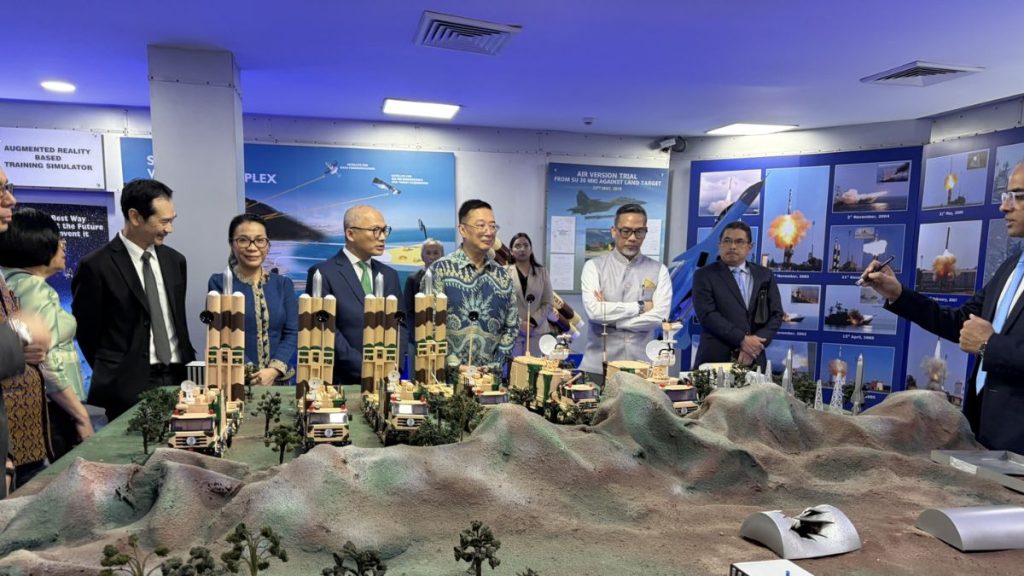
New Delhi: Three Asean envoys based in New Delhi visited Brahmos Aerospace headquarters in the capital on Wednesday, getting a closer look at the supersonic cruise missile programme and India’s defence manufacturing capabilities. The visit comes as southeast Asia emerges as the principal overseas market for Brahmos, with the Philippines already operating the system and Vietnam and Indonesia moving ahead with acquisitions.
The diplomatic engagement was organized with the involvement of the Philippine embassy, which currently chairs the Asean New Delhi committee. Representatives from Singapore and the Philippines were among those participating in the visit.
The Singapore high commission said the engagement offered an opportunity to learn more about India’s defence industry and the engineering behind Brahmos. The visit itself, however, does not indicate that all participating Asean countries are considering procurement.
The Philippines became the first foreign customer for Brahmos after signing a $374 million contract in January 2022 for three batteries of the shore-based anti-ship missile system. Deliveries began in April 2024, marking India’s first export of the jointly developed missile system.
Vietnam has since joined the Brahmos export pipeline. India’s defence secretary, Rajesh Kumar Singh, said in May that an agreement to supply Brahmos missiles to Vietnam had already been signed, although New Delhi did not disclose the contract’s financial or technical details. He said at the time that India had a “strong commitment” to Asean countries.
Indonesia is also set to acquire the system. By July, Indonesia had signed a contract with Brahmos Aerospace for the missile system, Reuters reported citing the Indonesian presidential palace, making it the third country after the Philippines and Vietnam to acquire Brahmos.
Brahmos Aerospace is an India-Russia joint venture between the Defence Research and Development Organisation and Russia’s NPO Mashinostroyenia. The latest diplomatic visit places the missile programme within a wider expansion of India’s defence-industrial engagement with Asean, while stopping short of suggesting procurement interest from every participating mission.