


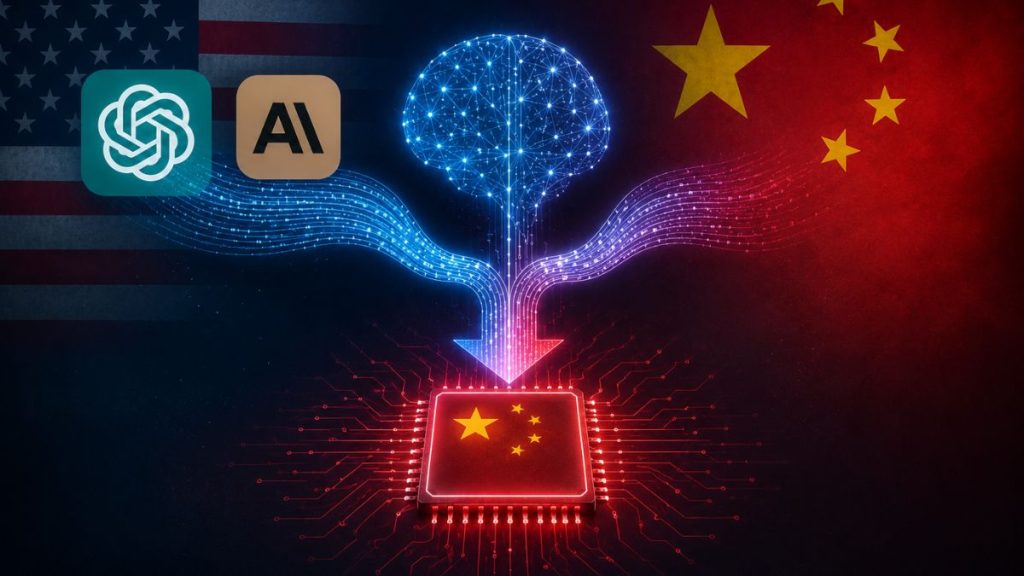
New Delhi: Researchers linked to China’s military have been using outputs from top US artificial intelligence models to train their own homegrown AI systems for defence use, according to an investigation by Reuters. The models used include OpenAI’s GPT-3.5 and Anthropic’s Claude.
The findings are based on a review of more than 80 Chinese research papers and patents. They had not been previously reported.
The researchers did not access the source code or internal workings of the American models. Instead, they used a technique called model distillation, in which a smaller AI system is trained by studying the outputs of a larger one.
A People’s Liberation Army (PLA) intelligence unit reportedly used GPT-3.5 to analyse and summarize military source code. It then trained a separate Chinese AI system on those summaries, allowing it to operate entirely within secure military networks.
Researchers also used the technique to shrink AI vision systems for drones. This let the drones recognize targets, analyse video and navigate without needing an internet connection or cloud computing.
Read also: As US’s unease over China’s AI rise deepens, White House announces $5 billion as Genesis Mission top-up.
A separate study applied distilled AI to warships, drones and unmanned submarines. The goal was to help them identify targets during simulated naval operations.
Claude was reportedly used to generate synthetic training data for tools related to social media monitoring, content moderation and text classification. Distillation is used widely across the AI industry and is not illegal in itself.
At the heart of the dispute is whether Chinese researchers are taking valuable capabilities from US models without permission. Critics say this could breach the companies’ usage policies or intellectual property rights.
US officials are also concerned the technique could help China work around export controls on advanced chips. That is because a distilled model needs far less computing power to run than the original one it learned from.
Beijing has previously accused Washington of using export restrictions to entrench its own dominance in AI. It has argued that American firms use similar training techniques themselves.
Experts cited in the reporting say distilled models remain narrower than the frontier systems they learn from. Such models can become highly effective at a specific task, such as target recognition or navigation, but do not match the broader reasoning ability of the original AI system.
The finding adds a new dimension to the US-China contest over artificial intelligence, which has largely focused on restricting China’s access to advanced chips and semiconductor technology. The review suggests that even without those chips, Chinese researchers can still draw on the capabilities of leading US models simply by using them.