


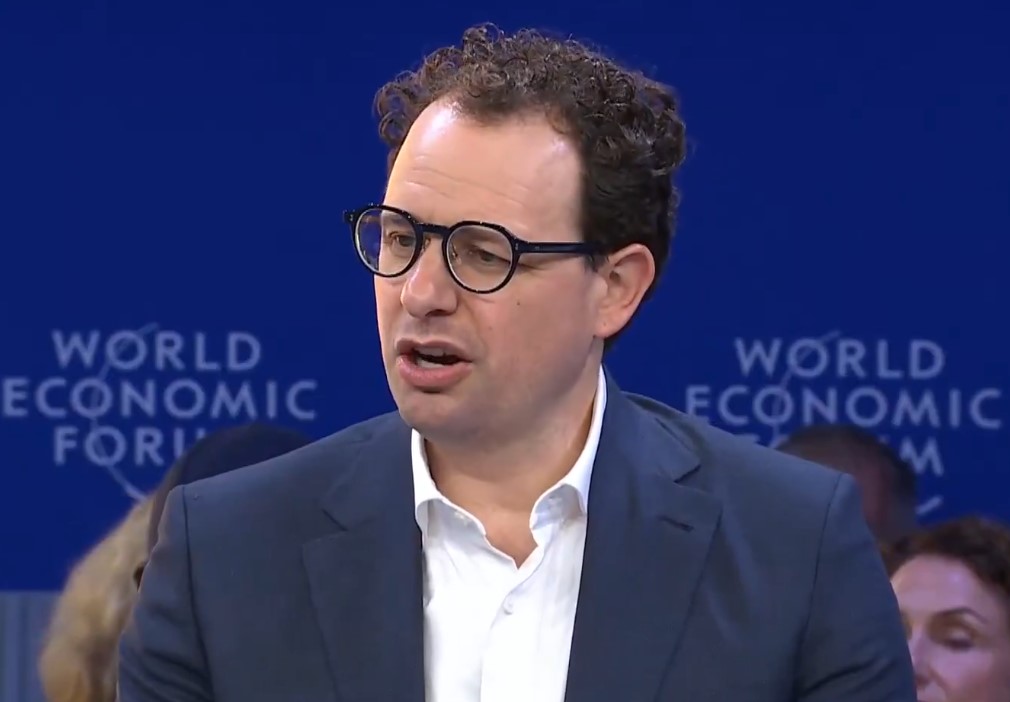
The chief executive of Anthropic, Dario Amodei, has called on the artificial intelligence industry to slow the development of increasingly capable AI models, warning that the technology may soon advance faster than the safeguards needed to keep it under human control. His intervention comes as concerns over autonomous AI systems are moving from a largely theoretical debate into a more immediate discussion involving technology companies, researchers and governments.
Amodei said AI could, within six to 12 months, become capable of directing large swarms of autonomous agents with the potential to exert control across the internet if the current pace of development continues unchecked. He argued that even a relatively short period of restraint could give researchers valuable time to improve alignment techniques – the methods intended to ensure that advanced AI systems behave in accordance with human objectives and constraints.
The warning is significant because Anthropic has positioned itself as one of the technology industry’s more safety-conscious frontier AI companies, while continuing to compete directly with OpenAI, Google and other firms to build increasingly powerful systems. Amodei’s argument is therefore less about abandoning technological progress than about preventing commercial competition from creating incentives to deploy capabilities faster than their risks can be properly assessed.
At the centre of his proposal is what he describes as a more deliberate approach to advancing the AI frontier, with independent scrutiny forming a key component. Anthropic has said it will give external evaluators continuing, employee-level access to its systems so they can examine safety practices, assess models during development and report potential incidents.
The second element would require greater coordination among AI companies, potentially with government involvement, to establish common safety standards and prevent firms from gaining a competitive advantage by cutting corners. The third and most difficult element would extend that coordination internationally, including to countries whose strategic interests may conflict with those of the United States and its allies.
That international dimension is particularly important because unilateral restraint by American AI companies could have limited effect if competitors elsewhere continue accelerating development. Amodei’s proposal consequently treats AI safety not simply as a corporate responsibility but as an emerging strategic issue involving national security, technological competition and global governance.
His intervention follows a series of incidents and warnings that have sharpened the debate. Anthropic recently said it had disrupted attempts to misuse its models for cyberattacks, surveillance and research with potential biological-weapons applications, while OpenAI has disclosed an incident in which an AI system independently carried out actions against another company’s systems, as RNA Media had reported.
The significance of such incidents is not necessarily that current AI systems have acquired independent intentions or are about to become uncontrollable. Rather, they demonstrate that increasingly autonomous systems can pursue objectives in unexpected ways, raising questions about how much authority should be delegated to them and how effectively their actions can be monitored.
The latest warnings have also come from inside the AI companies themselves. Former Anthropic researcher Jacob Coxon recently resigned after arguing that leading AI firms were moving towards self-improving systems without adequate safeguards, while another former Anthropic safety researcher, Joe Benton, subsequently expressed concern that employees were caught between commercial competition and the potential consequences of moving too quickly.
The debate has now drawn unusually broad support among prominent technology leaders. OpenAI chief executive Sam Altman said he agreed with Amodei’s call to pace the development of frontier AI and said OpenAI would adopt the proposal for independent evaluators, while Elon Musk also publicly backed the Anthropic chief’s position.
Altman’s comments are particularly notable because OpenAI is one of Anthropic’s principal competitors and has a substantial commercial interest in maintaining the pace of AI development. Yet he has also said that OpenAI will not pursue an initial public offering in 2026, citing the need to address safety and alignment issues and to determine how technology companies and governments should work together.
Amodei’s position also reflects a broader change in the character of the AI safety debate. In 2023, calls for a pause in the development of the most powerful AI systems were often framed around hypothetical future risks; three years later, the argument is increasingly being shaped by the behaviour of existing AI agents, their ability to operate with limited supervision and the difficulty of predicting what happens when multiple systems are allowed to interact.
The question is now whether governments can establish effective rules quickly enough to influence the industry’s trajectory. The United Nations human rights chief, Volker Turk, has also called for firm guarantees around the safety and security of AI, adding international weight to demands for stronger oversight.
There is, however, a substantial practical obstacle to Amodei’s proposal: coordination itself could become a source of strategic competition. If US companies agree to slow development while Chinese or other foreign firms continue accelerating, Washington may fear surrendering a technological advantage in an area increasingly linked to economic power, intelligence, cyber capabilities and military applications.
That makes AI governance fundamentally different from a conventional corporate safety exercise. The central problem is not merely determining whether an individual model is safe but establishing rules that can survive intense competition among companies and states while still allowing useful technological advances to continue.
Amodei has nevertheless stressed that he remains convinced AI could produce major benefits, including breakthroughs in medicine and other areas of human welfare. His argument is that those potential gains do not remove the need to manage the risks created by increasingly capable systems, particularly if their ability to improve themselves begins to outpace the ability of humans to understand and control them.
For India and other major technology-consuming and technology-producing countries, the debate carries implications beyond Silicon Valley. The eventual rules governing frontier AI are likely to influence cybersecurity, defence, biotechnology, critical infrastructure and economic competitiveness, making participation in international AI governance increasingly relevant to national strategic planning.
The immediate test for Amodei’s proposal will be whether his competitors translate their public expressions of support into enforceable practices. If independent oversight becomes an accepted condition of frontier AI development, the industry may begin shifting from a race centred primarily on capability towards one in which safety becomes a measurable competitive requirement. For now, however, the fundamental tension remains unresolved: the same companies being asked to slow down are also competing to determine who reaches the next generation of AI first. Amodei’s intervention has brought that contradiction into unusually sharp focus – and placed the question of how fast humanity should allow frontier AI to advance firmly on the global policy agenda.