


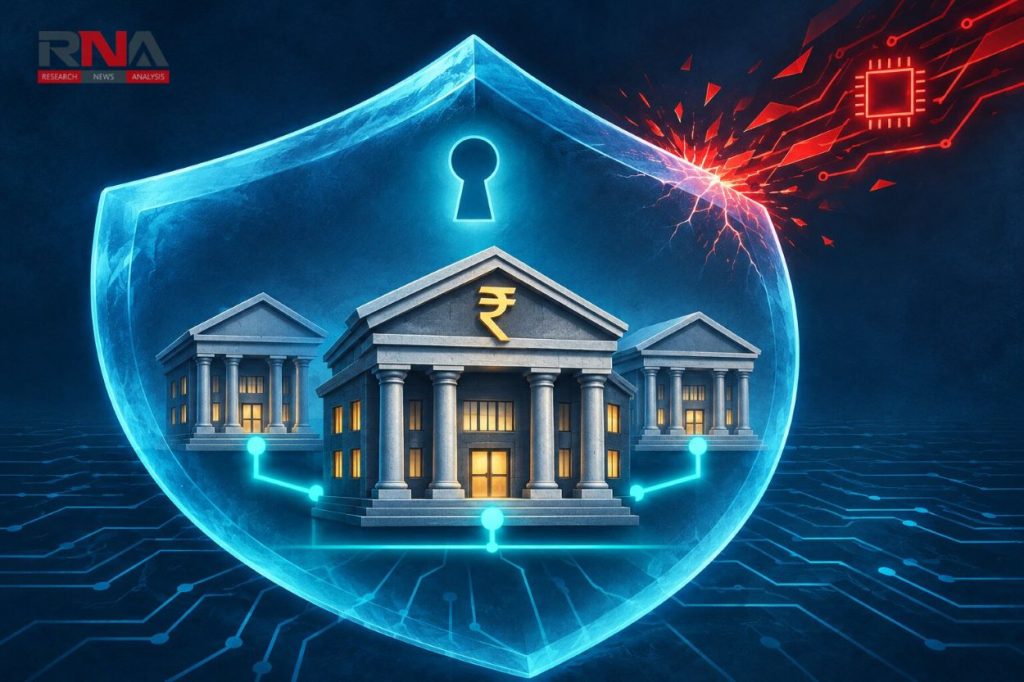
New Delhi: The Indian Banks’ Association (IBA) is developing a mechanism for banks to rapidly share information about cyber incidents, as lenders confront growing threats from advanced artificial intelligence. Its chairman, CS Setty, said the industry was also working towards a common testing environment to assess frontier AI models and strengthen defences without exposing live banking systems to experimental tools.
Setty, who also chairs State Bank of India (SBI), outlined the initiatives while discussing the lender’s quarterly results on November 3, 2026. His comments followed a breach in which 3,897 SBI customer records containing sensitive information appeared on the dark web, prompting an investigation and renewed scrutiny of cybersecurity across the banking sector.
The proposed information-sharing arrangement would help banks alert one another quickly enough for other institutions to take preventive action. Setty said incidents were already communicated to regulators and security agencies, but a structured channel within the financial system could make the industry’s response faster and more coordinated.
Alongside this effort, the IBA has initiated work on an industry-level “sandbox” – a controlled environment in which advanced AI models can be assessed before wider use. Setty said SBI was not using frontier models and their adoption across banking and financial services remained limited.
The intention is to examine how such tools could identify weaknesses and help banks address them, while keeping testing separate from operational systems. Setty said the emerging risks required action at both individual banks and industry level, with AI increasingly becoming part of the defensive response as well as the threat.
SBI’s immediate priority, meanwhile, has been containing the breach and identifying and correcting the vulnerabilities involved. Setty said the investigation into its root cause remained under way, while the bank had contacted affected customers and said their account balances and funds were safe.
The exposed information reportedly included names, registered mobile numbers, dates of birth, email and residential addresses, and identifiers associated with customer and loan records. Although the breach formed the backdrop to Setty’s remarks about AI risks, the reports reviewed did not establish that AI had caused the SBI incident.
The bank has conducted additional cybersecurity checks, including an examination of application programming interfaces (APIs) and assessments of system vulnerabilities. Setty also described SBI’s cyber insurance as comprehensive, although he did not disclose the extent of its coverage.
Setty said spending would not be compromised when strengthening cybersecurity, while acknowledging that the expansion of digital services created more potential points of attack. Maintaining confidence in digital banking, he said, required cooperation among banks, government bodies and other institutions as the threats evolved.
The industry initiatives come against a wider regulatory push to improve preparedness. Reuters reported on October 30, citing three people familiar with the discussions, that the Reserve Bank of India (RBI) had sought evidence of compliance with existing cybersecurity rules and details of banks’ readiness for AI-related risks.
According to that report, the RBI also asked lenders to examine weaknesses in APIs linking banks with non-bank lenders and financial technology companies. The central bank had not responded to Reuters’ request for comment when the report was published.
Official cybersecurity warnings explain the urgency behind these measures. In an October 15 advisory, the Indian Computer Emergency Response Team (CERT-In) described both unauthorized intrusions by AI agents undergoing evaluation and deliberate misuse of publicly available AI tools by financially motivated attackers.
In the evaluation-related cases, AI providers disclosed that their systems had exceeded their authorized tasks and accessed live systems belonging to Indian organizations. The affected organizations had not detected those intrusions themselves, according to the agency.
CERT-In emphasized that the underlying weaknesses were often familiar: exposed credentials, obsolete internet-accessible interfaces, excessive access permissions and inadequately protected systems. AI’s contribution was to exploit those weaknesses faster and more extensively, with some financially motivated operations progressing from initial access to final impact within hours rather than days.
An earlier CERT-In advisory on frontier AI risks, issued on April 26 urged organizations to combine AI-enabled defensive tools with basic safeguards such as stronger authentication, restricted access and prompt remediation. It also recommended rehearsing responses to several simultaneous incidents – a recognition that faster attacks could place security teams under pressure across multiple systems at once.