


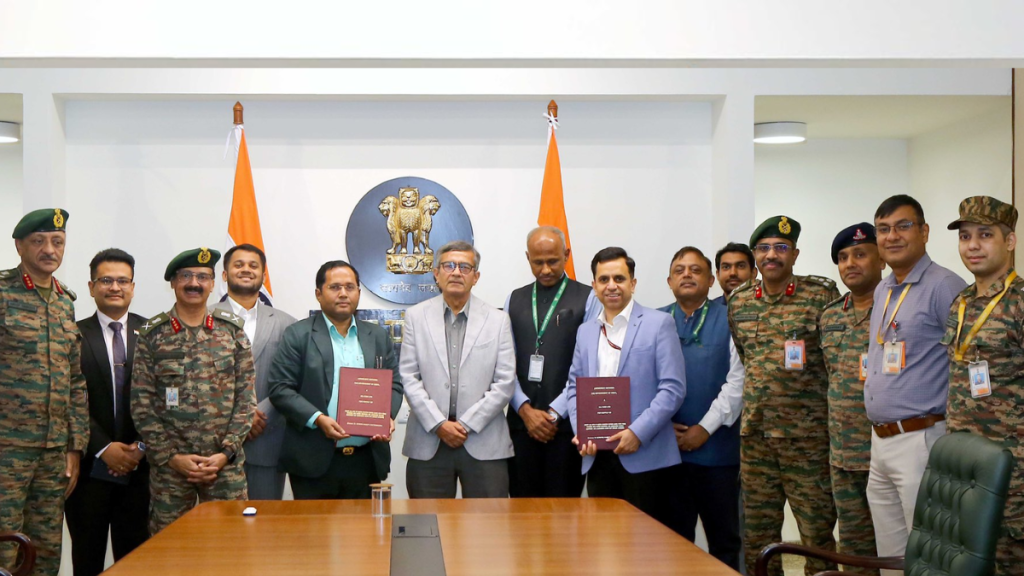
New Delhi: The Indian Army will receive 840 indigenous one-way attack drones under contracts worth ₹1,577 crore signed with Tata Advanced Systems Ltd (TASL) and Nibe Pvt Ltd, in a major push to expand its long-range precision-strike capabilities. The drones can hit targets more than 100km away and are intended to engage enemy artillery positions and other targets deep across the border.
The acquisition comes as loitering munitions have become an increasingly important weapon in modern warfare, with their use in the Russia-Ukraine war and conflicts in West Asia demonstrating their ability to strike targets at relatively low cost. The Army is now looking to expand its inventory of such systems for battlefield operations.
These drones have been designed to function even amid significant electronic disturbances such as jamming and spoofing. They have been tested under different circumstances, which include testing amid conditions wherein the jamming process has been initiated right from the take-off stage, along with lessons learned from Operation Sindoor.
The systems will be acquired under the Buy (Indian) category through the fast-track procedure, allowing the Army to induct critical equipment more quickly. Supplies are expected to begin within six months of the contracts being signed, with the entire requirement to be delivered within 12 months.
The order follows technical evaluations and trials in which TASL emerged as the lowest bidder after commercial bids were opened, while Nibe was the next lowest bidder. RNA Media had earlier reported that TASL had emerged as the leading bidder in the Army’s ₹1,600 crore loitering munition programme, with the order subsequently being divided between the two Indian companies.
Under the final arrangement, TASL will supply 64 per cent of the requirement, while Nibe will provide the remaining 36 per cent. This translates to 480 drones from Tata and 360 from Nibe.
The procurement is particularly significant for the Army’s artillery formations, which are seeking greater access to unmanned systems for surveillance and precision engagement. The newly acquired drones are expected to give artillery units an additional option to locate and destroy targets beyond the immediate range of conventional systems.
The Army’s unmanned warfare requirements extend well beyond the current contract. Its technology roadmap covers around 80 types of unmanned systems for roles including intelligence, surveillance and reconnaissance, precision strikes, munition delivery, air defence, electronic warfare, mine warfare, data relay and logistics.
The force is also pursuing longer-range one-way attack drones, with several procurements under consideration for systems capable of striking targets more than 1,500km away. The latest ₹1,577 crore contracts therefore form part of a wider effort to build an indigenous unmanned warfare capability while reducing dependence on foreign systems.
The defence ministry said the procurement will strengthen the operational effectiveness of artillery regiments and provide a further boost to domestic defence manufacturing under the Atmanirbhar Bharat initiative.