


New Delhi: A Pakistani warship allegedly came dangerously close to INS Kolkata before the two vessels collided in September, sustaining considerably greater damage than the Indian destroyer. The latest account, made public on Monday, has renewed attention on a naval encounter in the North Arabian Sea that prompted diplomatic protests from India and Pakistan.
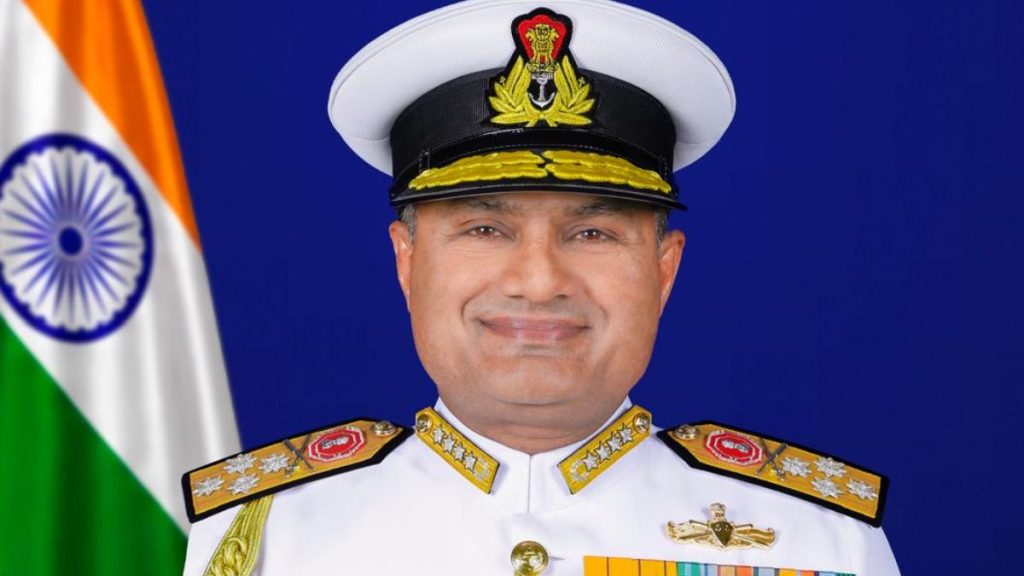
The chief of the naval staff, Admiral Krishna Swaminathan, made the remarks at the ANI National Security Summit 3.0 in New Delhi. He said close encounters between warships were not unusual but suggested the Pakistani vessel had manoeuvred beyond a safe position.
“I suppose it came dangerously close,” he said, describing the Pakistani vessel as having reached “a point of no return.”
Adm Swaminathan, said PNS Hunain apparently tried to move away as the two ships closed in but still made contact with INS Kolkata. At the point of impact, “we had no damage, but that ship had a lot more damage,” he said.
The Pakistani vessel subsequently moved away and returned to port, he added. The Navy chief said he could not precisely determine the extent of its damage and declined to say whether it was still undergoing refit more than two months later.
September collision
The collision took place on September 15 while INS Kolkata was conducting what the Ministry of External Affairs described as a routine deployment in the western Arabian Sea.
Indian officials alleged that PNS Hunain approached at high speed and made an unsafe overtaking manoeuvre. The ministry maintained that the incident took place in international waters and that the Indian destroyer suffered no major damage and remained operational.
Pakistan’s foreign office rejected the Indian account. It alleged that INS Kolkata manoeuvred aggressively near Pakistani naval units while the Pakistan Navy was conducting its biennial Seaspark-26 exercise.
Islamabad said the encounter occurred inside Pakistan’s exclusive economic zone and accused the Indian vessel of violating international law and the bilateral agreement governing military manoeuvres. Neither government’s account of responsibility has been independently established.
Diplomatic protests
India summoned Pakistan’s charge d’affaires in New Delhi on September 16 and protested what it called “unacceptable and unprofessional” conduct. Pakistan also summoned India’s diplomatic representative in Islamabad and lodged a counterprotest.
India accused the Pakistani vessel of breaching Article 10 of the 1991 agreement on advance notice on military exercises, manoeuvres and troop movements and cited international collision-prevention regulations. The agreement requires the two countries’ naval ships and submarines to maintain at least three nautical miles of separation in international waters.
Operation Urja Suraksha
Adm Swaminathan said INS Kolkata was operating near the mouth of the Gulf of Oman under operation Urja Suraksha, intended to assist and reassure Indian merchant vessels navigating conflict-affected waters near the Strait of Hormuz.
The strategic waterway carries energy shipments from the Gulf and is an important shipping route for India. Indian naval deployments in the area are intended to support merchant traffic seeking safe passage through the region.