


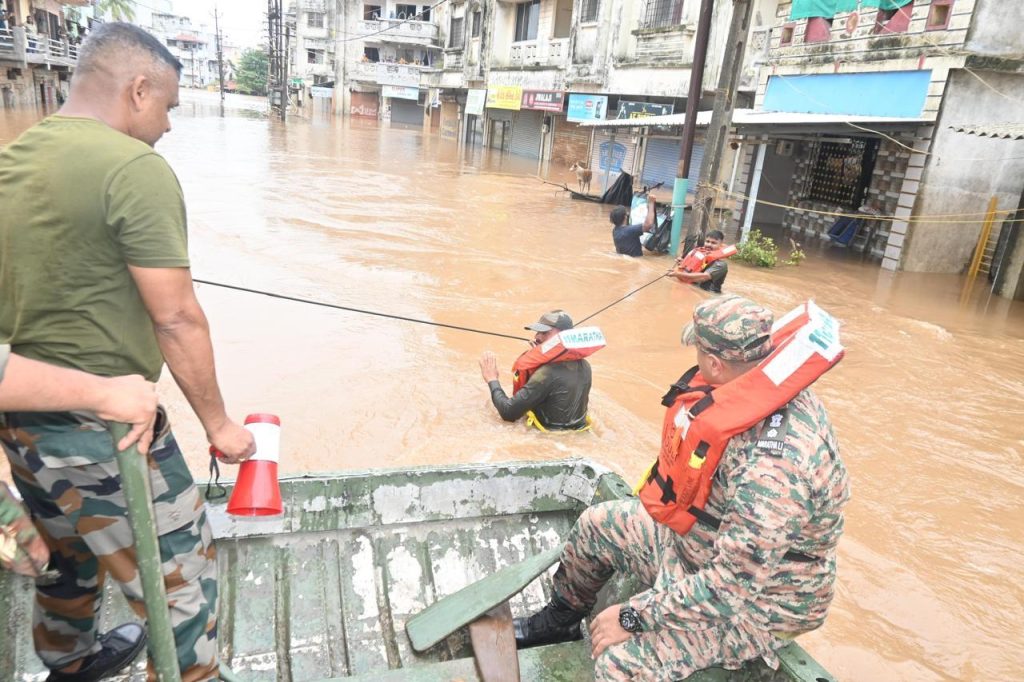
New Delhi: The Indian Army has deployed seven relief and rescue columns across flood-hit districts of Gujarat and the union territory of Dadra & Nagar Haveli, as authorities grapple with one of the region’s heaviest monsoon spells in years.
Operating under the Southern Command, the columns began humanitarian assistance and disaster relief operations on the evening of July 23, 2026, after incessant rainfall left several districts inundated. The teams, which include engineer and medical detachments, are working alongside the National Disaster Response Force, the State Disaster Response Force and civil administration.
The Army’s response follows extreme rainfall across south Gujarat this week. Umbergaon taluka in Valsad district recorded 1,200mm of rain in 36 hours, the third-highest daily rainfall ever recorded in India. The India Meteorological Department issued a red alert for 10 districts on July 24, with Navsari, Valsad, Surat, Ahmedabad, Kheda, Tapi and Dang among the worst affected.
State authorities said tens of thousands of residents had already been moved to safer locations before the Army’s columns arrived, with civilian rescue efforts under the NDRF and SDRF running in parallel to the military deployment.
Two Army columns are currently operating in Navsari and one in the Valsad–Vapi belt, the districts that bore the brunt of the rain. Three columns are deployed in and around Ahmedabad, covering the city, its rural periphery and the Ahmedabad–Rajkot highway, while a seventh is stationed in Silvassa, in Dadra & Nagar Haveli.
Additional columns are on standby at Vadodara, Ahmedabad and Jamnagar, ready to move at short notice should the situation worsen elsewhere.
Since operations began, Army personnel have rescued 355 stranded civilians from flooded buildings and cut-off habitations, some of whom had been trapped for extended periods before rescue teams could reach them.
Medical teams have treated residents requiring urgent care, while relief columns have distributed food, drinking water and other essential supplies to those still awaiting evacuation or the restoration of road and power links.
The Army said the operation was being carried out in close coordination with the civil administration, the NDRF, the SDRF, the police and other agencies, with the objective of ensuring timely rescue and relief across the affected districts. No timeline has been given for when the deployment will be scaled down, with further rain forecast over the coming days.