


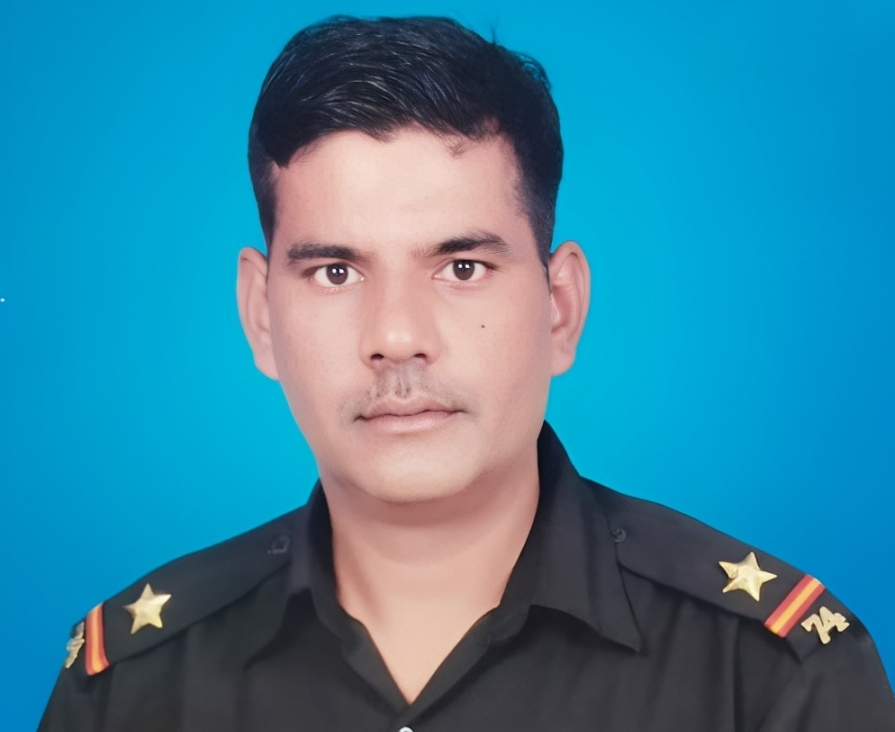
New Delhi: A serving Indian Army junior commissioned officer has given six critically ill patients across the country a fresh chance at life through the donation of his organs after death. He had suffered a brain stroke while deployed at an altitude of 16,000 feet in the high reaches of Ladakh.
Following the stroke, Naib Risaldar Virender Singh, who belonged to the Armoured Corps, was given immediate medical attention and evacuated by air to Command Hospital, Chandimandir, on July 16, but did not recover, and was declared brain dead on Tuesday.
His wife, Kusum, agreed to donate his organs even as the family grappled with the loss. Two kidneys, the liver, both lungs and both corneas were retrieved – five organs in all, transplanted into patients who had been waiting for donors to save their lives.
A defence spokesperson said on Thursday that the lung retrieval was the first carried out in the hospital’s history, calling it a milestone that reflected the growing technical capability of the Army’s medical branch.
The retrieved organs were distributed to recipients in different cities through India’s organ-sharing network. One kidney and both corneas were transplanted at Command Hospital itself, the second kidney went to the State Organ and Tissue Transplant Organisation in Haryana, the liver to Army Hospital (Research and Referral) in Delhi, and the lungs to KIMS Hospital in Hyderabad.
Getting the organs to their destinations within the narrow window that transplantation allows required a green corridor, cleared with the coordination of the military police, the civil administration and local authorities along the route.
Command Hospital, Chandimandir, under the Western Command, has in recent years become one of the more active centres for organ retrieval among the armed forces’ medical establishments, and was named the best emerging national organ transplant retrieval centre by the ministry of health and family welfare in recognition of that work.
In May 2026, its transplant team retrieved a heart from a brain-dead donor for the first time, the organ flown to Delhi within half an hour to save a 14-year-old Sudanese boy being treated at a hospital in the capital. Two years earlier, in June 2024, the hospital recorded another first for the armed forces’ medical system when its team harvested a pancreas from a brain-dead soldier of the Punjab Regiment, after his father consented to the donation.
Organ donation began in the armed forces in the late 2000s and was introduced at Western Command Hospital in 2014. The programme is coordinated nationally by the Armed Forces Organ Retrieval and Transplantation Authority, based in New Delhi. India’s wider organ-donation effort remains constrained by demand that far outstrips supply – government data has repeatedly shown that only a small fraction of patients on transplant waiting lists receive organs each year, which is why military hospitals building sustained donation programmes, rather than one-off cases, are seen as significant to the broader effort.