


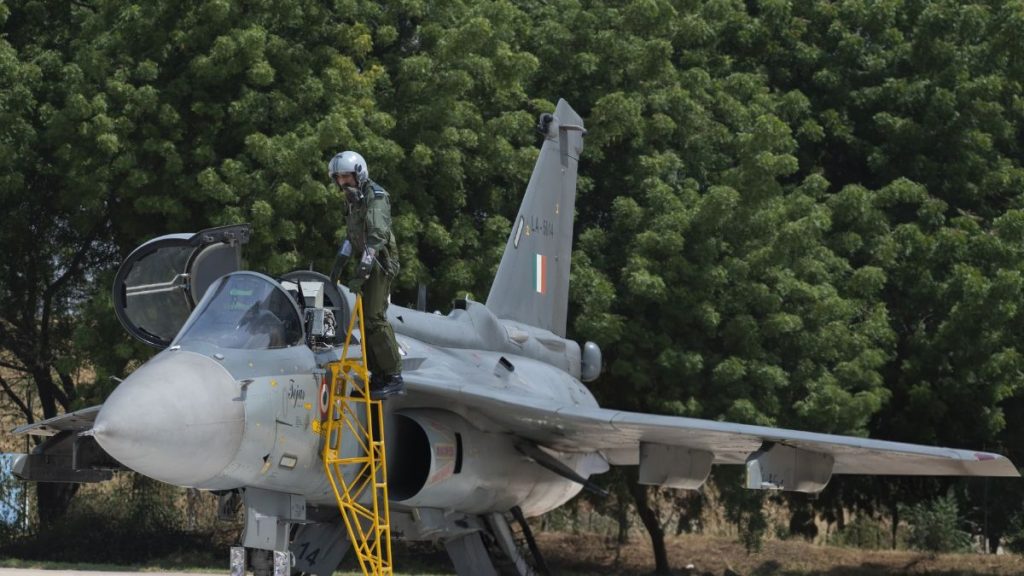
New Delhi: Exercise Veer Guardian 2026 between the Indian Air Force and Japan Air Self-Defence Force concluded at Air Force Station Jodhpur on Tuesday after 14 days of advanced flying and professional exchanges aimed at improving interoperability. The second edition also marked the first visit of Japanese fighter aircraft to India.
The IAF fielded light combat aircraft Tejas, Su-30MkI and Rafale fighters, while the JASDF deployed F-2A aircraft. The two sides conducted within visual-range combat training and coordinated multi-aircraft missions, alongside mission planning conferences and exchanges on engineering, maintenance practices and aerospace safety.
The exercise gave aircrew and ground personnel exposure to each other’s operational procedures, mission planning methods and maintenance practices. Subject matter expert exchanges and professional discussions were intended to improve tactical proficiency and aerospace operational synergy.
During the exercise, the IAF chief, Air Chief Marshal Amar Preet Singh, led a Tejas formation, while the JASDF chief of staff, General Takehiro Morita, flew in the twin-seater version of the indigenous fighter.
Veer Guardian complements the India-Japan army exercise, Dharma Guardian, and the India-Japan maritime exercise, Jaimex, extending bilateral training across all three services. At their August 20 meeting in New Delhi, the defence minister, Rajnath Singh, and his Japanese counterpart, Shinjiro Koizumi, agreed to increase the complexity of bilateral exercises, integrate unmanned systems and pursue short notice training opportunities.
Technology cooperation moves alongside drills
The operational engagement is increasingly being matched by work on defence technology and equipment. On Tuesday, the defence secretary, Rajesh Kumar Singh, met a visiting Liberal Democratic Party parliamentary delegation led by Taro Kono, with discussions covering defence technology collaboration, joint exercises and regional security cooperation.
The government-to-government framework is broader. The August defence ministers’ meeting agreed to deepen research and development cooperation between India’s Defence Research and Development Organisation (DRDO) and Japan’s Acquisition, Technology and Logistics Agency (ATLA), discuss operational requirements for additional equipment projects and convene a Defence Industry Forum.
The most concrete project is the Unified Complex Radio Antenna (Unicorn), a shipborne integrated communications antenna system intended for Indian Navy vessels. India and Japan signed a memorandum of implementation for its co-development in November 2024, and the July 2026 summit recorded agreement in principle on the remaining technical details. The two governments describe Unicorn as their first defence equipment transfer project, but it has not been publicly confirmed as inducted.
The two sides are also exploring further defence-industrial cooperation. The prime minister, Narendra Modi, has invited Japanese companies to work with Indian companies and startups on co-development and co-production under Make in India, while the August meeting discussed possible cooperation in naval shipbuilding and design, mine-countermeasure capabilities and reciprocal ship repair.