


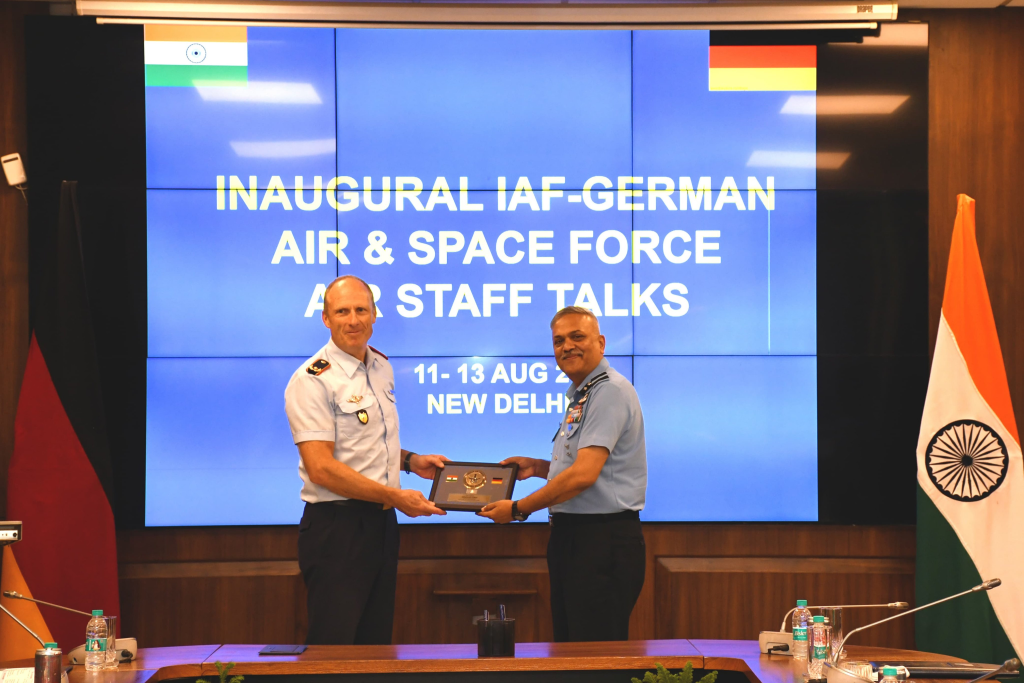
New Delhi: The Indian Air Force and Germany’s Luftwaffe (air force) are expanding cooperation in the air domain, with the two air forces holding the first India-Germany Air Staff Talks in New Delhi from August 11 to 13. The three-day engagement comes amid a broader push by New Delhi and Berlin to deepen military ties, strengthen defence-industrial collaboration and develop new avenues for joint capability building.
The talks brought the IAF and Luftwaffe together for discussions on training, operational exchanges and capability development. The engagement also adds a dedicated air-force-level mechanism to a relationship that has been gaining momentum across military and defence-industrial domains.
From military engagement to defence production
The latest talks build on a series of initiatives undertaken by India and Germany this year to give their defence partnership greater institutional depth. During the visit of the defence minister, Rajnath Singh, m to Berlin in April, he held talks with German defence minister Boris Pistorius on strengthening bilateral security and defence cooperation, with both sides identifying co-development and co-production of defence equipment as a priority.
A major outcome of the April meeting was the signing of a defence Industrial cooperation roadmap, providing a framework for greater collaboration between the two countries’ defence industries, particularly in niche technologies. The focus on joint development and production is significant as India seeks to expand domestic defence manufacturing and build partnerships around advanced technologies rather than limiting cooperation to equipment procurement.

Military to military cooperation was further stressed by both the ministers as an important pillar of the strategic partnership of India and Germany. The military-to-military talks at the service level and plans for future military exercises between the two countries were envisaged in order to have greater avenues for interactions.
Germany deepens air force engagement with India
This has led to air power becoming one of the most prominent spheres of this growing military cooperation. In 2024, Germany took part in India’s first multinational Exercise Tarang Shakti, which provided both air forces with the chance to work together in multinational air operations.
The second version of Exercise Tarang Shakti will take place at Jodhpur Air Force Station in Rajasthan. This follows Operation Sindoor, which makes this exercise very important in improving the operational readiness and interoperability of the IAF through multinational air operations.
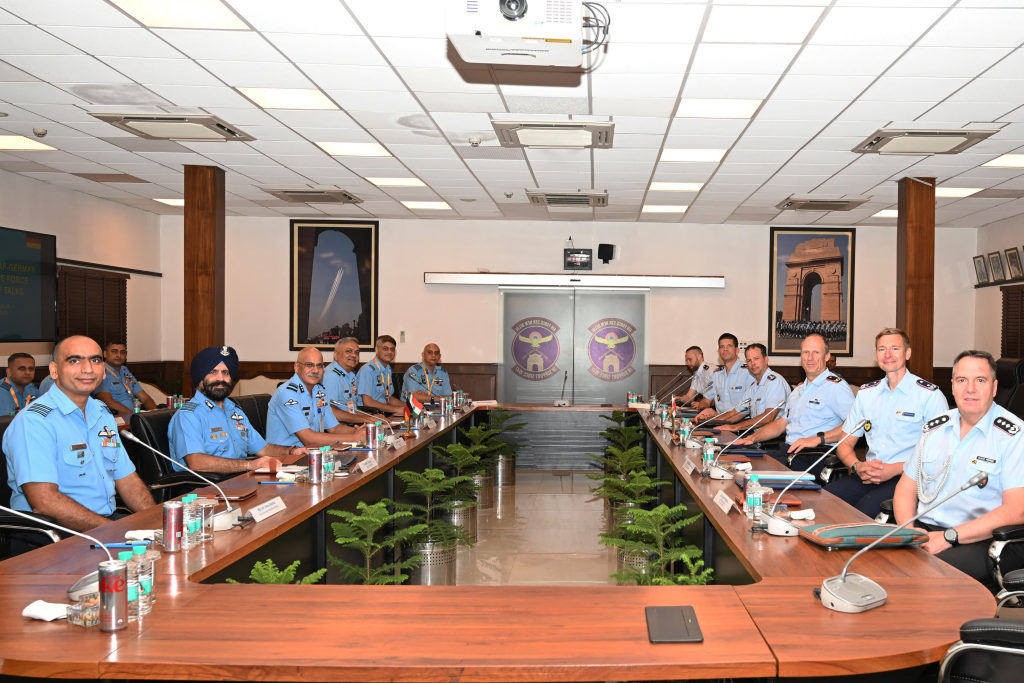
The inaugural India-Germany Air Staff Talks therefore provide a more structured platform for taking this engagement forward, particularly in areas such as training, operational exchanges and the development of future capabilities.
Cooperation extends beyond air power
The defence relationship is not limited to the air domain. India and Germany have also expanded cooperation in UN peacekeeping, signing an implementing arrangement for cooperation in peacekeeping training during Singh’s April visit. The agreement is intended to strengthen institutional cooperation and training capabilities between the two sides.
At the broader strategic level, New Delhi and Berlin have also agreed to leverage the recently established India-EU security and defence partnership for tangible bilateral and wider European outcomes. The framework is expected to support greater coordination, enhance joint capabilities and contribute to regional stability.
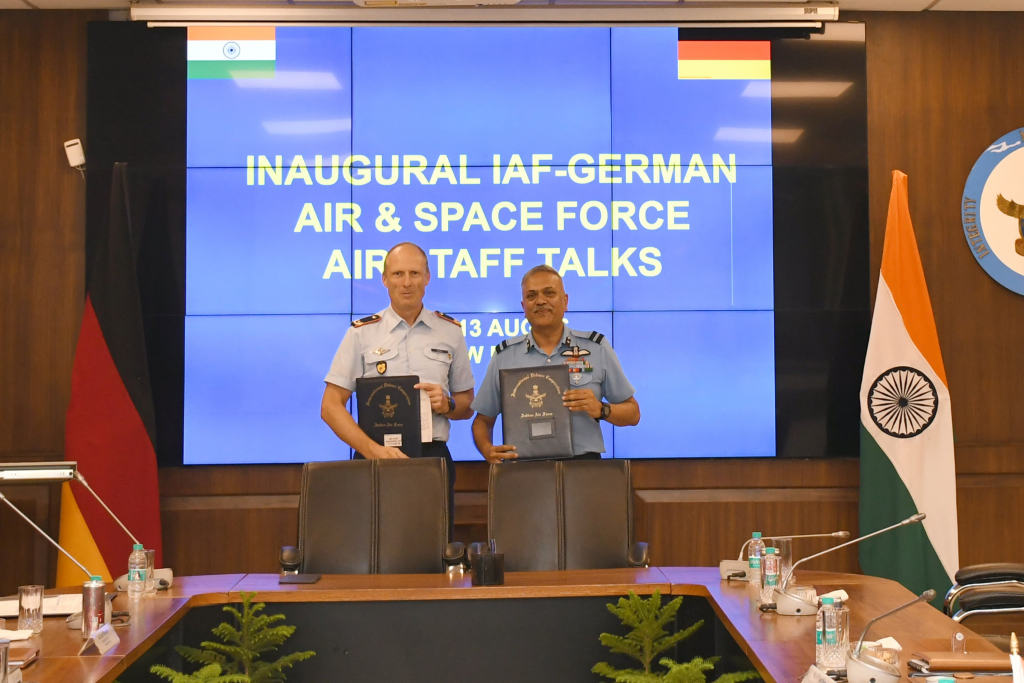
The growing defence engagement comes as New Delhi and Berlin mark 25 years of the India-Germany Strategic Partnership and 75 years of diplomatic relations in 2026. With the relationship increasingly moving towards defence technology, industrial cooperation, military exercises and institutionalized service-level engagement, the air staff talks signal an effort to translate the broader political commitment into deeper operational cooperation between the two countries’ armed forces.